Walk into any grocery store today and you’ll see protein on everything — protein bars, protein water, protein-boosted pasta. But behind the marketing hype is a genuinely important question most of us have never actually answered for ourselves: how much protein do you personally need each day? The answer isn’t one-size-fits-all, and it isn’t nearly as high (or as complicated) as supplement companies would have you believe. Here’s what the science actually says, how to calculate your own number, and the best foods to help you hit it without overthinking every meal.
Why Protein Matters More Than You Might Think
Protein is the building block for nearly everything your body repairs and maintains: muscle, skin, hair, enzymes, hormones, and antibodies. Unlike fat and carbohydrates, your body doesn’t store protein for later use, which is part of why a steady daily supply matters so much. Protein also plays a quiet but powerful role in day-to-day life — it’s the macronutrient most responsible for keeping you full after a meal, and it helps stabilize blood sugar when eaten alongside carbohydrates.
Research from Harvard T.H. Chan School of Public Health, which followed roughly 203,000 people over 30 years, found that those who ate a higher ratio of plant protein to animal protein had a 19% lower risk of cardiovascular disease and a 27% lower risk of coronary heart disease. That doesn’t mean animal protein is “bad” — it means the mix of protein sources you choose matters just as much as the total amount.
The Official Number: What the RDA Actually Says
The Recommended Dietary Allowance (RDA) for protein is 0.8 grams per kilogram of body weight per day for the average sedentary adult. This is the minimum amount needed to prevent deficiency — not necessarily the amount that helps you feel and function your best.
- A 165-pound (75 kg) man following the baseline RDA needs about 60 grams of protein per day.
- A 143-pound (65 kg) woman following the baseline RDA needs about 52 grams per day.
The acceptable macronutrient distribution range (AMDR) for protein is broader: 10% to 35% of total daily calories. Most nutrition experts agree that many healthy adults benefit from landing in the middle-to-upper end of that range rather than the bare minimum, especially if they’re physically active or getting older.
Why Active Adults Need More
If you exercise regularly, your protein needs climb. General guidance for active adults is 1.2 to 1.5 grams per kilogram of body weight, and those doing serious strength or endurance training may benefit from up to 1.7 grams per kilogram. The extra protein supports muscle repair and recovery after workouts, not just muscle growth.
Why Older Adults Need More, Too
This is the part most people miss: protein needs actually go up, not down, as we age. Adults 65 and older are generally advised to aim for about 1.0 to 1.2 grams per kilogram of body weight daily — well above the standard RDA. That’s because the body becomes less efficient at using protein to build and maintain muscle with age, a process that contributes to sarcopenia, or age-related muscle loss. Higher protein intake in older adults is linked to a lower risk of frailty, better mobility, and faster recovery from illness or injury. Despite this, an estimated one in three adults over 50 doesn’t get enough protein. Anyone recovering from surgery or a major illness may need even more — often 1.6 grams per kilogram or higher — which is a conversation worth having with a doctor or registered dietitian during recovery.
How to Calculate Your Own Target
You don’t need an app or a calculator to figure out roughly what you need. Here’s the simple math:
- Convert your body weight to kilograms (divide pounds by 2.2).
- Multiply that number by your target range: 0.8 for the baseline RDA, 1.0–1.2 if you’re over 65, or 1.2–1.7 if you’re active.
- That’s roughly how many grams of protein to aim for across the day.
Example: A 160-pound (about 73 kg) adult over 65 aiming for 1.1 grams per kilogram would target roughly 80 grams of protein per day — noticeably more than the bare-minimum 58 grams the baseline RDA would suggest at that weight.
Best Protein Sources: Animal and Plant
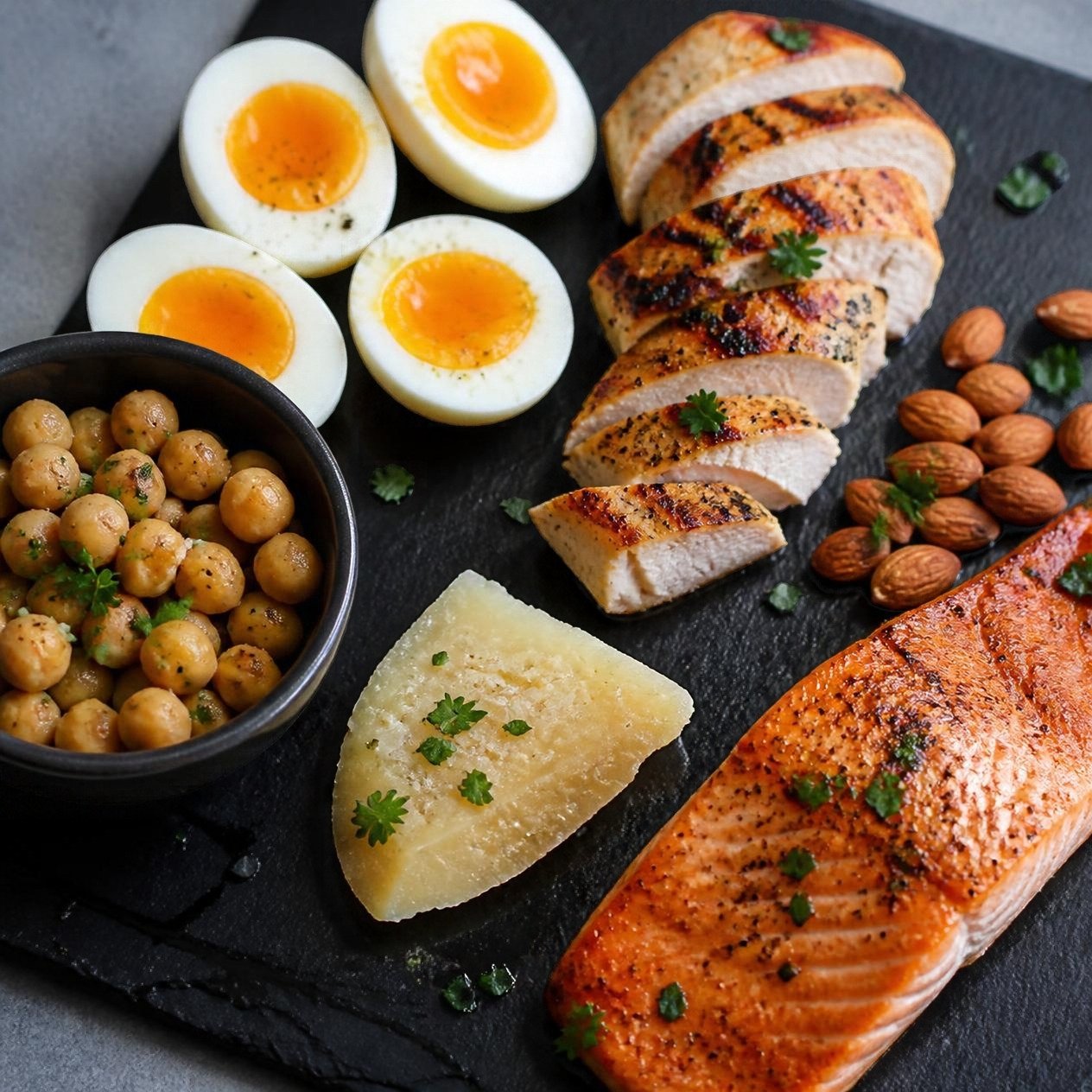
Protein quality matters alongside quantity. “Complete” proteins contain all nine essential amino acids your body can’t make on its own. Animal foods — poultry, fish, meat, eggs, and dairy — are naturally complete. Among plant foods, soybeans (and tofu), quinoa, and buckwheat are also complete proteins, while most other plant foods are missing or low in one or more amino acids. The good news: you don’t need to pair foods perfectly at every meal — eating a variety of plant proteins across the day gives your body everything it needs.
Animal-Based Sources
- Chicken breast (3 oz cooked): about 26 grams
- Eggs (1 large): about 6 grams
- Greek yogurt (1 cup, plain): about 20–23 grams
- Salmon (3 oz cooked): about 22 grams
- Cottage cheese (1/2 cup): about 12 grams
Plant-Based Sources
- Lentils (3/4 cup cooked): about 13 grams
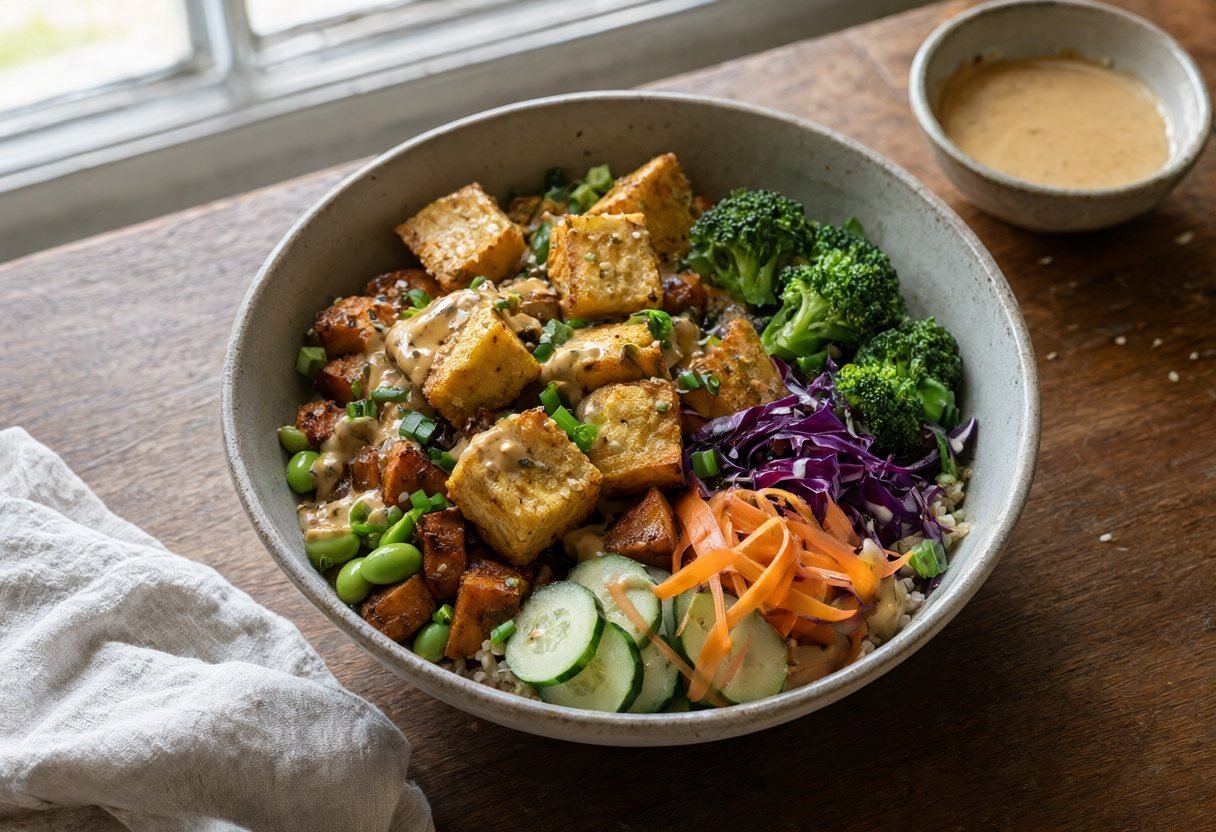
- Tofu, firm (3 oz): about 8 grams
- Quinoa (1 cup cooked): about 8 grams
- Edamame (1 cup): about 17 grams
- Chickpeas (3/4 cup cooked): about 11 grams
- Almonds (1/4 cup): about 7 grams
Most whole, unprocessed foods contain at least some protein, so it adds up faster than you’d expect across a full day of eating, even without relying on protein bars or shakes.
Practical Tips for Spreading Protein Across Your Day
How you distribute protein matters almost as much as how much you eat. Most people eat the bulk of their protein at dinner and very little at breakfast, which isn’t the most effective pattern for muscle maintenance or steady energy.
- Aim for protein at every meal. A general target is 20–30 grams per meal and 10–20 grams per snack, rather than saving it all for dinner.
- Start breakfast strong. Eggs, Greek yogurt, or a smoothie with protein-rich milk or yogurt set a better tone than a pastry or plain cereal.
- Build meals around a protein anchor first. Choose your protein source, then build the rest of the plate (vegetables, whole grains, healthy fats) around it.
- Keep convenient options on hand. Hard-boiled eggs, roasted chickpeas, string cheese, and edamame are easy grab-and-go additions.
- Boost meals you already eat. Stir milk powder or Greek yogurt into oatmeal or soup, or sprinkle nuts and seeds over salads.
- Combine plant proteins across the day. Grains and legumes (like rice and beans) together supply all nine essential amino acids — they don’t need to be eaten in the same meal, just the same day.
A Quick Myth Check
You may have heard that a high-protein diet damages healthy kidneys. For people with normal kidney function, there’s no strong evidence that moderately higher protein intake causes harm. However, anyone with existing kidney disease, or another condition that affects how the body processes protein, should work with their doctor or a registered dietitian before significantly increasing protein intake, since their needs are genuinely different. There’s also no solid evidence that healthy adults need to exceed the upper end of the recommended range (35% of calories) for any additional benefit — more isn’t automatically better once your needs are met.
The Bottom Line
Protein needs aren’t a fixed number everyone should copy from a label or an influencer’s meal plan. Start with the baseline RDA of 0.8 grams per kilogram, then adjust upward if you’re active, over 65, or recovering from illness. From there, focus less on hitting an exact gram count and more on spreading a mix of quality protein — animal and plant — evenly across your meals. Do that consistently, and the numbers tend to take care of themselves.
This article is for general informational purposes and isn’t a substitute for personalized medical or nutrition advice. If you have kidney disease, diabetes, or another condition that affects how your body processes protein, talk with your doctor or a registered dietitian before making significant changes to your diet.
Leave a Reply