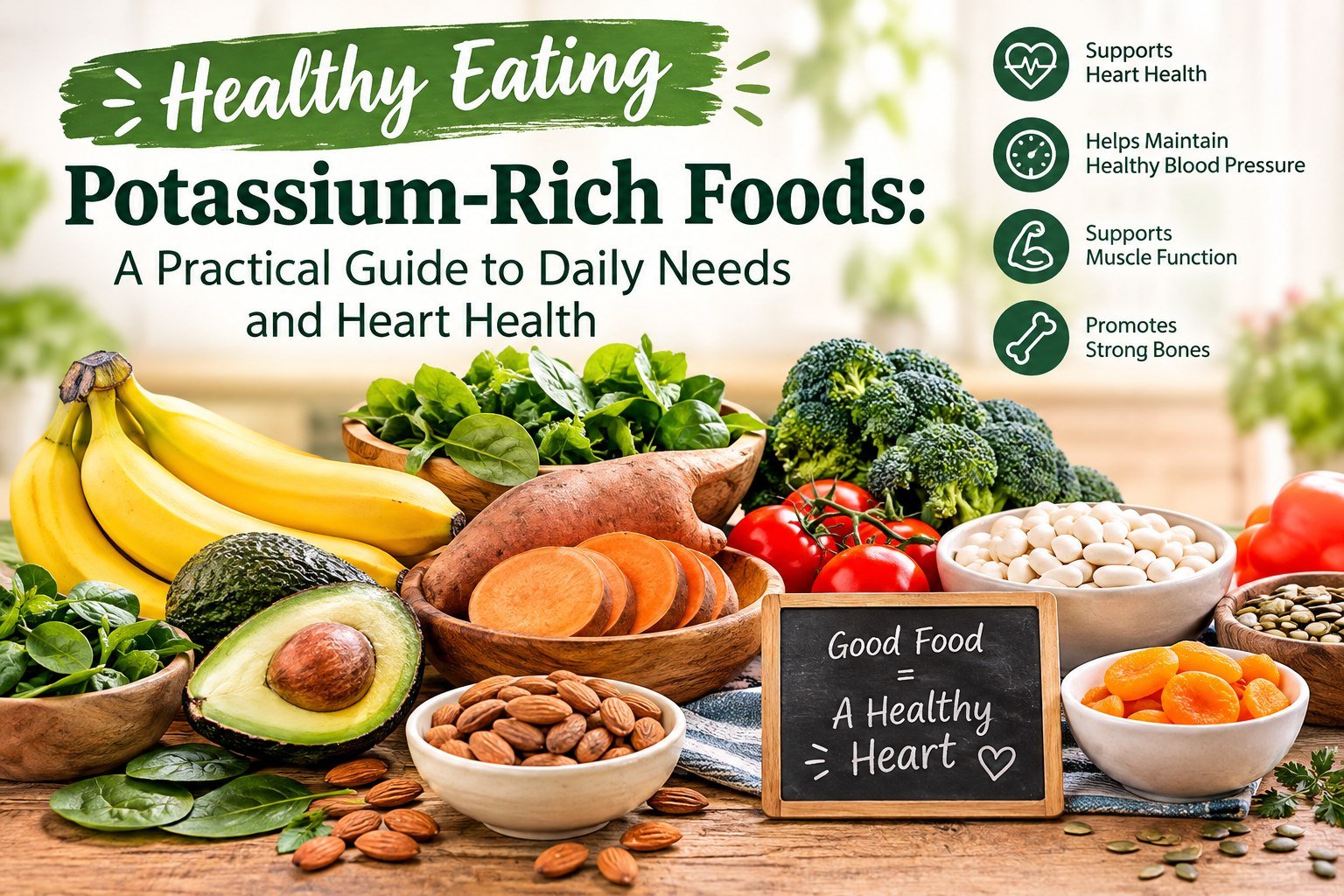
Potassium rarely gets the spotlight the way calcium, iron, or vitamin D do — but it’s one of the most important minerals for everyday health, and most adults in the U.S. don’t get nearly enough of it. It plays a direct role in managing blood pressure, keeping muscles and nerves working properly, and supporting bone and heart health. This guide breaks down exactly how much potassium you need, which everyday foods deliver the most, and a few important cautions worth knowing before you reach for a supplement.
How Much Potassium Do You Actually Need?
According to the National Institutes of Health Office of Dietary Supplements, the recommended daily intake for potassium is:
- Adult men (19+): about 3,400 mg per day
- Adult women (19+): about 2,600 mg per day
- Dried apricots (½ cup): about 755 mg
- Lentils, cooked (1 cup): about 731 mg
- Acorn squash, mashed (1 cup): about 644 mg
- Baked potato, flesh only (1 medium): about 610 mg
- Kidney beans, canned (1 cup): about 607 mg
- Orange juice (1 cup): about 496 mg
- Banana (1 medium): about 422 mg
- Spinach, raw (2 cups): about 334 mg
- Salmon, cooked (3 oz): about 326 mg
- Plain nonfat Greek yogurt (6 oz): about 240 mg
- Broccoli, cooked (½ cup): about 229 mg
- Swap white rice for beans or lentils as your side dish a few nights a week — they bring more than twice the potassium along with extra fiber.
- Leave the skin on potatoes and sweet potatoes when you roast or bake them; much of the potassium and fiber is concentrated there.
- Add a handful of spinach to smoothies, eggs, or pasta — it wilts down to almost nothing in volume but keeps its mineral content.
- Keep dried apricots or prunes on hand as a snack instead of lower-nutrient options like pretzels or crackers.
- Build a weekly dinner around salmon or another fatty fish, which pairs potassium with heart-healthy omega-3s.
Needs shift somewhat during pregnancy and breastfeeding, and requirements for children and teens are lower and scale with age. Because potassium is found across such a wide range of whole foods — fruits, vegetables, dairy, beans, and fish — most people can get close to these targets by eating a varied diet rather than relying on a single “miracle food” or supplement.
Why Potassium Matters for Your Health
Blood Pressure and Heart Health
Potassium and sodium work as a pair in the body, and the balance between them matters more than either mineral alone. Diets low in potassium — especially when paired with high sodium intake — are linked to a higher risk of high blood pressure. Potassium is thought to help lower blood pressure partly by relaxing blood vessel walls and helping the kidneys excrete excess sodium through urine, an effect that appears strongest in people who are especially sensitive to salt. This is part of why the well-studied DASH eating pattern, which emphasizes fruits, vegetables, and dairy, is naturally high in potassium alongside magnesium and calcium.
Kidney Stones and Bone Strength
When potassium intake is too low, the body can pull calcium out of bone and increase the amount of calcium excreted in urine, which raises the risk of painful kidney stones over time. Diets higher in potassium from fruits and vegetables have also been associated with stronger bones, as measured by higher bone mineral density — another reason this often-overlooked mineral deserves a regular spot on your plate.
Best Food Sources of Potassium
Whole foods are by far the best way to meet your potassium needs. Here’s how some everyday options stack up, according to NIH data:
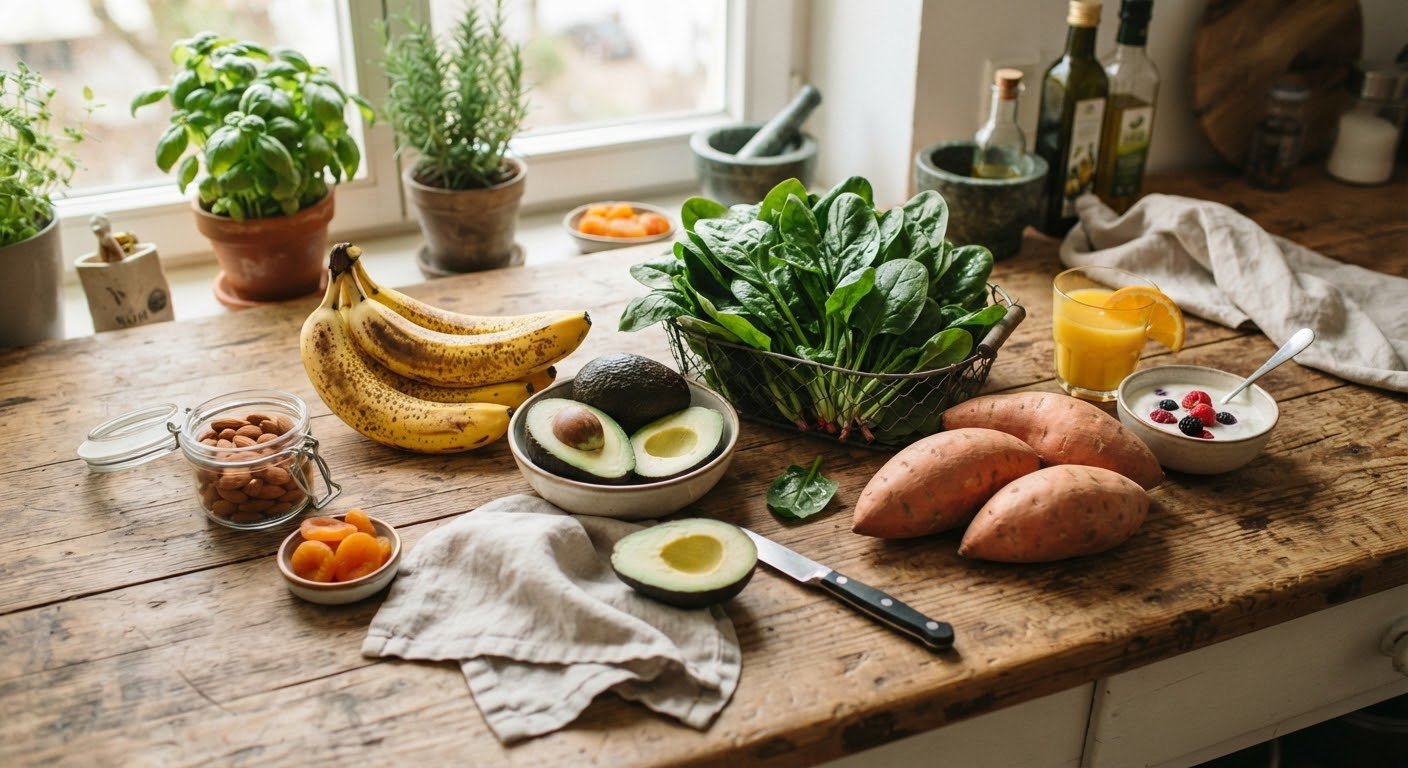
Notice the pattern: beans, leafy greens, winter squash, potatoes with the skin on, citrus, and bananas all show up near the top of the list. A simple, practical strategy is to anchor meals around these foods throughout the week rather than trying to hit your potassium target through any single “superfood.”
Easy Ways to Eat More Potassium-Rich Foods
If you’re also focused on fiber or iron intake, the good news is there’s a lot of overlap — beans, lentils, and leafy greens show up on all three lists. Our guides on how much fiber you really need and iron-rich foods and daily needs cover more of these foods in detail. If you’re looking for a recipe that puts several potassium-rich ingredients to work at once, our one-pot butternut squash and white bean soup combines winter squash and beans in a single cozy bowl.
A Note on Potassium Supplements and Salt Substitutes
Potassium from food has not been shown to cause harm in healthy people with normal kidney function, since the kidneys simply excrete what the body doesn’t need. Supplements and salt substitutes are a different story, though. Salt substitutes are typically made from potassium chloride and can contain anywhere from about 440 to 2,800 mg of potassium per teaspoon — enough to meaningfully shift your intake in a single use.
Too much potassium from supplements or salt substitutes can raise blood potassium to unsafe levels (called hyperkalemia), particularly for people with chronic kidney disease, type 1 diabetes, heart failure, liver disease, or adrenal insufficiency, and for anyone taking ACE inhibitors, ARBs, or potassium-sparing diuretics, since these medications already reduce the kidneys’ ability to clear excess potassium. On the flip side, loop and thiazide diuretics can cause the body to lose too much potassium, leading to low levels (hypokalemia), which can show up as muscle weakness, cramping, or fatigue.
If you take any of these medications, have kidney disease, or are considering a potassium supplement or salt substitute, talk with your doctor or pharmacist first — this is general information, not medical advice, and potassium is one nutrient where more isn’t automatically better for everyone.
Frequently Asked Questions
What are the signs of low potassium?
Mild potassium deficiency can cause fatigue, muscle weakness, and constipation. More severe deficiency can lead to irregular heartbeat and should be evaluated by a healthcare provider, especially if it develops after prolonged vomiting, diarrhea, heavy sweating, or diuretic use.
Can I get enough potassium without supplements?
Yes, for most healthy adults. Regularly including beans, leafy greens, potatoes with the skin, bananas, citrus, and dairy or fish makes it realistic to approach the recommended intake through food alone.
Is bananas really the best source of potassium?
Bananas are a convenient, well-known source at about 422 mg each, but they’re not actually the richest option — dried apricots, lentils, acorn squash, potatoes, and kidney beans all provide more potassium per serving.
Potassium may not be the flashiest nutrient on the label, but building meals around the foods that naturally deliver it — beans, leafy greens, winter squash, potatoes, and fruit — is one of the simplest ways to support healthy blood pressure, strong bones, and steady energy over the long run.
Leave a Reply