If you’ve been feeling unusually tired, cold, or foggy lately, your iron intake might be worth a second look. Iron deficiency is one of the most common nutritional shortfalls, and it’s easy to miss because the early signs — low energy, pale skin, trouble concentrating — overlap with so many other things going on in a busy week. The good news is that for most people, getting enough iron is simply a matter of knowing which foods to prioritize and how to pair them for better absorption.
This guide breaks down how much iron you actually need, where to find it in both animal and plant foods, who’s most likely to come up short, and the small habits that can meaningfully boost how much iron your body actually absorbs.
Why Iron Matters More Than You Might Think
Iron’s main job is helping your body make hemoglobin, the protein in red blood cells that carries oxygen from your lungs to every other tissue. It also supports myoglobin, which supplies oxygen to your muscles. When iron runs low, oxygen delivery becomes less efficient, which is why fatigue, brain fog, and low stamina are often the first clues that something is off. Adequate iron also plays a supporting role in energy metabolism, immune function, and even hair and nail health.
How Much Iron Do You Actually Need?
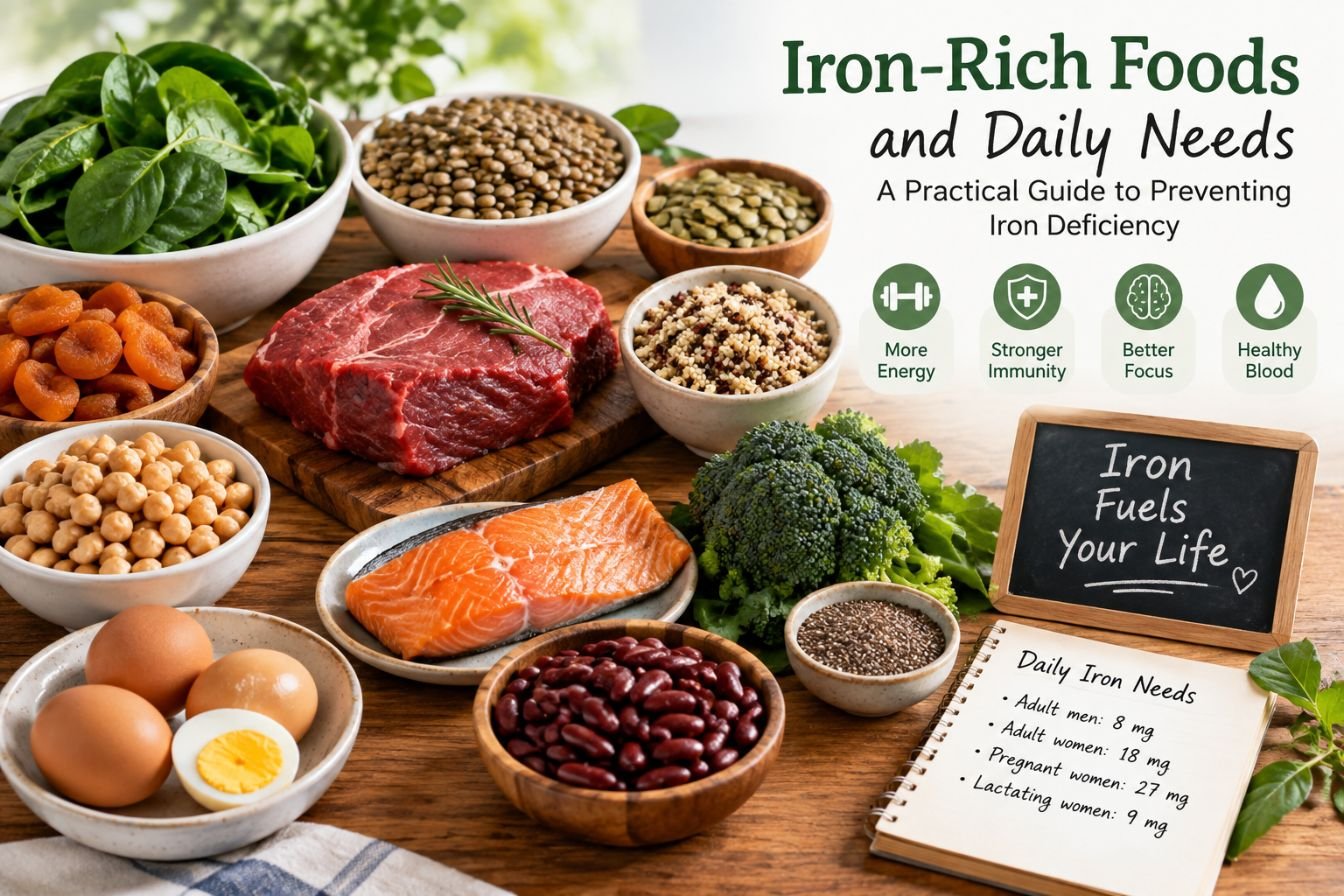
Iron needs vary quite a bit depending on age, sex, and life stage, which is part of why deficiency is so common in certain groups. According to the Cleveland Clinic, the recommended dietary allowances for iron are:
- Adult men (19 and older): 8 mg per day
- Women ages 19–50: 18 mg per day
- Women 51 and older (post-menopause): 8 mg per day
- Teen girls ages 14–18: 15 mg per day
- Pregnant women: 27 mg per day
- Breastfeeding women (19–50): 9 mg per day
- Children ages 1–13: roughly 7–10 mg per day, depending on age
Notice how much higher the requirement is for women of reproductive age and during pregnancy compared with men — that gap is the single biggest reason iron deficiency shows up so disproportionately in women.
Heme vs. Non-Heme Iron: Where to Find It
Dietary iron comes in two forms. Heme iron, found in animal foods, is absorbed more efficiently by the body. Non-heme iron, found in plant foods and fortified products, is absorbed less efficiently on its own but can still add up to meaningful amounts, especially with the pairing tips below.
Heme iron sources (better absorbed)
- Beef and lamb
- Chicken and turkey (especially dark meat)
- Liver and other organ meats
- Eggs
- Seafood: oysters, clams, shrimp, sardines, tuna, mackerel
Non-heme iron sources (plant-based and fortified)
- Lentils, chickpeas, kidney beans, and other legumes
- Tofu and tempeh
- Dark leafy greens: spinach, kale, collard and dandelion greens
- Fortified cereals, breads, and pasta
- Pumpkin seeds, sesame seeds, and cashews
- Dried fruit: raisins, prunes, and figs
- Blackstrap molasses
If you follow a vegetarian or vegan diet, it isn’t that you can’t get enough iron from plants — it just takes a bit more intention, since non-heme iron needs help to absorb well (more on that below).
Who’s Most at Risk of Running Low
According to Mayo Clinic, certain groups are more likely to develop iron deficiency, including:
- Women with heavy menstrual periods
- Pregnant women, whose iron needs increase significantly
- Infants and children, particularly those with low birth weight or poor diets during growth spurts
- Vegetarians and vegans who don’t actively plan for enough non-heme iron
- People who’ve had gastric bypass or other stomach surgery
- People with digestive conditions such as celiac disease or inflammatory bowel disease, which can impair absorption
- Frequent blood donors
Common symptoms of iron deficiency anemia, per Mayo Clinic, include ongoing fatigue and weakness, pale skin, shortness of breath, headaches or dizziness, cold hands and feet, brittle nails, a sore or swollen tongue, restless legs, and unusual cravings for non-food items like ice or dirt (a symptom known as pica). Symptoms are often mild at first and worsen gradually as iron stores drop, which is part of why deficiency can go unnoticed for a while.
Simple Ways to Absorb More Iron From Food
How you combine foods matters almost as much as what you eat. A few evidence-backed habits can meaningfully improve how much iron your body actually takes up:
- Pair plant-based iron with vitamin C. Cleveland Clinic notes that eating vitamin C-rich foods alongside non-heme iron sources boosts the iron’s bioavailability. Try a squeeze of lemon on sautéed spinach, strawberries alongside an iron-fortified cereal, or roasted red peppers tossed into a lentil salad.
- Include some protein at each meal to help round out overall iron intake, especially if you’re relying mostly on plant sources.
- Be mindful of medications that interfere with absorption. Cleveland Clinic notes that proton pump inhibitors, commonly used for acid reflux, can reduce how well the body absorbs iron — worth a conversation with your doctor or pharmacist if you take these regularly and have low iron.
- Don’t over-rely on supplements without guidance. Because excess iron can interfere with zinc absorption and cause digestive side effects, it’s best to get iron from food first and only supplement under a healthcare provider’s direction.
Easy Ways to Build More Iron Into Your Day
You don’t need a complicated meal plan to cover your iron needs — a few small, repeatable swaps go a long way:
- Add a handful of spinach or kale to morning eggs, smoothies, or pasta sauce
- Swap a plain side salad for one built on lentils or chickpeas, finished with a citrus vinaigrette
- Snack on pumpkin seeds or cashews instead of lower-iron options
- Choose fortified whole-grain bread or cereal for breakfast
- Finish an iron-rich dinner with fresh fruit high in vitamin C, like orange segments or kiwi, instead of a dessert with none
- If you eat meat, work in a seafood dinner (sardines, mussels, or shrimp) once a week for a heme-iron boost
When to Talk to a Doctor
This article is meant as general nutrition information and recipe inspiration, not individualized medical advice. If you’re experiencing ongoing fatigue, dizziness, or other symptoms that could point to iron deficiency anemia, or if you fall into one of the higher-risk groups above, it’s worth talking to a doctor or registered dietitian. They can check your iron levels with a simple blood test and help you figure out whether food changes alone are enough or whether supplementation is appropriate — iron deficiency has several possible underlying causes, and more isn’t always better when it comes to iron.
The Bottom Line
Iron deficiency is common, but it’s also one of the more manageable nutrient gaps once you know what to look for. Understanding your personal daily target, leaning on a mix of heme and non-heme sources, and pairing plant-based iron with a little vitamin C can make a real difference in how you feel day to day. Small, consistent choices at the grocery store and on your plate add up faster than most people expect.
Leave a Reply