If you’ve ever finished a day of eating “pretty healthy” and still felt sluggish or bloated, fiber might be the missing piece. It’s one of the most under-discussed nutrients in everyday wellness advice — overshadowed by protein, carbs, and fat — yet most adults eat only about half of what they need. The good news is that closing that gap doesn’t require a diet overhaul. A few smart swaps and additions can get you most of the way there.
Here’s a practical, no-nonsense look at how much fiber you actually need, why it matters more than you might think, and the best food sources to help you hit your goal without gas, bloating, or a cabinet full of supplements.
How Much Fiber Do You Actually Need Each Day?
According to Harvard Health Publishing, the general recommendation is about 14 grams of fiber for every 1,000 calories you eat. For most adults consuming between 2,000 and 2,400 calories a day, that works out to roughly 28 to 34 grams of fiber daily.
The catch: the average American eats only about 15 to 16 grams a day — less than half the target. And because calorie needs tend to decrease with age, older adults who eat smaller portions can fall even further behind unless they’re intentional about choosing fiber-dense foods.
Harvard’s guidance translates into simple daily targets: aim for 2 to 4 servings of fruit, 2 to 5 servings of vegetables, several servings of whole grains and legumes, and 1 to 2 servings of nuts or seeds. You don’t need to count grams obsessively — focus on consistently including these food groups at meals and snacks.
Why Fiber Deserves More Credit Than It Gets
Fiber doesn’t get broken down and absorbed the way other nutrients do, which is exactly what makes it so useful. It passes through your digestive system largely intact, and along the way it does a surprising amount of work.
It keeps digestion moving
Fiber adds bulk to stool and helps it move through the intestines more efficiently, which is why regular constipation is often a sign of too little fiber in the diet. If you struggle with irregularity, increasing fiber — alongside adequate water intake — is usually one of the first and most effective changes to make.
It supports healthy cholesterol levels
Research summarized by Harvard Health points to a clear link between higher fiber intake and lower LDL (“bad”) cholesterol, which plays a role in supporting long-term heart health. Fiber-rich foods like oats, beans, and fruit are often recommended as part of a heart-conscious eating pattern.
It’s linked to a lower risk of chronic disease
Adequate fiber intake has been associated with a reduced risk of both diabetes and heart disease. Fiber slows down how quickly food moves through the digestive tract, which can help prevent the sharp spikes and crashes in blood sugar that come from fast-digesting, low-fiber meals.
It feeds your gut microbiome
Fiber is essentially food for the trillions of bacteria living in your gut. As those bacteria ferment fiber, they produce short-chain fatty acids, compounds that may help support immune function, reduce inflammation, and play a protective role against chronic digestive conditions. A fiber-rich diet is one of the simplest ways to support a diverse, healthy gut microbiome.
It helps with weight management
High-fiber foods tend to be more filling and take longer to chew and digest, which naturally supports better portion control and fewer cravings between meals. Fiber-rich eating patterns are consistently associated with easier long-term weight management compared to low-fiber diets.
Note: this article offers general nutrition information and recipe inspiration, not individualized medical advice. If you have diabetes, heart disease, or another condition affected by diet, talk with your doctor or a registered dietitian before making significant changes to your fiber intake.
The Best High-Fiber Foods to Add to Your Plate
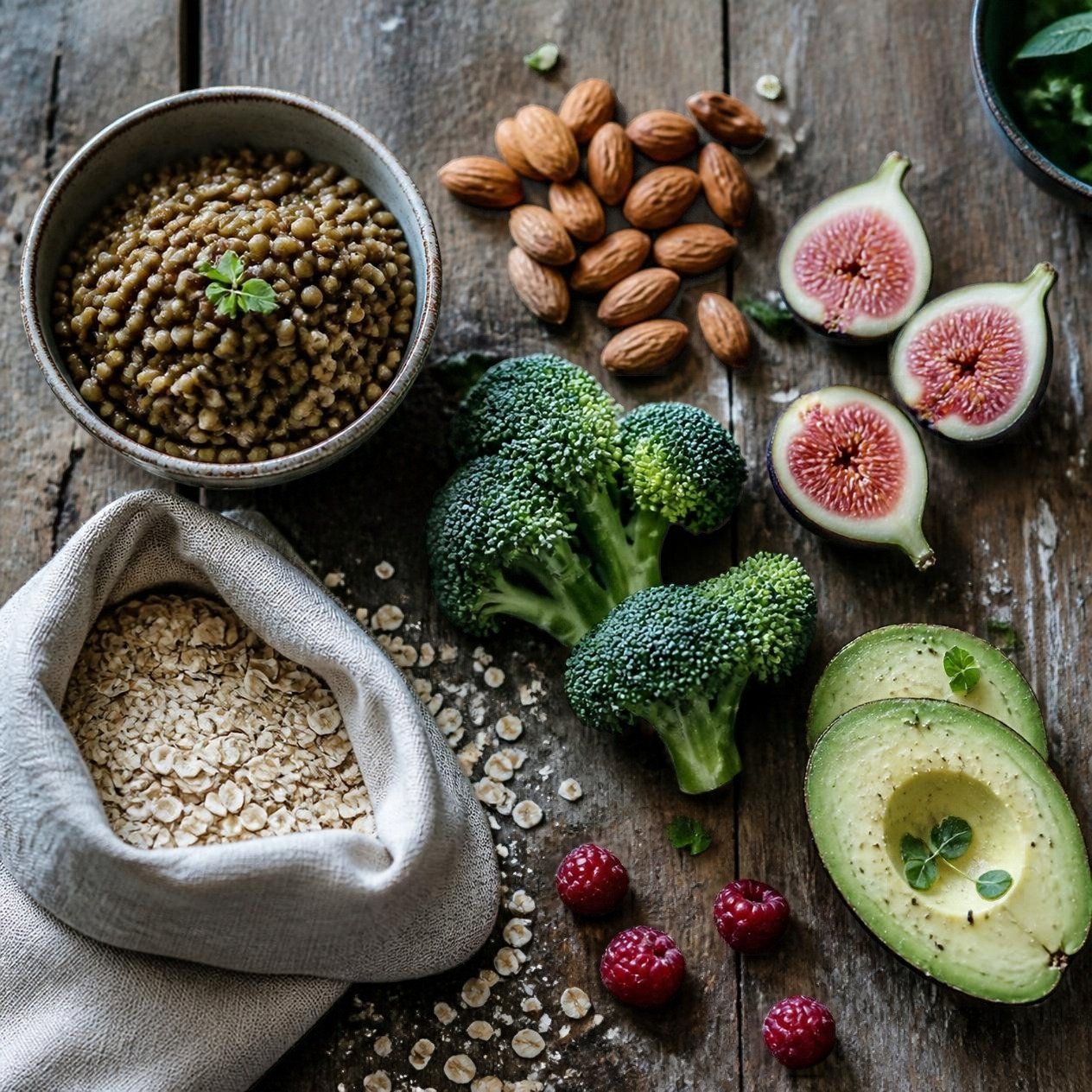
You don’t need exotic ingredients or fiber powders to hit your target — most of the best sources are already familiar, affordable, and easy to find. Here’s a practical breakdown by food group, with approximate fiber content per serving.
Legumes (the fiber heavyweights)
- Navy beans: about 9.5 g per ½ cup, cooked
- Black beans: about 8.3 g per ½ cup, cooked
- Split peas: about 8 g per ½ cup, cooked
- Lentils: about 7.8 g per ½ cup, cooked
- Kidney beans: about 6.5 g per ½ cup, cooked
- Chickpeas: about 6 g per ½ cup, cooked
Whole grains
- Bran flakes: about 5.5 g per ¾ cup
- Steel-cut or rolled oats: about 4 g per ½ cup, dry
- Bulgur: about 4 g per ½ cup, cooked
- Whole wheat pasta: about 4.5 g per cup, cooked
- Pearled barley: about 3 g per ½ cup, cooked
- Air-popped popcorn: about 3.5 g per 3 cups
Fruits
- Raspberries: about 8 g per cup
- Blackberries: about 7.6 g per cup
- Pear (with skin): about 5.5 g per medium fruit
- Apple (with skin): about 4.4 g per medium fruit
- Orange: about 4.4 g per large fruit
- Banana: about 3 g per medium fruit
Vegetables
- Acorn squash: about 9 g per cup, cubed and baked
- Collard greens: about 7.6 g per cup, cooked
- Green peas: about 7.2 g per cup, cooked
- Broccoli: about 5 g per cup, cooked
- Sweet potato (with skin): about 3.8 g per medium potato, baked
- Carrots: about 3.6 g per cup, raw
Nuts and seeds
- Chia seeds: about 5.7 g per 2 tablespoons
- Flax seeds: about 5.6 g per 2 tablespoons
- Almonds: about 3.5 g per 1 ounce (about 23 almonds)
- Pistachios: about 3 g per 1 ounce
Notice a pattern? Legumes and vegetables tend to offer the most fiber per calorie, which makes dishes like bean chilis, lentil soups, and vegetable-heavy grain bowls some of the most efficient ways to build a high-fiber plate.
Simple Ways to Increase Your Fiber Without the Bloat
Jumping from 15 grams a day to 30 grams overnight is a common mistake — and usually an uncomfortable one. Too much fiber too quickly can cause gas, bloating, and stomach cramps. Instead, Harvard Health recommends a gradual approach:
- Add one high-fiber food at a time. Swap white rice for brown rice, or add a serving of beans to a salad or soup, then give your body about a week to adjust before adding more.
- Drink more water as you go. Fiber absorbs water as it moves through your digestive system, so increasing fluid intake alongside fiber helps prevent constipation rather than worsening it.
- Spread fiber across the day. Instead of loading up at one meal, aim to include a fiber source at breakfast, lunch, dinner, and snacks — it’s gentler on digestion and easier to sustain.
- Keep the skins on. Much of the fiber in fruits and vegetables like apples, pears, and potatoes is concentrated in or near the skin, so eating them unpeeled (when well-washed) boosts the fiber content for free.
- Think whole food first. Over-the-counter fiber supplements can help fill small gaps, but they shouldn’t be your main source — whole foods bring along other nutrients, like vitamins, minerals, and plant compounds, that supplements don’t replicate.
A Simple Day of High-Fiber Eating
Here’s what hitting your fiber goal might look like in practice, without any special products or complicated prep:
- Breakfast: Oatmeal made with rolled oats, topped with a handful of raspberries and a tablespoon of chia seeds (roughly 9–10 g fiber)
- Lunch: A grain bowl with quinoa, black beans, roasted sweet potato, and plenty of greens (roughly 12–14 g fiber)
- Snack: An apple with the skin on, plus a small handful of almonds (roughly 8 g fiber)
- Dinner: A vegetable-forward stir-fry with broccoli and brown rice, or a lentil soup (roughly 8–10 g fiber)
Add it up, and that’s well over 30 grams of fiber in a single day — without a single supplement, and without the meals feeling restrictive or unusual. That’s the real takeaway: hitting your fiber goal is less about tracking numbers and more about consistently choosing whole, plant-based foods at each meal.
The Bottom Line
Most adults need somewhere between 28 and 34 grams of fiber a day, yet the typical diet delivers barely half that amount. The fix isn’t complicated: build meals around legumes, whole grains, fruits, vegetables, nuts, and seeds, increase your intake gradually, and drink plenty of water along the way. Your digestion, your cholesterol levels, and your energy will likely thank you for it — one lentil soup and berry-topped oatmeal bowl at a time.

Leave a Reply