
This lentil stew is comfort food that happens to be very good for you. Red lentils cook quickly and melt into a thick, creamy base, and they bring plenty of plant protein and fiber. It is inexpensive, freezer-friendly and tastes even better the next day. Below, we’ll walk through why lentils deserve a permanent spot in your pantry, what makes this version so easy to pull off on a weeknight, and how to customize it so it never gets boring.
Why Lentils Deserve a Spot in Your Weekly Rotation
Lentils are one of the most nutrient-dense ingredients you can keep in a pantry. According to the Cleveland Clinic, just half a cup of cooked lentils provides around 140 calories, 12 grams of plant-based protein, 9 grams of fiber, and roughly 15% of your daily iron needs, with only a trace of fat and very little sodium. Among legumes, only soybeans pack in more protein, which is part of why lentils are such a popular meat alternative in vegetarian and vegan cooking.
That combination of protein and fiber is also what makes a bowl of this stew so satisfying. Fiber slows digestion and protein helps trigger fullness signals, so a serving of this stew tends to keep you satisfied for longer than a dish with the same number of calories but less of either nutrient.
Red Lentils vs. Green and Brown Lentils
This recipe calls for red lentils specifically, and that’s not an accident. Red lentils are split and hulled, which means they cook much faster than whole green or brown lentils — usually in 15 to 20 minutes — and they don’t need any soaking beforehand. As they simmer, they break down and melt into the broth rather than holding their shape, which is exactly why this stew turns thick and creamy without any cream, flour, or cornstarch added. If you only have green or brown lentils on hand, the stew will still work, but expect a longer cook time and a heartier, more distinct bite instead of the velvety texture red lentils give you.
The Health Benefits of This Stew, Beyond the Bowl
Beyond being filling and budget-friendly, lentils bring some genuinely useful health benefits to the table:
- Heart health: the Cleveland Clinic notes that the folate, iron, and B vitamins in lentils support cardiovascular health, and that lentils may help lower LDL (“bad”) cholesterol and blood pressure. One study they cite found lentils lowered blood pressure more than chickpeas, peas, or other beans.
- Steadier blood sugar: lentils have a low glycemic index, meaning they raise blood sugar more slowly than refined carbohydrates. This can be helpful for people managing or working to prevent type 2 diabetes, and may also support healthier cholesterol levels in people who have diabetes.
- Gut and digestive health: the fiber in lentils feeds beneficial gut bacteria and keeps digestion moving, and some research referenced by the Cleveland Clinic links higher fiber intake with a lower risk of colorectal cancer.
- Plant-based protein: paired with a whole grain or crusty bread, lentils provide a complete-enough protein profile for a satisfying vegetarian or vegan main course, and they’re naturally gluten-free.
- Heat the olive oil in a large pot over medium heat. Add the onion, carrots and celery and cook 6 to 8 minutes until softened.
- Stir in the garlic, cumin, paprika and turmeric and cook 1 minute until fragrant.
- Add the lentils, tomatoes and broth. Bring to a boil, then reduce to a simmer.
- Cook uncovered for 20 to 25 minutes, stirring occasionally, until the lentils are soft.
- Stir in the spinach until wilted, then add the lemon juice. Season with salt and pepper.
- Build a flavor base first. Sauté your onion, garlic, carrot, and celery in a bit of oil before adding the lentils and broth. This step, sometimes called “sweating” the vegetables, develops a deeper savory flavor than simply dumping everything in a pot at once.
- Bloom your spices in the fat. Adding ground spices like cumin, smoked paprika, or turmeric to the pan with the aromatics — before the liquid goes in — helps “wake up” their flavor rather than leaving them tasting dusty or flat.
- Finish with acid and fresh herbs. A squeeze of lemon juice or a splash of vinegar stirred in at the very end, off the heat, brightens the whole pot. Lentil stews can taste a little one-note without this step. Fresh herbs like parsley or cilantro add the same lift.
- Adjust the thickness as you go. Red lentils continue to soften and thicken the stew even after it’s done cooking. If it gets thicker than you’d like (especially with leftovers), stir in a splash of broth or water when reheating.
- Add greens. Stir in a few handfuls of spinach or kale during the last few minutes of cooking for extra vegetables and color.
- Swap the vegetables. Diced sweet potato, bell pepper, or zucchini all work well in place of or alongside the carrots and celery.
- Make it spicier. A pinch of red pepper flakes or a spoonful of harissa adds warmth if you like more heat.
- Boost the protein further. A dollop of plain yogurt on top adds creaminess and a little extra protein per serving.
A quick note: this is general nutrition information, not medical advice. Lentils also contain natural compounds that can slightly reduce iron and zinc absorption, though thorough cooking (as this recipe calls for) reduces that effect, and eating a large portion of any legume can cause temporary gas or bloating for some people. If you’re managing a specific health condition, talk with your doctor or a registered dietitian about how lentils fit into your diet.
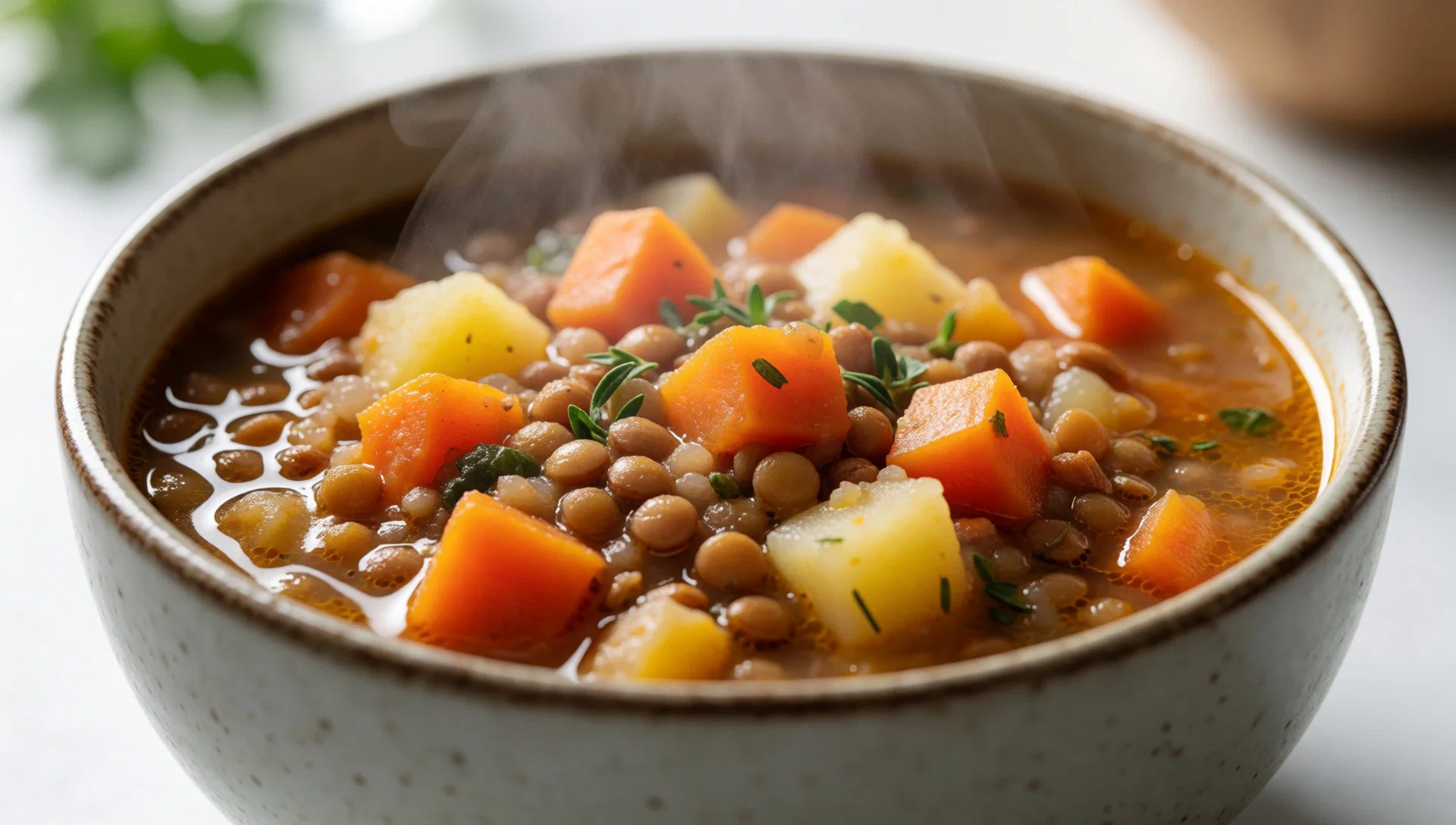
One-Pot Lentil and Vegetable Stew
Ingredients
Method
Notes
Tips for the Best One-Pot Lentil Stew
This stew is forgiving, but a few small habits make a noticeable difference in flavor and texture:
Make-Ahead, Storage, and Reheating
One of the best things about this stew is how well it holds up after cooking. Stored in a sealed container in the refrigerator, it keeps for about 4 to 5 days, and many people find the flavor actually improves after a day or two as the spices continue to meld. It also freezes well for up to about 3 months — lentil-based stews tend to freeze better than cream-based soups, since there’s no dairy to separate or turn grainy once thawed.
To reheat, warm it gently on the stovetop or in the microwave, stirring in a splash of water or broth since the lentils will have thickened further in storage. If reheating from frozen, let it thaw in the refrigerator overnight first for the most even results.
Ways to Customize This Stew
Once you’ve made the base recipe, it’s easy to riff on it depending on what’s in your fridge or what you’re craving:
The Bottom Line
This one-pot lentil and vegetable stew checks a lot of boxes at once: it’s quick enough for a weeknight, inexpensive, naturally gluten-free, and built around an ingredient with real, research-backed health benefits for heart health, blood sugar, and digestion. Make a big batch on a Sunday and you’ve got a freezer stash of comforting dinners ready whenever you need one.
Looking for more ways to build fiber- and protein-rich meals like this one? Check out our guides on how much fiber you really need and how much protein you really need, or try another cozy one-pot dinner with our One-Pot Mediterranean Chickpea and Spinach Stew.
Leave a Reply