These lettuce wraps are a fresh, low-carb way to enjoy tuna salad. Greek yogurt keeps it creamy with less mayonnaise, and crunchy vegetables add texture. It’s the kind of lunch that comes together in about ten minutes but still manages to feel like you planned ahead — a cool, crunchy wrap packed with protein, healthy fats, and almost none of the carbs you’d get from bread or a tortilla.
Why Tuna Salad Lettuce Wraps Work So Well for Lunch
Canned tuna is one of the most convenient protein sources in the pantry — no cooking required, shelf-stable for months, and inexpensive compared to fresh fish. Pairing it with crisp lettuce instead of bread turns a basic tuna salad into a lunch that’s lower in carbohydrates, naturally gluten-free, and still satisfying enough to keep you full through the afternoon. Swapping most of the mayonnaise for Greek yogurt adds extra protein and cuts back on saturated fat without sacrificing the creamy texture that makes tuna salad good in the first place.
The Nutrition Behind This Recipe
Canned tuna earns its reputation as a lunch staple for good reason. A 3-ounce serving of canned white (albacore) tuna packed in water provides roughly 20 grams of protein for about 109 calories, along with meaningful amounts of selenium and vitamin B12, according to a nutrition breakdown compiled from USDA FoodData Central by Cornell University’s seafood marketing program. That same portion contributes omega-3 fatty acids, the type of fat the American Heart Association highlights for heart health — the AHA recommends two servings of fish per week, with “two servings” generally meaning about 6 ounces of cooked fish total.
Tuna is also one of the natural food sources of vitamin D, according to the National Institutes of Health’s Office of Dietary Supplements, which notes that fatty fish such as salmon, tuna, and mackerel are among the best dietary sources of that nutrient — useful to know heading into the lower-sunlight months. Seafood in general, including tuna, is also a natural source of selenium, an essential trace mineral.
Canned Tuna and Mercury: What to Know
Because tuna is a fish that can accumulate mercury, it’s worth understanding the FDA and EPA’s joint guidance, especially if you’re pregnant, may become pregnant, or are feeding tuna to children. According to the FDA, albacore (white) tuna “typically contains three times more mercury than canned light tuna,” which is why the two are treated differently in official advice. Canned light tuna is listed as a “Best Choice” for regular eating, while albacore is a “Good Choice” meant to be eaten less often.
For people who are pregnant or might become pregnant, the FDA’s guidance allows 2 to 3 servings of canned light tuna per week, but only 1 serving of albacore tuna — and no other fish that week if albacore is chosen. For children, the FDA recommends 2 servings per week of fish from the “Best Choices” list, with serving sizes scaled to age (for example, roughly 1 ounce for ages 1–3 and up to 4 ounces for an 11-year-old). For the general adult population, federal dietary guidelines point to at least 8 ounces of seafood per week as part of a balanced, 2,000-calorie diet. If you want to keep this recipe comfortably within that guidance, canned light tuna is the easiest swap to make — the flavor and texture work just as well in a lettuce wrap.
This is general nutrition information, not medical advice. If you’re pregnant, nursing, or have specific health concerns about mercury exposure, talk with your doctor or a registered dietitian about what’s right for you.
Lettuce Wraps vs. Bread or Tortillas: The Carb Difference
The biggest reason this recipe reads as “low-carb” is the wrap itself. Leafy greens like romaine lettuce are extremely low in both calories and carbohydrates compared to the grain-based wraps they replace — a difference large enough that it meaningfully changes the nutritional profile of the whole meal without changing much about how satisfying it feels to eat. Using large, sturdy lettuce leaves (romaine hearts or butter lettuce both work well) in place of a tortilla or a couple of slices of bread lets the tuna salad itself — and its protein and healthy fats — do the work of keeping you full, rather than relying on refined starch.
Why Greek Yogurt Instead of All Mayo
Swapping some of the mayonnaise in traditional tuna salad for plain Greek yogurt is a simple way to boost protein without losing the creamy consistency. According to Harvard Health Publishing, a 6-ounce serving of plain nonfat Greek yogurt contains roughly double the protein of the same amount of regular yogurt — about 18 grams compared to around 7 grams — while both styles contain live cultures. Harvard Health also notes that choosing a low-fat or nonfat Greek yogurt, rather than a whole-milk version, makes it easier to fit into a heart-healthy eating pattern, since whole-milk Greek yogurt can be higher in saturated fat. That extra protein is part of why this version of tuna salad feels just as filling with a lighter hand on the mayonnaise.
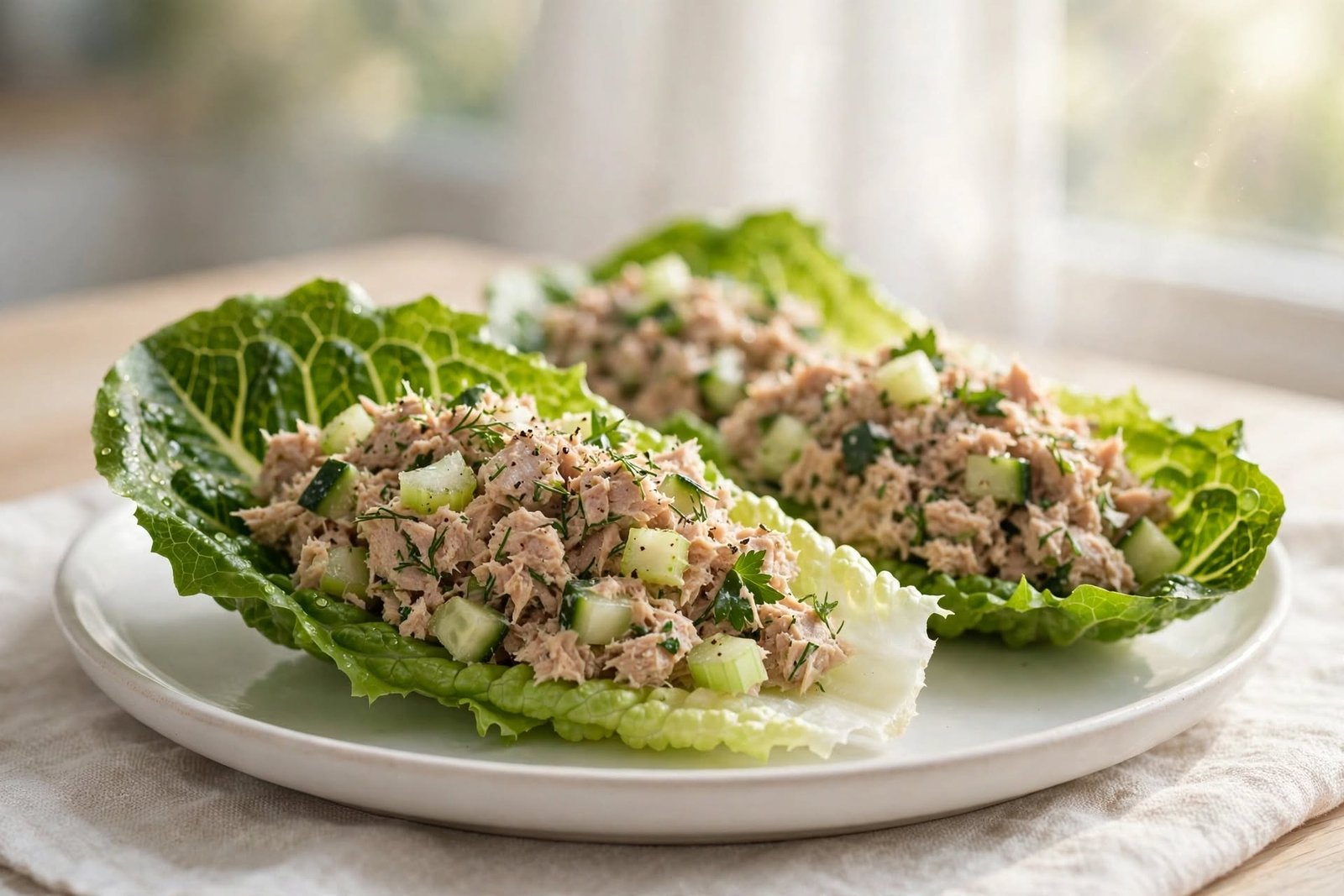
Tuna Salad Lettuce Wraps (Low-Carb Lunch)
Ingredients
Method
- Flake the tuna into a bowl.
- Add the yogurt, mayonnaise, mustard, lemon juice, celery, onion and herbs. Mix well and season.
- Spoon into lettuce leaves and serve with tomatoes and cucumber.
Notes
Tips to Make This Recipe Your Own
- Choose light tuna most often. It’s lower in mercury than albacore and works fine in this recipe — look for “chunk light” in water.
- Add crunch. Diced celery, red onion, or bell pepper all add texture without adding many carbs.
- Brighten it up. A squeeze of lemon juice and a pinch of black pepper cut through the richness and balance the creaminess of the yogurt.
- Swap the wrap. No romaine on hand? Butter lettuce, iceberg, or even cucumber “boats” (halved and hollowed) all work as low-carb vessels.
- Make it spicier. A spoonful of Dijon mustard or a dash of hot sauce mixed into the tuna salad adds flavor without extra carbs.
How to Store and Meal-Prep These Wraps
The tuna salad filling keeps well in an airtight container in the refrigerator for up to 3 to 4 days, which makes it an easy make-ahead lunch for the week. For the best texture, store the lettuce leaves separately and assemble the wraps just before eating — lettuce that sits dressed with the tuna salad for too long will wilt and lose its crunch. If you’re packing lunches for work or school, keep the tuna salad in a small container and the lettuce leaves wrapped loosely in a damp paper towel in a separate bag or container, then build the wraps right before eating.
Pairing Ideas for a Complete, Balanced Lunch
On their own, these wraps make a light, protein-forward lunch, but you can round them out depending on how hungry you are. A side of fresh fruit, a handful of nuts, or a small serving of whole grains (if you’re not watching carbs closely that day) can turn this into a more complete meal. If you’re trying to figure out how much protein you actually need in a day, our guide on how much protein you really need breaks it down by age and activity level. And if low-carb eating in general is new to you, our beginner’s guide to low-carb eating covers the basics without the extremes. For another no-cook, protein-packed option to rotate into your lunch lineup, try our Mediterranean chickpea and quinoa power bowl.
The Bottom Line
Tuna salad lettuce wraps are proof that a low-carb lunch doesn’t have to be complicated or bland. With canned tuna’s protein, omega-3s, and vitamin D, a lighter hand on the mayo thanks to Greek yogurt, and crisp lettuce standing in for bread, this recipe checks a lot of boxes in about ten minutes of hands-on time. Keep a few cans of light tuna in the pantry and a head of romaine in the fridge, and you’re never far from a lunch that’s quick, filling, and genuinely good for you.
Leave a Reply