Important: This guide is general information, not medical advice. If you have diabetes, kidney disease, heart disease or take medication, speak to your doctor before significantly changing how many carbs you eat.
“Low-carb” is one of the most searched diet terms, and one of the most confusing. For some people it means strict keto with almost no bread or fruit. For others it just means fewer pastries and smaller portions of pasta. This guide takes the balanced route: what the evidence actually says, which carbs are worth cutting back on, and how to eat lower-carb without making your diet miserable or unbalanced.
What counts as “low-carb”?
There isn’t one official definition. According to Mayo Clinic’s patient guide to low-carb diets, many strict low-carb diets limit carbohydrates to roughly 20 to 57 grams a day. For comparison, the Dietary Guidelines for Americans suggest carbohydrates make up 45% to 65% of daily calories, which for most adults is well over 200 grams.
So there’s a wide spectrum:
- Very low-carb / ketogenic: usually under about 50 grams a day. Very restrictive and hard to sustain.
- Moderately low-carb: noticeably fewer carbs than usual, with most coming from vegetables, beans, fruit and whole grains.
- “Smarter carb”: not counting grams at all, just swapping refined carbs for whole-food ones and trimming portions.
For most beginners, the moderate or “smarter carb” approach is the most realistic place to start.
What does the research say?
A Mayo Clinic review of low-carb diet studies found that people following low-carb diets lost about 2.5 to 5 pounds more than people on comparison diets, which were usually calorie-restricted or low-fat. The researchers noted no short-term negative health effects, but they also said the studies didn’t look at long-term effects.
In other words: lower-carb eating can help some people lose weight in the short term, but the advantage over other sensible approaches is modest. The best eating pattern is the one you can stick with.
Carbs to cut back on
These are the carbs most worth reducing, whatever approach you take:
- Sugary drinks: soda, sweetened iced tea, energy drinks and most juices
- Sweets and pastries: cookies, cakes, donuts and candy
- Refined grains: white bread, white rice, regular pasta and many breakfast cereals
- Highly processed snacks: chips, crackers and sweetened granola bars
- Hidden sugar: flavored yogurts, sauces, dressings and “healthy” snack bars
Carbs worth keeping
Not all carbohydrate foods behave the same. These bring fiber, vitamins and minerals along with their carbs:
- Non-starchy vegetables: leafy greens, broccoli, cauliflower, peppers, zucchini, tomatoes. Eat these freely.
- Beans and lentils: higher in carbs, but also packed with fiber and protein.
- Whole fruit: especially berries, apples and citrus.
- Whole grains in modest portions: oats, quinoa, brown rice, barley.
- Plain dairy: Greek yogurt and milk.
Cutting all of these out is where many strict low-carb diets go wrong. You can lose a lot of fiber, which matters for digestion and heart health.
How to build a balanced lower-carb meal
A simple template:
- Start with a big serving of non-starchy vegetables, about half the plate.
- Add a palm-sized portion of protein: fish, chicken, eggs, tofu, lean meat or beans.
- Include some healthy fat: olive oil, avocado, nuts or seeds.
- Add a small portion of whole-food carbs if you like: a few spoonfuls of quinoa, beans or sweet potato, or a piece of fruit.
This is similar to the balanced plate, just with a smaller carb section.
Easy lower-carb swaps
- Lettuce wraps instead of bread or tortillas. Our Tuna Salad Lettuce Wraps take 10 minutes.
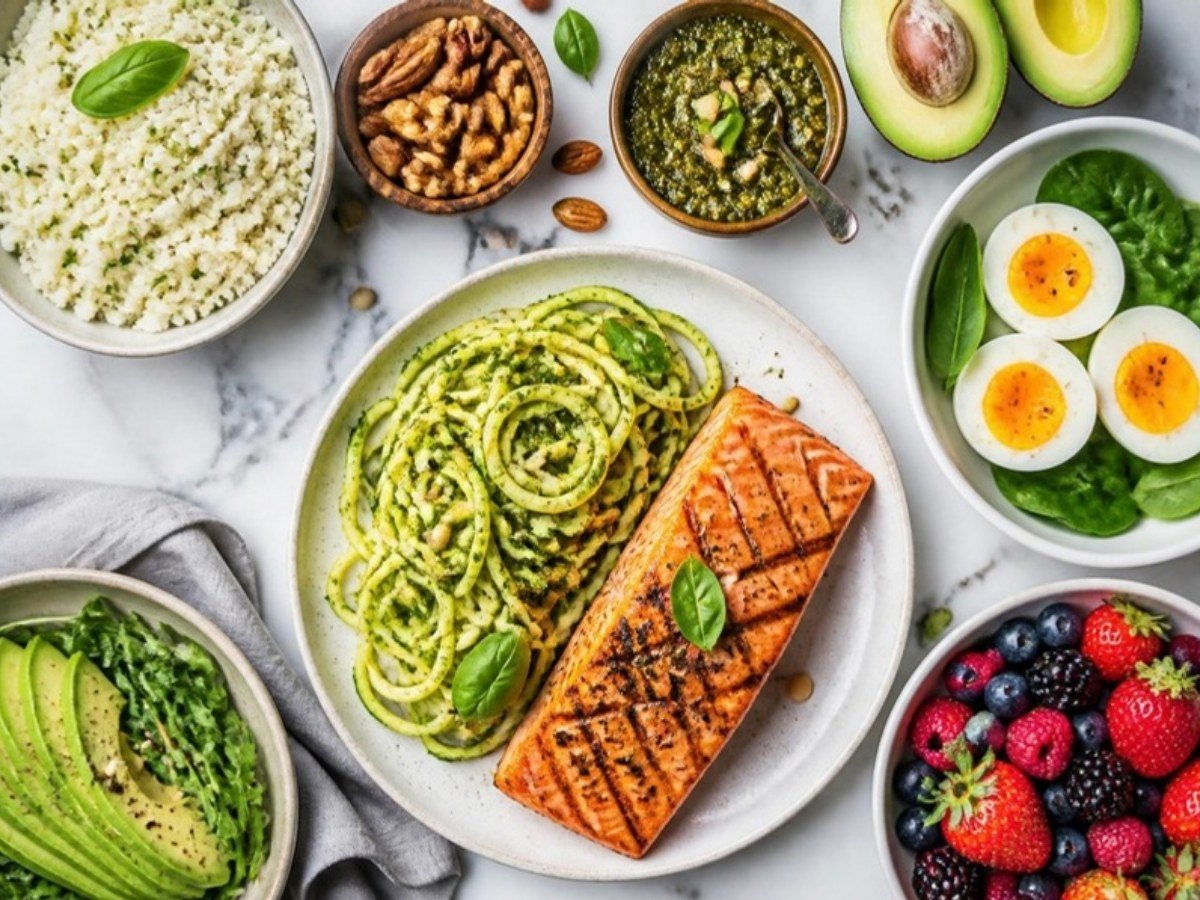
- Cauliflower rice or extra vegetables instead of a full bowl of rice.
- Eggs and vegetables for breakfast instead of cereal or toast, like our Spinach and Feta Egg Muffins.
- Zucchini noodles mixed half-and-half with pasta, so you still get the pasta you like.
- Plain Greek yogurt with berries instead of flavored yogurt.
- A sheet-pan dinner of protein and roasted vegetables, like our Sheet-Pan Shrimp Fajitas served in lettuce or with a single tortilla.
A sample lower-carb day
- Breakfast: Veggie omelet with spinach, peppers and feta
- Lunch: Tuna salad lettuce wraps with cherry tomatoes and cucumber
- Snack: A handful of almonds and a few strawberries
- Dinner: Chicken and broccoli stir-fry with a small scoop of brown rice. Try our Easy Chicken and Broccoli Stir-Fry.
What to watch out for
- The first few days can feel rough. Some people notice tiredness, headaches or irritability when they sharply reduce carbs. A gentler reduction usually avoids this.
- Constipation. If fiber drops, digestion can slow down. Keep eating vegetables, beans and seeds, and drink enough water.
- Swapping carbs for processed meat. Processed meats are low in carbs but aren’t great everyday foods. Choose fish, poultry, eggs, beans and tofu more often.
- Medication. If you take medicine for diabetes or blood pressure, cutting carbs can change how much you need. Talk to your doctor first.
Who should be careful
Check with a doctor before starting a strict low-carb diet if you:
- have diabetes, especially if you take insulin or sulfonylureas
- have kidney disease
- are pregnant or breastfeeding
- have a history of disordered eating
Frequently asked questions
Is low-carb the same as keto?
No. Keto is a very strict form of low-carb eating. Most people can get benefits from a moderate reduction without going that far.
Can I eat fruit on a low-carb diet?
In a moderate approach, yes. Berries are lower in sugar and high in fiber, so they’re a good choice.
Will I regain weight if I start eating carbs again?
If you go back to eating more than you need, you may. That’s why a sustainable, balanced approach usually works better than a very strict one.
Sources
- Mayo Clinic, Low-carb diet: Can it help you lose weight? (Mayo Clinic health library)
- Mayo Clinic News Network, Low-carb diet findings and cautions
- U.S. Department of Agriculture & HHS, Dietary Guidelines for Americans
Disclaimer: This article is for general information only and is not medical advice. Read our full Disclaimer.


Leave a Reply