If counting calories, macros or points sounds exhausting, the balanced plate method is for you. It uses the one tool you already have at every meal, your plate, to get the proportions roughly right. No app, no scale, no spreadsheet.
Versions of this idea are used by the USDA’s MyPlate, Harvard’s Healthy Eating Plate and the American Diabetes Association’s Diabetes Plate. They differ in the details, but the core idea is the same: lots of vegetables, some protein, some quality carbs.
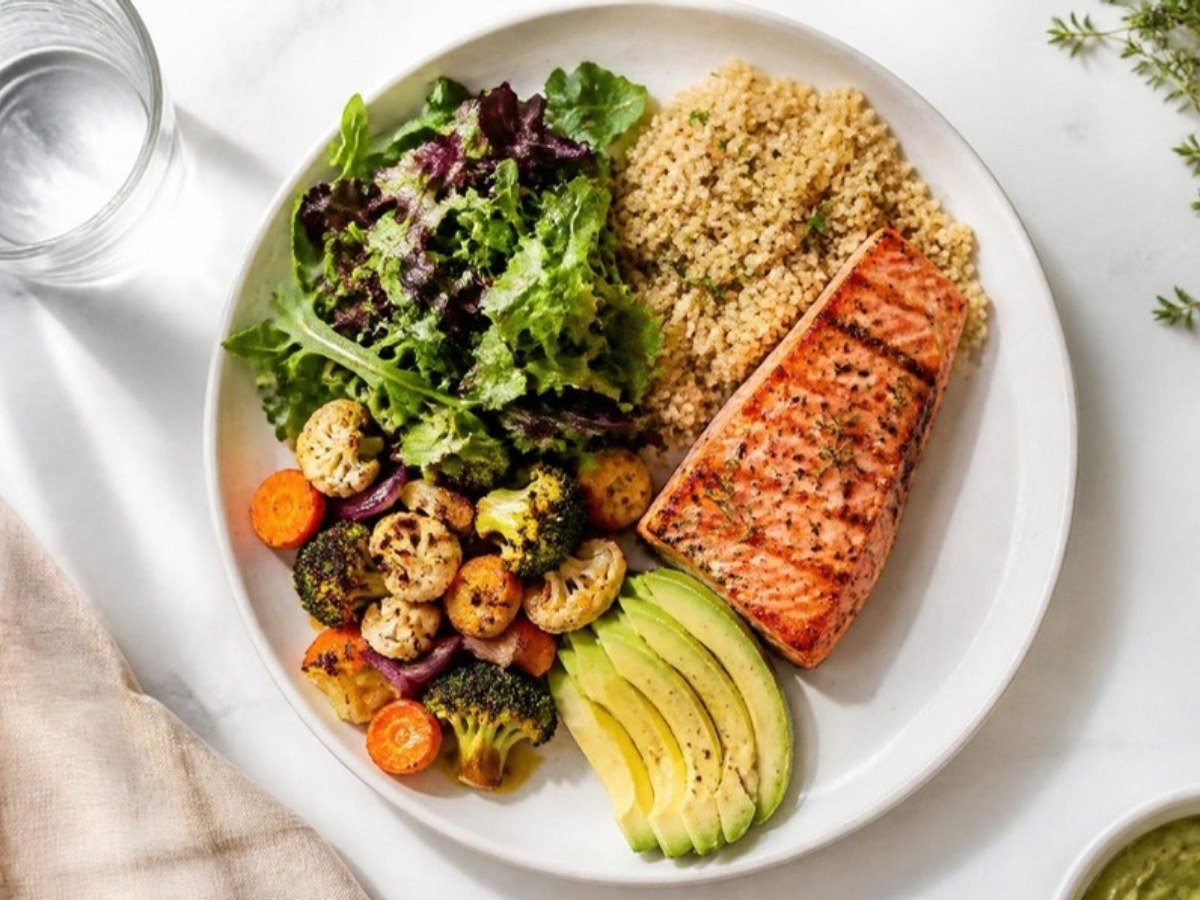
The basic balanced plate
Picture a regular dinner plate, about 9 to 10 inches across:
- Half: vegetables (and some fruit). The bigger the variety of colors, the better.
- One quarter: protein. Fish, poultry, eggs, beans, lentils, tofu or lean meat.
- One quarter: whole grains or starchy foods. Brown rice, quinoa, whole-grain pasta or bread, potatoes, sweet potatoes, corn.
- A little healthy fat. Olive oil for cooking or dressing, a few nuts, some avocado.
- To drink: water. Or another unsweetened drink.
That’s the whole method.
Section 1: Vegetables (half the plate)
This is the section most people underfill. Vegetables add bulk, fiber, vitamins and minerals for relatively few calories, so they help you feel full.
Easy options: salad greens, broccoli, green beans, carrots, peppers, tomatoes, cauliflower, zucchini, cabbage, mushrooms, and frozen mixed vegetables.
Tips:
- Roast a big tray at the start of the week and add a scoop to every meal.
- Frozen vegetables count and are ready in minutes.
- Potatoes and corn count as starchy foods, not in this section.
👨🍳 Chef Nadeem’s tip: Vegetables taste far better when they’re browned, not steamed. Roast or sauté them at 400–450°F (200–230°C) and give the pieces plenty of space in the pan so moisture can escape. That high heat caramelizes their natural sugars and gives them a savory, nutty flavor.
Struggling here? Our 10 Easy Ways to Eat More Vegetables has practical tricks.
Section 2: Protein (one quarter)
Protein helps you feel satisfied and supports muscle. Vary your sources through the week:
- Fish and seafood: salmon, tuna, sardines, shrimp
- Poultry: chicken or turkey
- Eggs
- Plant proteins: beans, lentils, chickpeas, tofu, tempeh
- Dairy: Greek yogurt, cottage cheese
- Red meat: lean cuts in smaller amounts
A quarter plate of meat or fish is roughly the size of your palm.
Section 3: Whole grains and starchy foods (one quarter)
Carbs give you energy, and whole grains bring fiber too. Choose whole-grain or less-processed options most of the time:
- Brown rice, quinoa, barley, bulgur, farro
- Whole-wheat pasta, bread and wraps
- Oats
- Potatoes and sweet potatoes, ideally with the skin on
Keeping this to a quarter of the plate is especially useful if you’re managing your weight or blood sugar.
Don’t forget healthy fats
A small amount of fat helps your body absorb some vitamins and makes food taste better. Use olive oil or other plant oils for cooking and dressings, and add nuts, seeds or avocado in modest amounts. They’re healthy but calorie-dense, so a drizzle beats a pour.
Balanced plate examples
Breakfast: Two scrambled eggs, sautéed spinach and tomatoes, one slice of whole-grain toast. Or our Spinach and Feta Egg Muffins with fruit.
Lunch: A big salad with chickpeas, cucumber, peppers and feta, with a small whole-grain pita. See our Mediterranean Chickpea Salad.
Dinner: Baked salmon, roasted broccoli and carrots, and a small serving of brown rice, like our Diabetes-Friendly Baked Salmon.
What about mixed dishes?
Stews, curries, pasta dishes and stir-fries don’t sit neatly in sections. Ask two questions:
- Is roughly half of this dish vegetables? If not, add a side salad or extra vegetables.
- Is the carb portion taking over? If a bowl is mostly pasta or rice, serve less of it and add more vegetables and protein.
Our Easy Chicken and Broccoli Stir-Fry is a good example of a mixed dish that’s already balanced.
Using the plate when eating out
- Order a side salad or vegetables if the main dish doesn’t include them.
- Ask for dressing on the side.
- Restaurant portions are large, so box half before you start.
- Pizza night? Add a big salad and have one or two slices fewer.
Common mistakes
- Letting the carb section creep up. Pasta and rice tend to expand to fill the plate.
- Using a huge plate. A giant plate makes “half vegetables” a lot of everything else too.
- Forgetting drinks. Juice and soda add sugar the plate doesn’t account for.
- Chasing perfection. Getting close most of the time is plenty.
👨🍳 Chef Nadeem’s tip: Healthy food fails when it’s bland. Season in layers while you cook, not just at the end, and finish stews, lentils and roasted vegetables with a squeeze of lemon or a splash of apple cider vinegar. That little bit of acid makes the whole plate taste brighter.
Frequently asked questions
Do I need to use this at every meal?
No. Use it as a guide for most meals. Snacks and treats can still fit around it.
Does it work for vegetarians?
Yes. Fill the protein quarter with beans, lentils, tofu, eggs or dairy.
Is it enough for weight loss?
For many people, simply filling half the plate with vegetables reduces portions of higher-calorie foods. See our Healthy Weight Loss Without Dieting guide for more.
Sources
- U.S. Department of Agriculture, MyPlate
- Harvard T.H. Chan School of Public Health, Healthy Eating Plate
- American Diabetes Association, What is the Diabetes Plate?
Disclaimer: This article is general information, not medical or nutrition advice. If you have a health condition, talk to your doctor or a registered dietitian about what’s right for you. Read our full Disclaimer.
Leave a Reply