Important: This is general information, not medical advice. If you have a medical condition, take medication, are pregnant, or have a history of disordered eating, talk to your doctor before trying to lose weight.
Most diets fail for a boring reason: they’re too hard to keep doing. Cutting out entire food groups, eating the same three meals, or living on shakes can work for a couple of weeks. Then life happens, and the weight comes back.
The alternative isn’t exciting, but it’s what the evidence supports. According to the CDC’s Steps for Losing Weight, people who lose weight at a gradual, steady pace of about 1 to 2 pounds (roughly 0.5 to 1 kg) a week are more likely to keep it off than people who lose it faster. The CDC also points out that healthy weight loss involves a whole lifestyle: good nutrition, regular physical activity, enough sleep and stress management.
Here are twelve habits that support that kind of slow, lasting change.
First, a realistic goal
You don’t need a dramatic transformation to see health benefits. The CDC notes that even modest weight loss can improve blood pressure, cholesterol and blood sugar. For someone who weighs 200 pounds, a 5% loss is 10 pounds. That’s a meaningful, reachable first target.
1. Know your “why”
The CDC’s first step is to write down why you want to lose weight: more energy to play with your kids, a family history of heart disease, or feeling more comfortable being active. Put the list somewhere you’ll see it. On the days motivation disappears, your reasons are still there.
2. Fill half your plate with vegetables
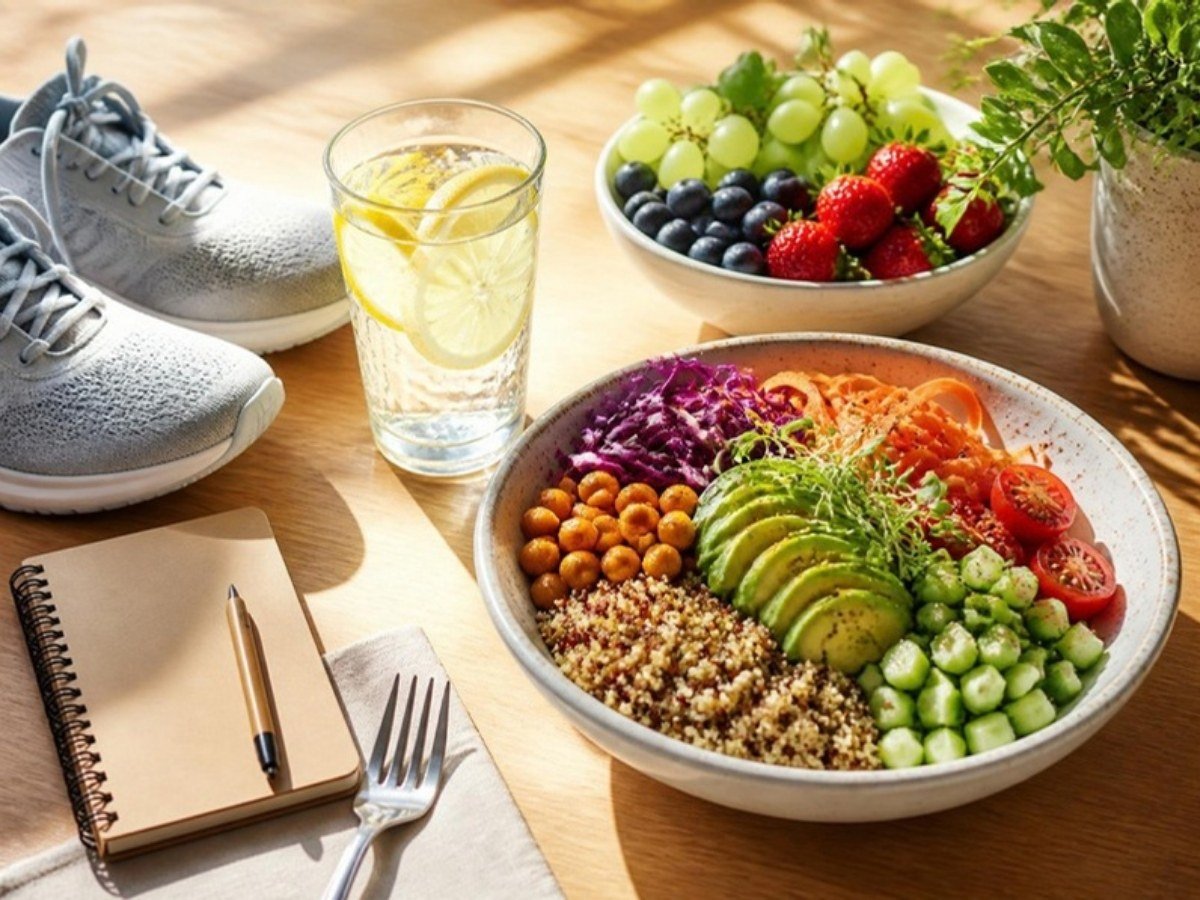
Vegetables add volume and fiber with relatively few calories, so you feel full on less. The simplest rule is half the plate vegetables, a quarter protein, a quarter whole-grain or starchy carbs. Our guide to building a balanced plate walks through it.
3. Get protein at every meal
Protein helps you feel satisfied for longer. Eggs, Greek yogurt, beans, lentils, tofu, fish and chicken all count. A breakfast like our Spinach and Feta Egg Muffins is easy to prep ahead for busy mornings.
4. Drink water instead of sugary drinks
Regular soda, sweetened coffee drinks, energy drinks and juice can add a lot of calories without making you feel full. Swapping even one sugary drink a day for water, sparkling water or unsweetened tea is one of the easiest changes you can make.
5. Choose whole foods most of the time
Highly processed snacks are easy to overeat. Building meals around foods close to their natural form, such as vegetables, fruit, beans, whole grains, eggs, fish and nuts, makes portion control easier without much effort.
6. Watch portions, not just food choices
Healthy foods still have calories. Olive oil, nuts, granola and smoothies are nutritious but easy to overdo. Using a smaller plate, measuring oil with a spoon instead of pouring, and serving food in the kitchen rather than at the table are simple ways to keep portions in check.
7. Don’t skip meals and “save up”
Skipping breakfast or lunch often backfires. You get very hungry and overeat later. Regular meals with protein and fiber keep hunger more even through the day.
8. Plan and prep a little
You don’t need a full Sunday meal-prep marathon. Cooking a pot of grains, roasting a tray of vegetables and preparing one protein gives you building blocks for several meals. Our 7-Day Healthy Meal Plan for Beginners is a good template.
9. Move more in ways you enjoy
The CDC’s physical activity guidelines for adults recommend at least 150 minutes of moderate-intensity activity a week, like brisk walking, plus muscle-strengthening activity on two days. If that feels like a lot, start with 10-minute walks and build up. The best exercise is the one you’ll actually keep doing.
10. Protect your sleep
Short or poor sleep can make you hungrier and more likely to reach for high-calorie foods. A consistent bedtime and fewer screens before bed are small changes that can help.
11. Track something simple
The CDC suggests tracking your eating, activity and sleep to see where you are. That doesn’t have to mean counting every calorie. You could write down what you eat for a week, count daily steps, or note how many days you had vegetables at lunch. Tracking helps you notice patterns you’d otherwise miss.
12. Expect slow progress and plan for slip-ups
Weight naturally goes up and down day to day because of water, salt and digestion. Weigh yourself at the same time of day, no more than once or twice a week, and look at the trend over a month instead of a single number. When you have an off day, and everyone does, just make the next meal a normal one. There’s no need to “start again Monday.”
What to expect in the first month
- Week 1–2: The scale may drop quickly at first, partly from water. Don’t expect that pace to continue.
- Week 3–4: Progress slows to the steadier 1–2 pounds a week range, or less. That’s normal and healthy.
- Non-scale wins: Better energy, fewer afternoon crashes and clothes fitting differently often show up before big changes on the scale.
👨🍳 How I cook calorie-conscious meals for guests
In hotels and on cruise ships, weight-loss and calorie-conscious menus had strict calorie limits, but guests still expected a generous plate that looked good. These are the techniques I used:
- Volume and fiber. I built generous portions on high-water, high-fiber ingredients like zucchini, mushrooms, spinach and roasted root vegetables. They look impressive without adding many calories.
- Measured fat, not no fat. Instead of pan-frying in pools of butter or oil, I measured the oil with a brush or a light spray, then finished the dish with one small, high-flavor touch, like a drop of sesame oil or a few shaved nuts.
- Juicy lean protein. I kept chicken breast and white fish moist by poaching, steaming over an aromatic broth, or cooking en papillote (sealed in parchment paper), rather than adding fat.
— Chef Nadeem
Mistakes that stall progress
- Cutting too much, too fast. Very low-calorie diets are hard to sustain and can leave you tired and hungry.
- Relying on exercise alone. Activity is great for health, but it’s easy to eat back the calories you burn.
- “Healthy” foods in unlimited amounts. Nuts, avocado, granola and dried fruit are nutritious but calorie-dense.
- All-or-nothing thinking. One slice of cake doesn’t undo a week of good choices.
👨🍳 Chef Nadeem’s tip: Don’t strip all the fat out of your cooking. A small drizzle of olive oil, a few toasted nuts or some avocado helps your body absorb vitamins A, D, E and K and keeps you full longer, so you’re less likely to snack an hour later. And skip ultra-processed “diet” products. They’re often full of hidden sugar and sodium, and real food satisfies you more.
Frequently asked questions
How fast should I lose weight?
The CDC suggests about 1 to 2 pounds a week for weight loss that’s more likely to last.
Do I have to give up carbs?
No. Whole grains, beans, fruit and starchy vegetables can all fit. Portion size and quality matter more than cutting carbs completely. See our Balanced Beginner’s Guide to Low-Carb Eating if you’re curious about a lower-carb approach.
When should I get professional help?
If you’ve tried for several months without progress, have a health condition, or feel your relationship with food is becoming stressful, talk to your doctor or a registered dietitian.
Sources
- Centers for Disease Control and Prevention, Steps for Losing Weight
Disclaimer: This article is for general information only and is not a substitute for personalized advice from a qualified health professional. Read our full Disclaimer.

Leave a Reply