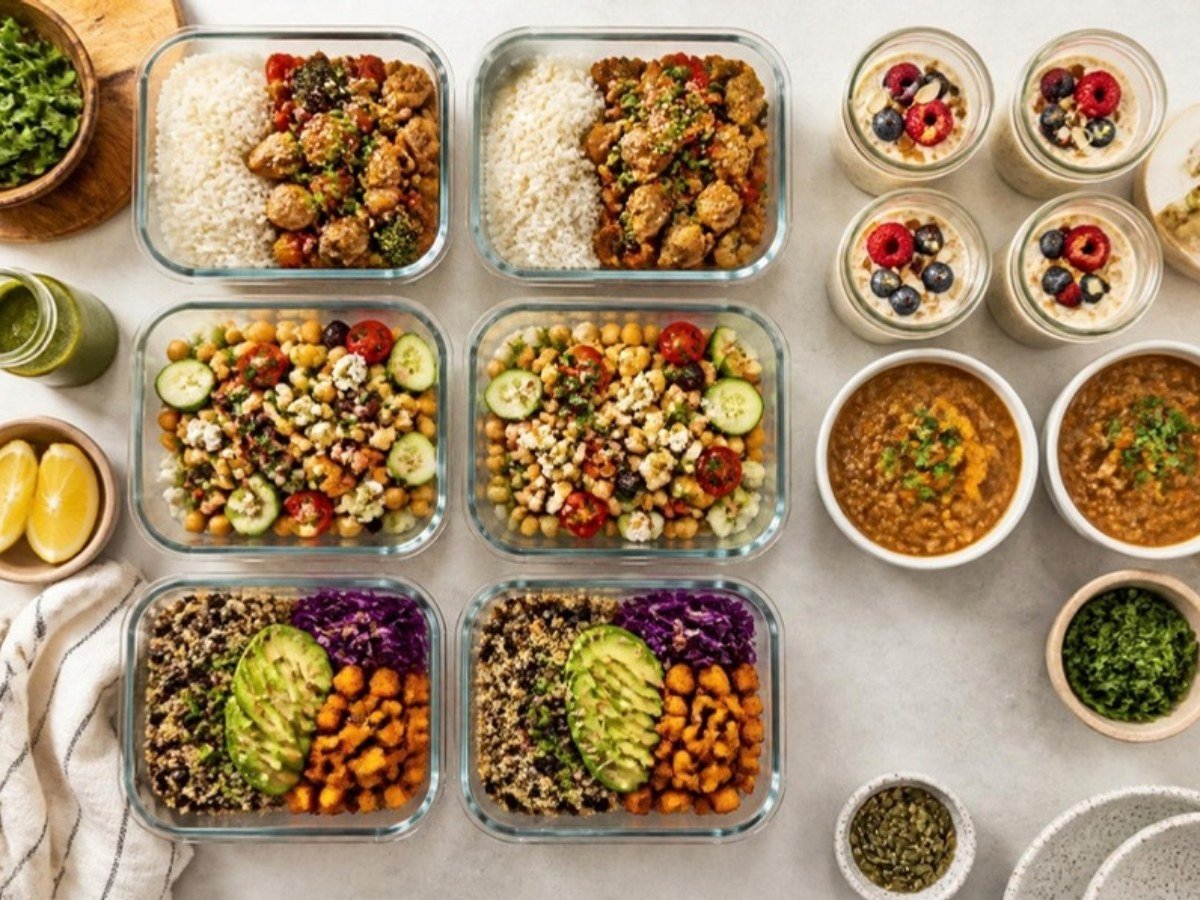
Starting to eat healthier is a lot easier when you already know what is for breakfast, lunch, and dinner. This beginner-friendly 7-day meal plan leans on simple recipes and repeated ingredients, so you spend less time deciding what to cook, waste less food, and still eat meals that actually taste good. It is built around a short Sunday prep session, a rotation of make-ahead staples, and a handful of fresh-cooked dinners that come together in 30 minutes or less. Adjust portion sizes to your own appetite, activity level, and goals — this is a framework to build on, not a strict prescription.
This article shares general nutrition information for healthy adults and is not medical advice. If you have a medical condition, are pregnant or breastfeeding, or take medication that interacts with food, talk with your doctor or a registered dietitian before changing your diet.
Why a 7-Day Plan Works So Well for Beginners
Most people who quit a new eating plan do not quit because the food is bad — they quit because deciding what to cook, every single day, is exhausting. A written 7-day plan removes that decision fatigue. You shop once, prep once, and then follow a map instead of improvising from an empty fridge at 6 p.m. Repeating a few core ingredients across multiple meals — the same roasted vegetables, the same batch of grains, the same marinated protein — also means less food gets forgotten in the back of the fridge and thrown out, which is good for your wallet and for the planet.
What Current Nutrition Guidance Says About Building a Plate
The USDA updated its Dietary Guidelines for Americans in early 2026, and the familiar MyPlate graphic has been replaced with a new, inverted food pyramid. Whole grains now sit at the base of the pyramid as a foundation food, while protein, dairy, fruits and vegetables, and healthy fats are grouped across the top tiers as foods to prioritize at most meals. The updated guidance also encourages eating some form of protein at each meal, choosing whole-food fats you already cook with, and limiting added sugars and ultra-processed foods. This plan reflects that shift: every day includes a protein source at breakfast, lunch, and dinner, whole grains show up as a base rather than an afterthought, and vegetables fill a generous share of the plate at most meals.
Prep Day: Sunday (About 1 Hour)
One focused hour on Sunday sets up the entire week. Do these four things in whatever order fits your kitchen flow:
- Make a batch of overnight oats (3 jars) and spinach-feta egg muffins.
- Cook a pot of quinoa and roast a tray of sweet potatoes and chickpeas.
- Make the Mediterranean chickpea salad.
- Wash and cut vegetables for snacks, and portion the week’s protein so dinners come together fast.
If an hour feels like too much on your first try, split it into two 30-minute sessions — one for grains and roasted vegetables, one for the salad and snack prep. The plan still works either way.
The 7-Day Plan
Monday
- Breakfast: Overnight oats with berries
- Lunch: Mediterranean chickpea salad
- Dinner: Chicken and broccoli stir-fry with brown rice
- Snack: Apple with peanut butter yogurt dip
Tuesday
- Breakfast: 2 egg muffins and a piece of fruit
- Lunch: Leftover stir-fry
- Dinner: One-pot lentil and vegetable stew
- Snack: Roasted chickpeas
Wednesday
- Breakfast: Green protein smoothie
- Lunch: Quinoa power bowl
- Dinner: Sheet-pan shrimp fajitas
- Snack: Carrots and hummus
Thursday
- Breakfast: Overnight oats
- Lunch: Leftover lentil stew
- Dinner: Baked salmon with roasted vegetables
- Snack: Greek yogurt with berries
Friday
- Breakfast: 2 egg muffins and fruit
- Lunch: Turkey and hummus veggie wrap
- Dinner: Homemade pizza night on whole-wheat crust, loaded with vegetables
- Snack: Handful of almonds
Saturday
- Breakfast: Veggie omelet with whole-grain toast
- Lunch: Quinoa power bowl
- Dinner: Leftover makeover or eat out mindfully
- Dessert: Greek yogurt berry parfait
Sunday
- Breakfast: Overnight oats
- Lunch: Big salad with leftover protein
- Dinner: Lentil stew from the freezer
- Dessert: Chocolate banana nice cream
Food Safety Tips for Meal Preppers
Batch cooking only saves time if the food stays safe to eat. According to FoodSafety.gov, perishable food should go into the refrigerator within two hours of coming out of the oven or off the stove, and within just one hour if the room is hotter than 90°F, such as a hot kitchen or a summer picnic. Once food is refrigerated, plan to eat it or freeze it within about four days. Frozen food stays safe indefinitely, though quality is best within two to six months, and leftovers should be reheated to 165°F before eating.
- Use small, shallow containers for anything you refrigerate — they cool food faster than one big pot, which keeps food out of the bacteria-friendly temperature range longer.
- Label containers with the day you cooked them so nothing lingers past day four.
- Freeze half a batch of soup or stew right away if you know you will not finish it within four days.
Tips for Success
- Do not aim for perfection. Following the plan most days is a big win. If Tuesday goes sideways, pick the plan back up on Wednesday instead of starting over next Monday.
- Swap freely. Any meal in this plan can trade places with another meal in the plan if it suits your schedule better — the ingredients were chosen to overlap, so swapping will not blow up your grocery list.
- Drink water throughout the day. Keeping a water bottle nearby during prep and meals makes it easier to notice true hunger instead of mistaking thirst for it.
- Keep a running grocery list on your phone as you cook through the week, so Sunday’s shopping trip takes five minutes instead of twenty.
- Taste as you go. A squeeze of lemon, a pinch of salt, or a dash of your favorite spice blend can make a repeated base ingredient, like quinoa or roasted chickpeas, taste different enough each time that it never feels boring.
Frequently Asked Questions
Can I double this plan for two people?
Yes. Everything here scales up easily — just double the batch-cooked items (oats, egg muffins, quinoa, roasted vegetables) on Sunday, and cook dinners in a slightly larger pan.
What if I do not like one of the meals?
Swap it for another meal already in the plan, or repeat a favorite day twice. The goal is a sustainable week, not a rigid script.
Do I need to count calories to use this plan?
No. This plan is built around balanced, whole-food meals rather than a specific calorie target. Adjust portion sizes up or down based on your own hunger, activity level, and goals, and check with a registered dietitian if you want individualized numbers.
The Bottom Line
A good beginner meal plan should make your week easier, not stricter. This one leans on a single prep session, a short list of repeated staples, and a protein, a vegetable, and a whole grain at nearly every meal — the same priorities reflected in the USDA’s updated 2025-2030 dietary guidance. Follow it loosely, swap what does not fit, and keep the food safety basics in mind, and you will land the week with less stress and a fridge full of food you actually want to eat.
Leave a Reply