I’ve cooked Mediterranean food professionally in very different settings, from high-volume service on cruise ships out of Miami to running coastal Italian takeaway operations in Bermuda. Across 35 years, from the Middle East to the US, I’ve found it always comes down to the same principles: absolute respect for ingredient quality, clean high-heat cooking, and balancing fat with fresh acid. — Chef Nadeem
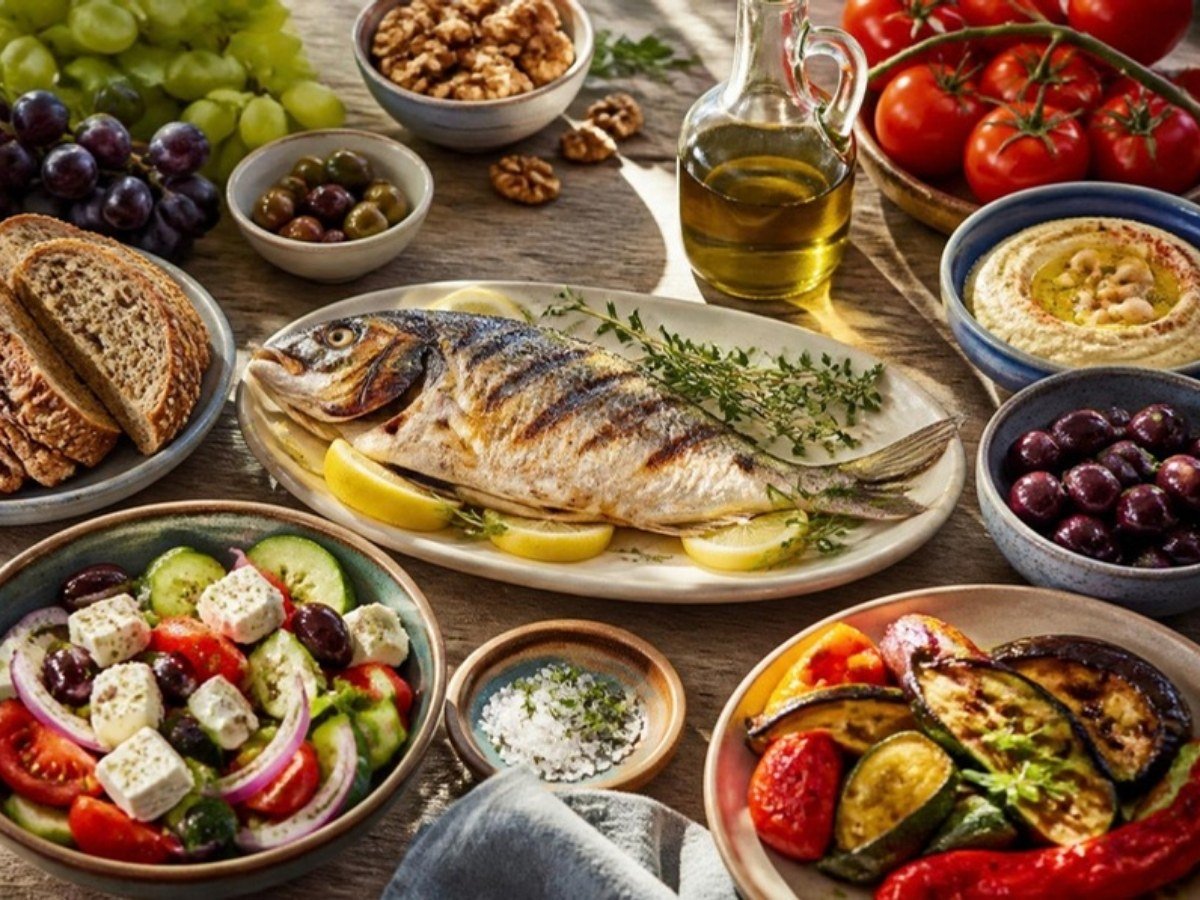
The Mediterranean diet shows up at the top of “healthiest diets” lists year after year. That isn’t because of a secret superfood. It’s a relaxed, flexible way of eating built on vegetables, beans, whole grains, fish and olive oil, and it happens to be one of the easiest healthy eating patterns to actually enjoy.
This guide covers what it is, why health experts like it, what to eat more and less of, and how to start this week.
What is the Mediterranean diet?
It’s based on the traditional eating habits of countries around the Mediterranean Sea, such as Greece, Italy and Spain. As Mayo Clinic Health System explains, it blends the basics of healthy eating with the traditional flavors and cooking methods of the region.
It’s less a strict diet and more a pattern:
- Every day: vegetables, fruit, whole grains, beans and lentils, nuts and seeds, herbs and spices, and olive oil as the main fat
- Often (at least twice a week): fish and seafood
- In moderation: poultry, eggs, cheese and yogurt
- Occasionally: red meat and sweets
There’s no calorie counting and no banned food groups, which is a big part of why people stick with it.
Why is it considered heart-healthy?
Interest began in the 1960s, when researchers observed fewer deaths from heart disease in Mediterranean countries such as Greece and Italy than in the United States and northern Europe. Since then, research has linked the Mediterranean diet with reduced risk factors for cardiovascular disease.
It’s also one of the healthy eating patterns included in the Dietary Guidelines for Americans to promote health and help prevent chronic disease.
A few features likely help:
- Olive oil and nuts provide mostly unsaturated fats instead of saturated fats.
- Fish provides omega-3 fatty acids.
- Vegetables, beans and whole grains provide lots of fiber.
- Less processed food and red meat means less saturated fat, salt and added sugar.
For more heart-focused tips, see our Heart-Healthy Eating guide.
Foods to eat more of
Vegetables: tomatoes, leafy greens, eggplant, peppers, zucchini, onions, garlic, cucumbers, artichokes.
Fruit: fresh fruit as a snack or dessert, such as oranges, grapes, figs, berries and apples.
Whole grains: whole-wheat bread, bulgur, farro, barley, oats, brown rice and whole-grain pasta.
Beans and lentils: chickpeas, lentils, white beans and kidney beans. They’re cheap, filling and versatile.
Nuts and seeds: almonds, walnuts, pistachios and sesame seeds (including tahini). A small handful is a serving.
Fish and seafood: salmon, sardines, tuna, mackerel, shrimp and mussels.
Extra virgin olive oil: for cooking, roasting and dressings.
Herbs and spices: oregano, basil, parsley, rosemary, cumin and lemon add flavor so you need less salt.
Foods to eat less of
- Red and processed meats
- Butter and other saturated fats (use olive oil instead)
- Sugary drinks, sweets and pastries
- Refined grains and highly processed snacks
A simple Mediterranean shopping list
If you’re starting from scratch, these staples cover most meals:
- Extra virgin olive oil
- Canned chickpeas, lentils and white beans
- Canned tomatoes and passata
- Canned tuna or sardines
- Whole-grain pasta, bulgur or brown rice
- Oats
- A bag of mixed nuts
- Plain Greek yogurt
- Feta cheese
- Lemons, garlic and onions
- Fresh or frozen spinach
- Whatever vegetables and fruit are in season
Our Healthy Pantry Staples Checklist has more ideas.
A sample Mediterranean day
- Breakfast: Plain Greek yogurt with berries, walnuts and a drizzle of honey
- Lunch: Our Mediterranean Chickpea Salad with cucumber, tomatoes, red onion, feta and a lemon-olive oil dressing
- Snack: An orange and a small handful of almonds
- Dinner: Our One-Pot Mediterranean Chickpea and Spinach Stew with a slice of whole-grain bread, or baked salmon with roasted vegetables
👨🍳 How I cook heart-healthy meals for guests
Heart-healthy and low-salt meals were a regular request on cruise ships and in hotels. The challenge is taking out sodium and saturated fat without making the food taste flat or washed out. My approach lines up closely with Mediterranean cooking:
- Acid and umami instead of salt. Fresh citrus zest, finishing vinegars like aged balsamic or apple cider, plus roasted garlic, tomato paste, caramelized onions, toasted spices and fresh herbs.
- Searing and roasting. Dry, high-heat cooking builds deep, caramelized flavor that makes up for using less salt.
- Better fats. Cold-pressed extra virgin olive oil, avocado oil or a nut-based drizzle to finish, instead of butter, heavy cream or animal fats.
- Homemade stock. Low-sodium vegetable, chicken or fish stock, reduced down for body, instead of salty commercial stock bases.
— Chef Nadeem
How to start without overhauling everything
You don’t have to change your whole diet at once. Try one step per week:
- Week 1: Cook with olive oil instead of butter.
- Week 2: Have one meatless meal built on beans or lentils.
- Week 3: Eat fish twice.
- Week 4: Swap one refined grain (white bread or white rice) for a whole-grain version.
- Week 5: Replace one sweet snack a day with fruit or a handful of nuts.
After five weeks, you’re eating in a mostly Mediterranean way without a dramatic “diet day one.”
Common mistakes
- Pouring olive oil freely. It’s a healthy fat but calorie-dense. Measure with a spoon if you’re watching your weight.
- Treating pasta and pizza as the main event. Traditional Mediterranean meals have smaller pasta portions with lots of vegetables and beans.
- Forgetting the lifestyle side. The traditional pattern also includes regular physical activity and shared meals.
Frequently asked questions
Can the Mediterranean diet help with weight loss?
It can, especially if it replaces a diet high in processed foods. Portions still matter, particularly with olive oil, nuts, bread and cheese.
Is it expensive?
It doesn’t have to be. Beans, lentils, oats, canned fish, frozen vegetables and seasonal produce keep costs down. See our Budget-Friendly Healthy Meal Plan.
Is it suitable for vegetarians?
Yes. Beans, lentils, eggs, dairy, nuts and whole grains already make up much of the diet.
Sources
- Mayo Clinic Health System, Eating for your heart: the Mediterranean diet
- U.S. Department of Agriculture & HHS, Dietary Guidelines for Americans
Disclaimer: This article is for general information only. If you have a heart condition or other health concerns, talk to your doctor or a registered dietitian before changing your diet. Read our full Disclaimer.
Leave a Reply