Healthy food does not have to be expensive. Some of the most nutritious foods, like beans, lentils, oats, eggs and frozen vegetables, are also among the cheapest items in the store. This plan shows how to build three days of balanced, satisfying meals around them, with a short shopping list and a few habits that stretch your grocery budget even further.
Why Cheap and Healthy Are Not Opposites
It is a common assumption that eating well means spending more, but the opposite is often true. Dried and canned beans, lentils, oats, eggs, frozen vegetables and canned fish are consistently some of the least expensive items per serving in a grocery store, and they also happen to be nutrient-dense: high in fiber, protein, or both, and shelf-stable so very little goes to waste. The USDA’s Thrifty Food Plan, the government benchmark used to set food-assistance budgets, is built around exactly this kind of staple-first grocery list, which is a good sign that a budget plan like this one can still be genuinely healthy.
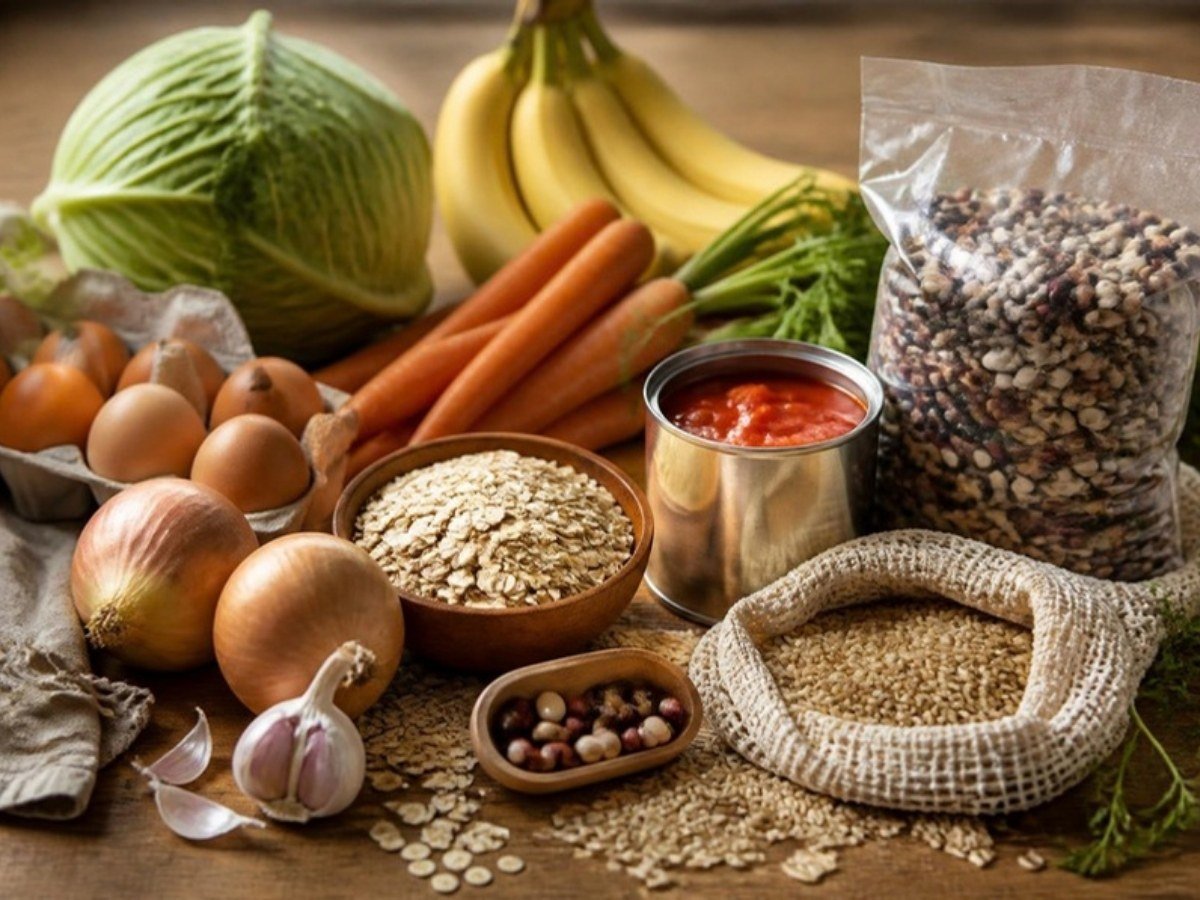
Budget Superstars
- Dried or canned beans and lentils
- Eggs
- Rolled oats
- Brown rice and whole-wheat pasta
- Frozen vegetables and fruit
- Bananas, apples, carrots, cabbage and onions
- Canned tomatoes and canned tuna
- Peanut butter
Frozen vegetables deserve a special mention: they are typically flash-frozen within hours of harvest, which means their vitamin content is often comparable to fresh, and sometimes higher than fresh produce that has spent a week in transit and on a shelf. There is no nutritional downside to leaning on the freezer aisle.
Sample Day 1
- Breakfast: Oatmeal with banana and peanut butter
- Lunch: Tuna and white bean salad with lemon and olive oil
- Dinner: Lentil and vegetable stew with brown rice
Sample Day 2
- Breakfast: Scrambled eggs with frozen spinach and toast
- Lunch: Leftover lentil stew
- Dinner: Whole-wheat pasta with tomato sauce, frozen broccoli and white beans
Sample Day 3
- Breakfast: Overnight oats with frozen berries
- Lunch: Egg fried rice with frozen peas and carrots
- Dinner: Black bean tacos with cabbage slaw and salsa
What This 3-Day Plan Costs Compared to Takeout
Every ingredient on this list is a pantry or freezer staple, which means most of these meals cost a few dollars per serving at most, and several — oatmeal, egg fried rice, lentil stew — cost even less once you are cooking from a well-stocked pantry rather than a fresh shopping trip each time. Compare that to a single takeout meal, which frequently costs more than an entire day of homemade meals from this plan, and the savings add up fast over a month.
Money-Saving Tips
- Plan meals around what is on sale and in season. A rotating 3-day plan like this one is easy to adjust: swap in whatever vegetable is cheapest that week.
- Cook big batches and freeze portions. A double batch of lentil stew costs barely more to make than a single batch, but gives you two or three free dinners later.
- Buy store brands of staples like oats, rice and canned goods — the nutrition label is usually identical to the name brand.
- Use every part: vegetable scraps (onion ends, carrot peels, celery tops) can go in a freezer bag and become homemade broth once it fills up.
- Choose plant proteins a few nights a week. Beans and lentils cost a fraction of meat per serving and still deliver protein and fiber.
- Keep a running list of staples you are low on so you never make an extra, impulse-heavy grocery trip mid-week.
Storing Leftovers Safely on a Budget
Saving money only works if the food you batch-cook does not go to waste. According to FoodSafety.gov, perishable leftovers like the lentil stew or pasta sauce should go into the refrigerator within two hours of cooking, and should be eaten or frozen within about four days. Portioning a big batch into small, shallow containers right after cooking helps it cool faster and stay safe longer, and anything you will not get to within four days should go straight into the freezer, where it stays safe indefinitely, with best quality within two to six months.
Frequently Asked Questions
Is canned food as healthy as fresh?
For beans, tomatoes and tuna, yes — canning locks in nutrients at the point of processing. Rinsing canned beans under water removes a good portion of the added sodium, which makes them an even better swap for dried beans when you are short on time.
How do I stretch this to feed a family?
Scale up the grain, bean and vegetable portions first, since those are the cheapest parts of each meal. Eggs and canned tuna cost more per serving, so stretching the plant-based components keeps the per-person cost low while still feeding everyone.
What if I cannot afford fresh vegetables every week?
Lean on the freezer aisle. Frozen vegetables are nutritionally comparable to fresh, last for months without spoiling, and let you buy in bulk when they go on sale.
A Short, Reusable Shopping List
Because so many meals share ingredients, one grocery trip covers nearly all three days:
- Rolled oats, peanut butter and a bag of frozen berries
- A dozen eggs
- Canned tuna, canned white beans and canned black beans
- Dried or canned lentils, brown rice and whole-wheat pasta
- Canned diced tomatoes and a jar of pasta sauce or salsa
- Frozen spinach, broccoli, and peas and carrots
- A head of cabbage, a lemon, and a loaf of whole-grain bread
Most of these are shelf-stable or freezer staples, so buying a double batch when they are on sale does not mean anything goes to waste before you get to it. If you want a longer version of this same low-cost, high-nutrition approach, our 7-day healthy meal plan for beginners uses the same batch-cooking logic stretched across a full week.
The Bottom Line
Eating well on a budget is mostly a matter of leaning on a short list of inexpensive, nutrient-dense staples — beans, lentils, oats, eggs and frozen produce — and repeating them in different combinations across the week. Follow this 3-day rotation, batch-cook what you can, and store leftovers properly, and you will spend less while eating just as well as a far more expensive grocery list.

Leave a Reply