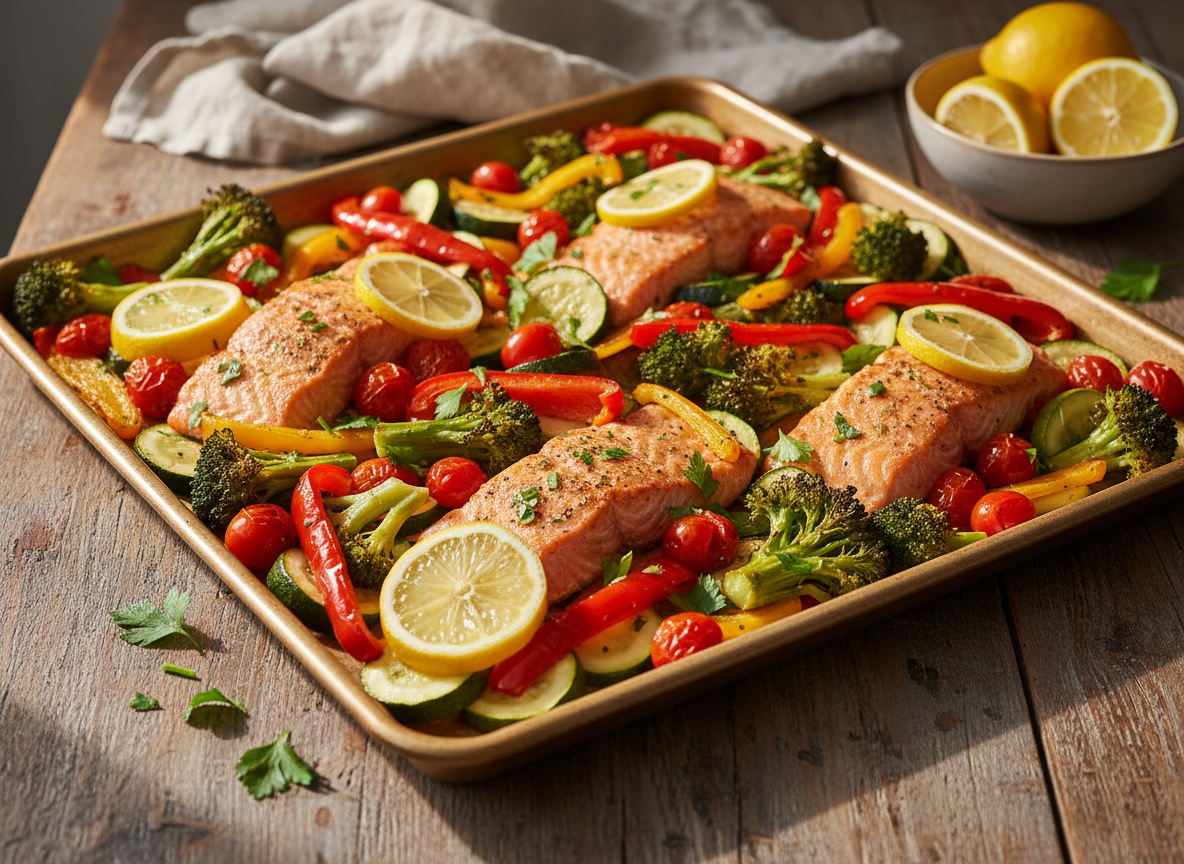
Cooking for diabetes doesn’t mean bland, restrictive meals — it means building plates that keep blood sugar steadier while still tasting like something you’d actually want for dinner. This baked salmon with roasted vegetables does exactly that: one sheet pan, about 30 minutes, and a plate structured around the same framework diabetes educators actually recommend. Below you’ll find the full recipe, the nutrition science behind why it works, and practical tips for adapting it to your own needs.
A quick note before we start: this article shares general nutrition information and a recipe, not individualized medical advice. If you’re managing diabetes, talk with your doctor or a registered dietitian about how any recipe fits your personal carbohydrate and blood sugar goals.
Understanding the Diabetes Plate Method
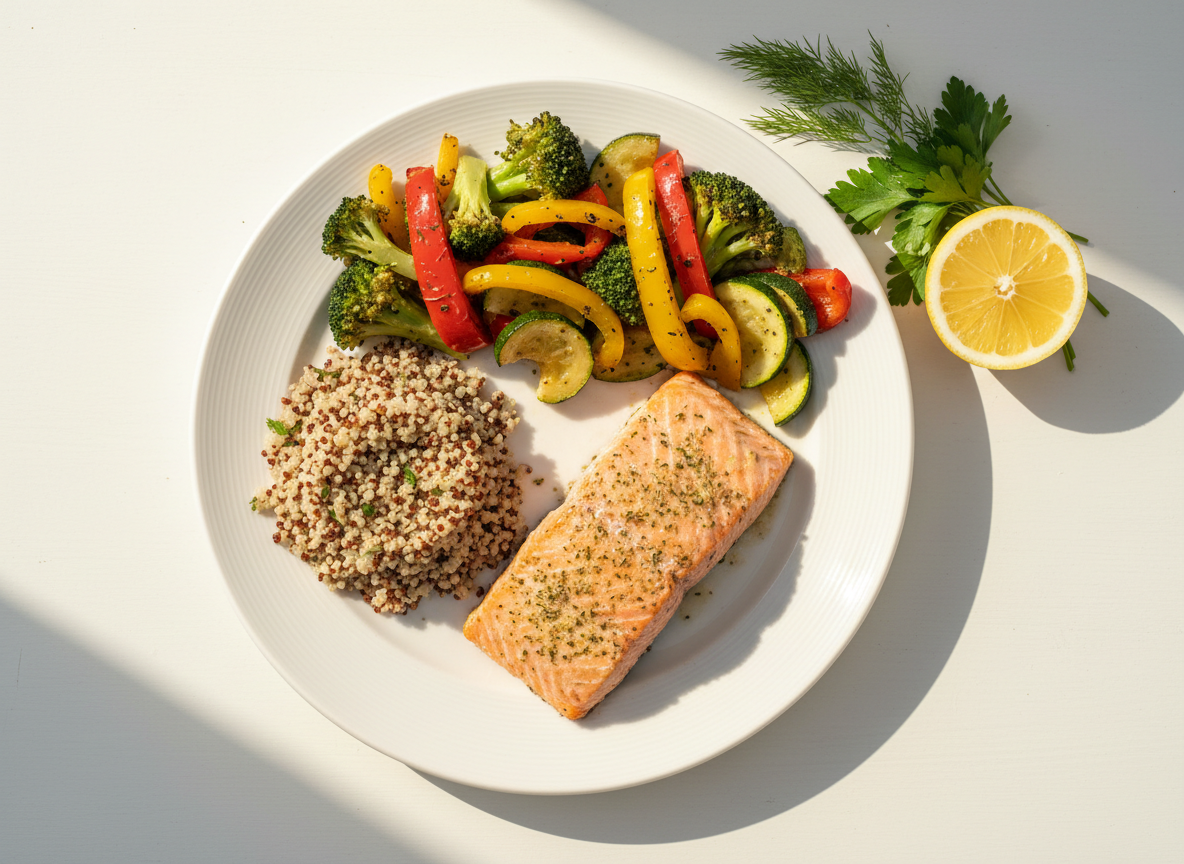
Rather than counting every gram or following a rigid meal plan, the American Diabetes Association promotes a simpler visual framework called the Diabetes Plate Method. It works with a standard 9-inch plate, divided into three sections:
- Half the plate — non-starchy vegetables: foods like broccoli, bell peppers, zucchini, asparagus, and leafy greens. These are lower in carbohydrates, so they don’t raise blood glucose very much, while contributing fiber, vitamins, and minerals.
- One quarter — lean protein: chicken, fish, eggs, shellfish, lean cuts of meat, tofu, or beans, chosen to minimize saturated fat.
- One quarter — quality carbohydrates: whole grains, starchy vegetables, fruit, beans, or low-fat dairy, portioned to keep post-meal blood glucose from rising too sharply.
Rounding out the plate with water or another zero-calorie drink completes the method. It’s a framework, not a strict rulebook — and it’s exactly the structure this recipe is built around, with roasted non-starchy vegetables taking up half the pan and salmon providing the lean protein.
Why Salmon Fits a Blood Sugar-Conscious Plate
Salmon is naturally carbohydrate-free, so it doesn’t directly raise blood glucose, and it packs in lean protein that helps with satiety. It’s also one of the fatty fish the American Heart Association highlights as a rich source of omega-3 fatty acids — the AHA notes that regularly eating fish and seafood is consistently associated with a lower risk of cardiovascular disease, and recommends two servings of fish per week (a serving being about 3 ounces cooked). That heart-health angle matters here in particular, since people with diabetes face a higher risk of cardiovascular disease, so a protein source that supports heart health while staying carb-free is a genuinely good fit, not just a trendy ingredient.
Diabetes-Friendly Baked Salmon with Roasted Vegetables
This is a one-pan, weeknight-friendly recipe: everything roasts together, cleanup is minimal, and it reheats well for lunch the next day.
Ingredients (serves 4)
- 4 salmon fillets (about 4-5 oz each), skin on or off
- 2 cups broccoli florets
- 1 red bell pepper, sliced into strips
- 1 medium zucchini, cut into half-moons
- 1 cup cherry tomatoes, halved
- 3 tablespoons olive oil, divided
- 3 cloves garlic, minced
- 1 lemon (zest and juice)
- 1 teaspoon dried oregano
- 1/2 teaspoon smoked paprika
- Salt and freshly ground black pepper, to taste
- Fresh parsley or dill, chopped, for serving
- Optional quarter-plate carb: 1/2 cup cooked quinoa or farro per serving, or a small whole-grain roll
Instructions
- Preheat the oven to 425°F and line a large baking sheet with parchment paper.
- In a large bowl, toss the broccoli, bell pepper, zucchini, and cherry tomatoes with 2 tablespoons of olive oil, half the minced garlic, the oregano, smoked paprika, and a pinch of salt and pepper. Spread the vegetables in a single layer on the baking sheet.
- Roast the vegetables alone for 8 minutes to give them a head start, since they take slightly longer to cook through than the salmon.
- While the vegetables roast, pat the salmon fillets dry and rub them with the remaining olive oil, garlic, lemon zest, salt, and pepper.
- Remove the baking sheet from the oven, push the vegetables to the sides, and nestle the salmon fillets in the center.
- Return the pan to the oven and roast for another 12-14 minutes, until the salmon flakes easily with a fork and reaches an internal temperature of 145°F, and the vegetables are tender.
- Squeeze fresh lemon juice over everything, scatter with chopped parsley or dill, and serve — with a quarter-plate portion of quinoa, farro, or a small whole-grain roll alongside if you’d like to complete the Diabetes Plate Method.
Total time: about 30 minutes (10 minutes prep, 20 minutes cook).
Estimated Nutrition (per serving, salmon and vegetables only, before adding a carb side)
Approximately 320-350 calories, 3-5g net carbohydrates, 3-4g fiber, 30-32g protein, and 18-20g fat, calculated from standard nutrition data for the ingredients listed. These are estimates rather than lab-tested values — if you’re tracking carbohydrates closely, a nutrition-tracking app or your dietitian’s guidance will give you a more precise number for your specific portions and any carb side you add.
Tips for Making This Recipe Even More Diabetes-Friendly
Watch the marinades and sauces
This recipe relies on olive oil, garlic, lemon, and herbs rather than a sweetened glaze or teriyaki-style sauce, which often carries hidden added sugar. If you like a sauce with salmon, check the label or make your own so you know exactly what’s in it.
Lean into non-starchy vegetables
Feel free to swap in other non-starchy vegetables you have on hand — asparagus, green beans, cauliflower, mushrooms, and Brussels sprouts all roast well alongside salmon and keep the “half the plate” portion of the Diabetes Plate Method easy to hit.
Choose your carb side deliberately
Quinoa and farro are whole grains with more fiber than refined white rice or pasta, which can help moderate the blood sugar response. Keep the portion to about a quarter of your plate, per the plate method above, rather than leaving it unmeasured.
Meal-prep friendly
This recipe keeps well in the refrigerator for up to 3 days, making it a solid option for prepping a few lunches or dinners in advance. Reheat gently to avoid drying out the salmon — a covered dish in the microwave at 50% power, or a few minutes in a low oven, both work well.
Frequently Asked Questions
Is salmon good for people with diabetes?
Salmon is naturally carbohydrate-free and a source of lean protein and omega-3 fatty acids, which the American Heart Association links to a lower risk of cardiovascular disease — relevant since diabetes raises heart disease risk. That said, individual nutrition needs vary, so it’s worth discussing your overall eating pattern with your doctor or a registered dietitian.
Can I use a different fish?
Yes — other fatty fish like trout, arctic char, or mackerel work well with this same roasting method and timing. Leaner white fish like cod or tilapia will cook faster, so start checking for doneness around 8-10 minutes.
What if I don’t want a carb side at all?
That’s completely fine — the salmon and vegetables alone make a satisfying, low-carbohydrate meal. The quarter-plate carb portion in the Diabetes Plate Method is a guideline for building balanced meals, not a requirement for every single plate.
The Takeaway
You don’t need a complicated meal plan to eat in a way that’s kinder to your blood sugar — a sheet pan, some non-starchy vegetables, and a piece of salmon get you most of the way there. This recipe leans on the same half-plate, quarter-plate structure diabetes educators teach, dressed up with real flavor instead of restriction. As always, treat this as a starting point rather than a prescription, and loop in your healthcare team on how it fits your individual plan.
Leave a Reply