
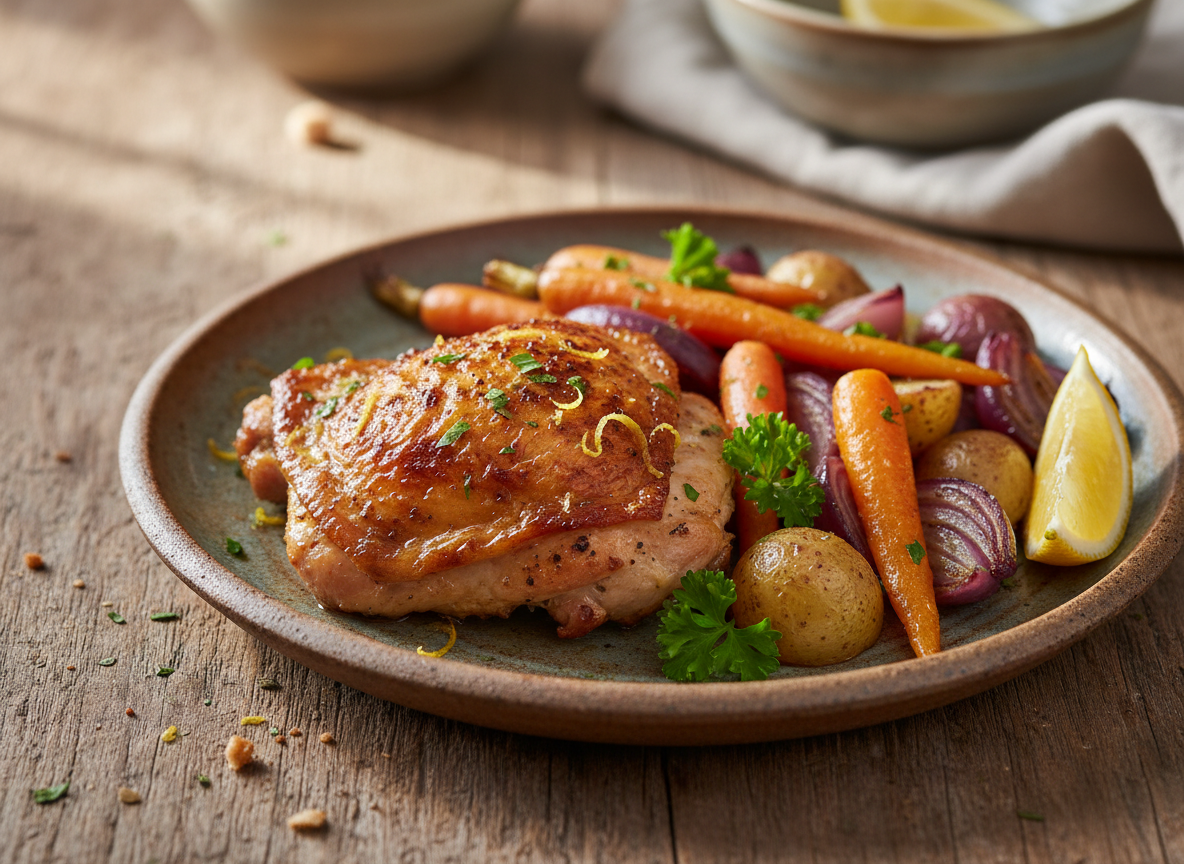
Some nights you want a real dinner on the table without a sink full of pots and pans to show for it. This sheet-pan lemon herb chicken with roasted fall vegetables is exactly that: one pan, about 15 minutes of hands-on prep, and a meal that covers your protein and vegetables in a single roast. It’s become a regular in our own weeknight rotation, and once you try it, it’s easy to see why.
Beyond the convenience, this dinner is genuinely well-balanced: juicy, herb-marinated chicken thighs roast alongside a colorful mix of vegetables, so you’re getting lean protein, fiber, and a range of vitamins in one dish. No sides to plan, no extra dishes to wash — just a sheet pan, a mixing bowl, and dinner in under an hour.
Why This Sheet-Pan Dinner Works
Sheet-pan dinners have earned their popularity for good reason. Roasting chicken and vegetables together at high heat caramelizes the vegetables’ natural sugars while keeping the chicken juicy, and the lemon-herb marinade does double duty as a simple pan sauce once everything roasts down together. A few things make this particular version worth keeping on hand:
- One pan, minimal cleanup — everything cooks together, so there’s no juggling a stovetop and oven.
- Balanced by design — a lean protein plus several vegetables means you’re not scrambling to add a side dish.
- Flexible — swap in whatever vegetables are in your fridge or in season without changing the method.
- Meal-prep friendly — it reheats well, making it a solid option for lunches later in the week.
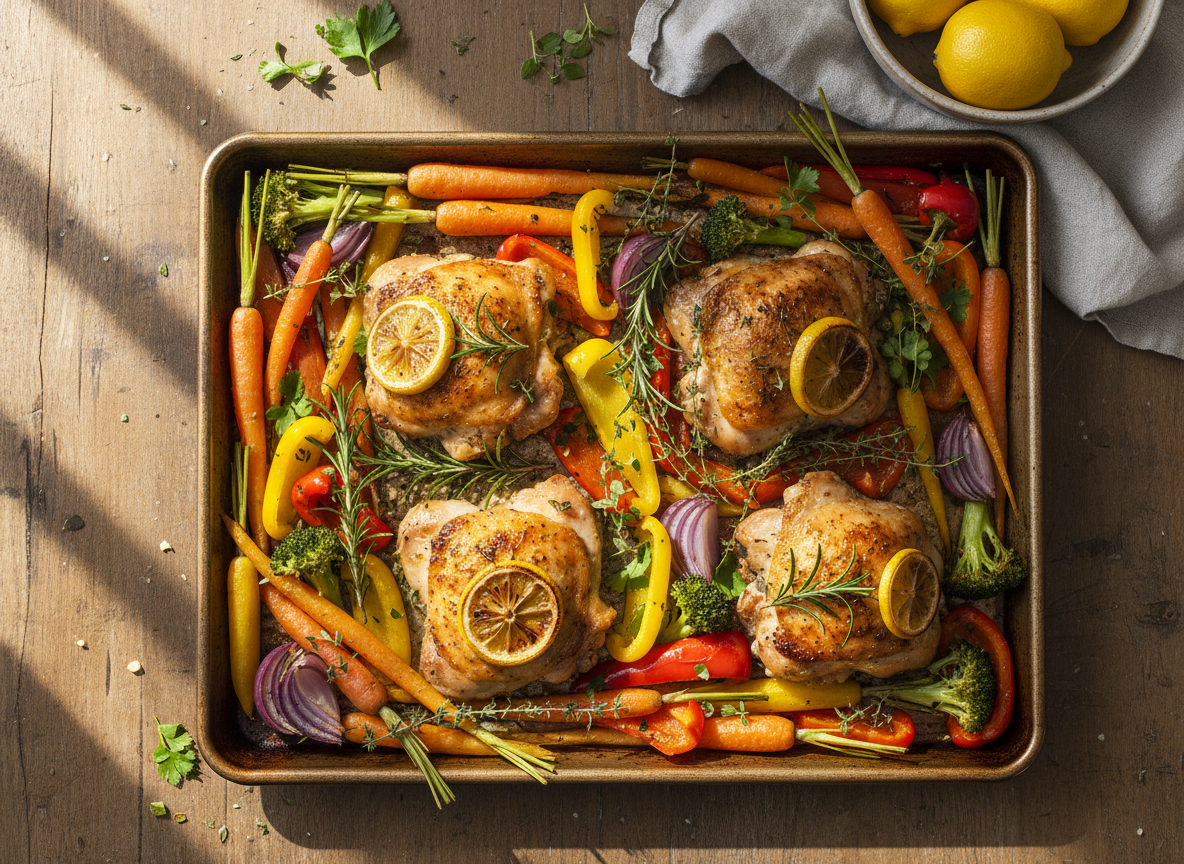
Sheet-Pan Lemon Herb Chicken with Roasted Fall Vegetables
Ingredients
Method
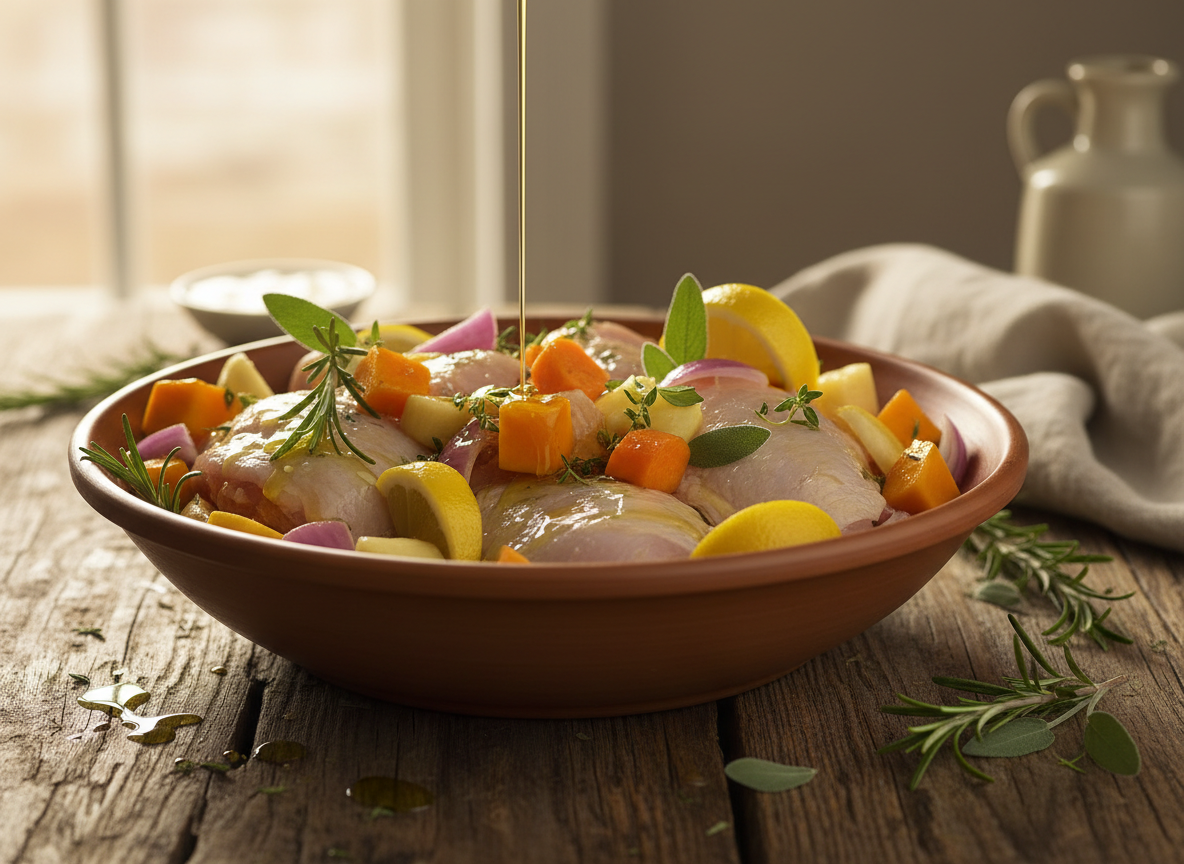
- Marinate the chicken (10 minutes, or up to overnight): In a large bowl, whisk together 2 tablespoons olive oil, lemon zest, garlic, chopped herbs, paprika, salt, and pepper. Add the chicken thighs and toss to coat. If you have time, let this sit for 30 minutes at room temperature or refrigerate for up to a day — the extra time deepens the flavor, but even a quick toss right before roasting works well.
- Prep and season the vegetables: Preheat your oven to 425°F (220°C). On a large, rimmed sheet pan, toss the potatoes, broccoli, bell pepper, and onion with the remaining tablespoon of olive oil, a pinch of salt, and pepper. Spread the vegetables in an even layer, leaving room for the chicken.
- Arrange and roast: Nestle the marinated chicken thighs among the vegetables, skin-side up, and tuck the lemon slices around the pan. Roast for 30 to 35 minutes, until the chicken is golden and the vegetables are tender and lightly caramelized at the edges.
- Check for doneness: Food safety matters here as much as flavor. According to the USDA Food Safety and Inspection Service, chicken needs to reach a safe minimum internal temperature of 165°F, checked with a food thermometer inserted into the thickest part of the thigh, away from the bone. If your thighs aren’t quite there yet, give the pan another 5 to 10 minutes and check again — a thermometer is far more reliable than color or juices alone.
- Rest, garnish, and serve: Let the pan rest for about 5 minutes before serving — this gives the chicken’s juices time to redistribute, keeping every bite tender. Scatter fresh parsley over the top and serve straight from the pan, or plate individual portions with an extra lemon wedge on the side.
Notes
Ingredient Notes and Easy Swaps
Part of what makes this recipe a long-term keeper is how forgiving it is. The method stays the same no matter what you have on hand, so it’s worth getting to know the building blocks rather than following the ingredient list to the letter every time.
- Chicken: Bone-in, skin-on thighs are the most forgiving cut for roasting — the skin crisps up and the dark meat stays juicy even if it spends a few extra minutes in the oven. Boneless thighs work too and cook faster, so start checking them a little sooner. Bone-in chicken breasts can be substituted, but watch them closely since they dry out more easily than thighs.
- Vegetables: Any vegetable that roasts well at 425°F is fair game — try broccoli, bell peppers, red onion, Brussels sprouts, carrots, or baby potatoes. Cut denser vegetables (potatoes, carrots) smaller than quicker-cooking ones (bell peppers, broccoli) so everything finishes at roughly the same time.
- Herbs: Fresh rosemary, thyme, or oregano all work in the marinade. No fresh herbs on hand? Dried versions work fine — just use about a third of the amount, since dried herbs are more concentrated.
- Lemon: Both the juice and the zest go into the marinade. If you only have bottled lemon juice, add a little extra lemon zest from an orange or a splash of vinegar to bring back some of that fresh brightness.
Tips for Perfectly Roasted Chicken and Vegetables
A handful of small habits make the difference between a sheet-pan dinner that comes out evenly roasted and one where the chicken is done before the vegetables have even started to brown.
- Don’t crowd the pan. If the chicken and vegetables are packed too tightly together, they’ll steam instead of roast, and you’ll lose that caramelized edge. Use two pans if needed rather than overloading one.
- Pat the chicken dry. Removing excess moisture from the skin before it goes in the marinade helps it crisp rather than turn soggy in the oven.
- Give dense vegetables a head start. If you’re using potatoes or carrots alongside quicker-cooking vegetables, toss them with oil and roast for 10 minutes before adding the chicken and the rest of the vegetables, so everything finishes together.
- Check for doneness with a thermometer, not a clock. According to FoodSafety.gov’s safe minimum cooking temperature chart, chicken — including thighs — is safe to eat once it reaches an internal temperature of 165°F. An instant-read thermometer inserted into the thickest part of the thigh, avoiding the bone, is the most reliable way to check.
- Let it rest for 5 minutes. Resting the chicken briefly after it comes out of the oven lets the juices redistribute instead of running straight out when you cut into it.
Why This Meal Supports Everyday Healthy Eating
This dinner isn’t just convenient — it’s genuinely nutritious. Chicken thighs provide protein for muscle repair and satiety, while the vegetable mix contributes dietary fiber, vitamin C, and a range of antioxidants. According to the Harvard T.H. Chan School of Public Health’s Nutrition Source, most adults need at least 25 to 35 grams of fiber a day for good health, yet the average American gets only about 15 grams. Fiber-rich vegetables like broccoli, potatoes (with the skin on), and bell peppers are an easy way to help close that gap, and fiber itself plays a role in digestive health, healthy cholesterol levels, and steadier blood sugar after meals. If you want a deeper look at how much fiber you actually need and where to get it, our practical guide to hitting your daily fiber goal breaks it down further.
Roasting is also one of the gentler cooking methods for preserving nutrients, especially compared to boiling, which can leach water-soluble vitamins into the cooking water. Keeping the skin on potatoes and roasting vegetables just until tender — rather than until fully softened — helps retain more of their natural vitamin and fiber content. Bell peppers and broccoli in particular are well known for their vitamin C content, and pairing them with a protein source like chicken rounds out a plate that covers several nutritional bases at once. For more on how much protein a meal like this one actually contributes toward your daily needs, see our age-by-age guide to protein needs.
If you’re trying to simply eat more vegetables day to day, a sheet-pan dinner like this one is one of the easiest ways to do it without extra effort — the vegetables cook right alongside dinner instead of requiring a separate side dish. Our 10 easy ways to eat more vegetables every day has more ideas in the same spirit if you want to build on the habit.
Make It Ahead and Store the Leftovers
This recipe holds up well beyond the night you make it, which makes it a solid option for meal prep:
- Marinate ahead: The chicken can sit in the lemon-herb marinade in the refrigerator for up to 24 hours before roasting, which means you can do the prep work the night before.
- Refrigerate leftovers promptly: Get cooked chicken and vegetables into the refrigerator within 2 hours of cooking.
- Use leftovers within a few days: Per USDA food safety guidance (also echoed by the Mayo Clinic), cooked leftovers like this one are safest to eat within 3 to 4 days of cooking.
- Reheat gently: A low oven (around 300°F) for 10-15 minutes keeps the chicken from drying out better than the microwave, though the microwave works fine in a pinch.
Frequently Asked Questions
Can I use chicken breasts instead of thighs?
Yes, though breasts are leaner and dry out more easily than thighs. If you swap in breasts, keep a closer eye on the oven and pull them as soon as they hit 165°F internally rather than roasting for the full time listed for thighs.
What if my vegetables aren’t browning?
This usually means the pan is too crowded or the oven isn’t fully preheated. Spread everything in a single layer with a little space between pieces, and make sure the oven has reached temperature before the pan goes in.
Can I freeze this dish?
Yes. Cooked, cooled chicken and vegetables freeze reasonably well for up to about 2-3 months in an airtight container. Note that roasted potatoes can take on a slightly different texture after freezing and thawing, so this works best if you leave those out or add fresh ones when reheating.
The Bottom Line
A good weeknight dinner shouldn’t require a long ingredient list or a sink full of dishes. This sheet-pan lemon herb chicken with roasted vegetables delivers a balanced, satisfying meal with minimal effort, and it’s flexible enough to become a template you return to again and again with whatever vegetables you have on hand. Give it a try this week, and don’t be surprised if it becomes a regular in your own rotation.
Leave a Reply