Ingredients
Method
- Preheat the oven to 425°F and line a large baking sheet with parchment paper.
- In a large bowl, toss the broccoli, bell pepper, zucchini, and cherry tomatoes with 2 tablespoons of olive oil, half the minced garlic, the oregano, smoked paprika, and a pinch of salt and pepper. Spread the vegetables in a single layer on the baking sheet.
- Roast the vegetables alone for 8 minutes to give them a head start, since they take slightly longer to cook through than the salmon.
- While the vegetables roast, pat the salmon fillets dry and rub them with the remaining olive oil, garlic, lemon zest, salt, and pepper.
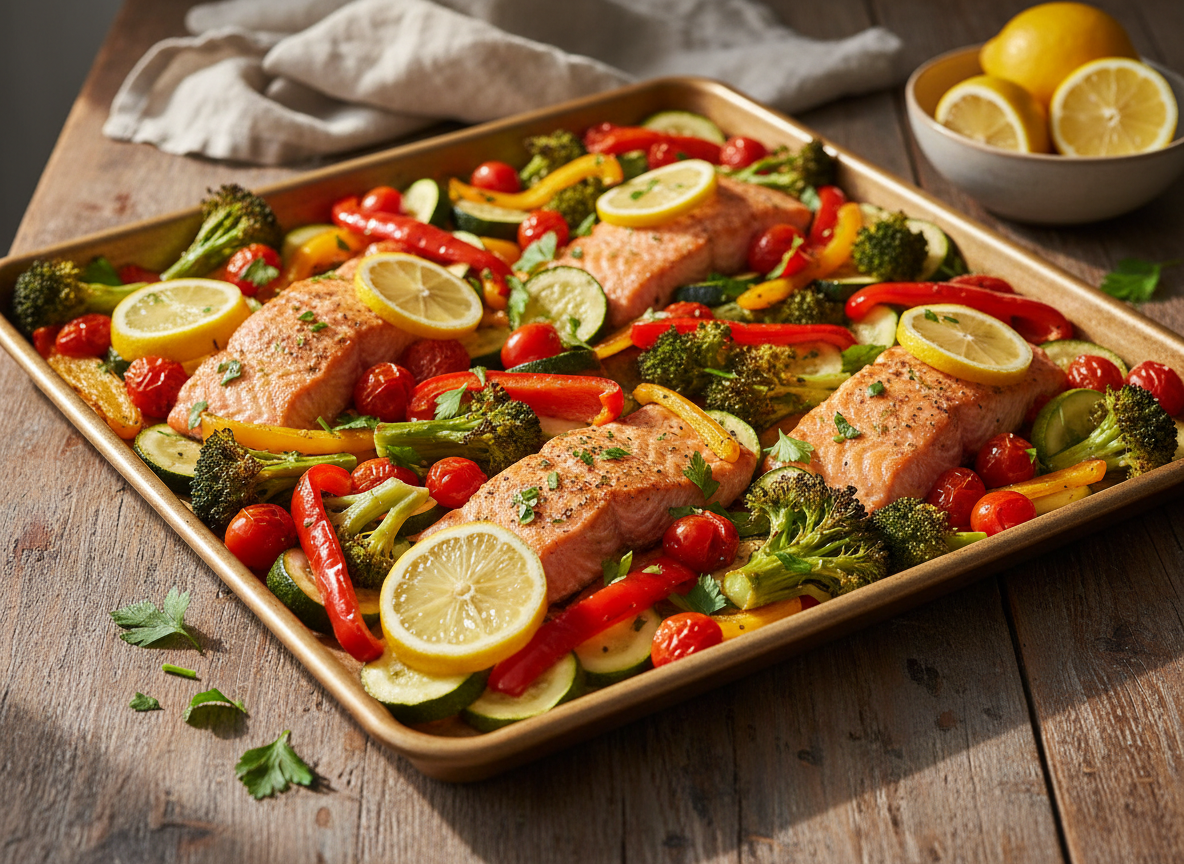
- Remove the baking sheet from the oven, push the vegetables to the sides, and nestle the salmon fillets in the center.
- Return the pan to the oven and roast for another 12-14 minutes, until the salmon flakes easily with a fork and reaches an internal temperature of 145°F, and the vegetables are tender.
- Squeeze fresh lemon juice over everything, scatter with chopped parsley or dill, and serve — with a quarter-plate portion of quinoa, farro, or a small whole-grain roll alongside if you’d like to complete the Diabetes Plate Method.
Notes
Tips for Making This Recipe Even More Diabetes-Friendly: Watch the marinades and sauces – This recipe relies on olive oil, garlic, lemon, and herbs rather than a sweetened glaze or teriyaki-style sauce, which often carries hidden added sugar. If you like a sauce with salmon, check the label or make your own so you know exactly what’s in it. Lean into non-starchy vegetables – Feel free to swap in other non-starchy vegetables you have on hand — asparagus, green beans, cauliflower, mushrooms, and Brussels sprouts all roast well alongside salmon and keep the “half the plate” portion of the Diabetes Plate Method easy to hit. Choose your carb side deliberately – Quinoa and farro are whole grains with more fiber than refined white rice or pasta, which can help moderate the blood sugar response. Keep the portion to about a quarter of your plate, per the plate method above, rather than leaving it unmeasured. Meal-prep friendly – This recipe keeps well in the refrigerator for up to 3 days, making it a solid option for prepping a few lunches or dinners in advance. Reheat gently to avoid drying out the salmon — a covered dish in the microwave at 50% power, or a few minutes in a low oven, both work well.