
Important: This guide is general information, not medical advice. If you have diabetes or prediabetes, especially if you take insulin or other glucose-lowering medication, work with your doctor or a diabetes educator before changing how you eat.
If you’ve just been told your blood sugar is “a bit high,” the internet can make eating feel like a minefield. One site says cut all carbs, another says eat fruit freely, a third wants you to buy a special supplement. The good news is that the approach most diabetes organizations actually recommend is much simpler than that, and it doesn’t involve giving up whole food groups.
This guide walks through the basics: how to build a plate, which carbs work best, why pairing foods matters, and what a realistic day of eating can look like.
There is no single “diabetic diet”
The American Diabetes Association doesn’t prescribe one fixed diet for everyone with diabetes. Instead, it recommends an eating pattern tailored to your treatment goals, health, food preferences and culture. The CDC’s healthy eating hub for diabetes takes the same view, covering everything from choosing carbs to eating well on a budget and adapting meal plans to your culture.
That’s worth knowing because it takes the pressure off. You don’t have to eat like someone else. You need a structure you can repeat most days.
Start with the diabetes plate method
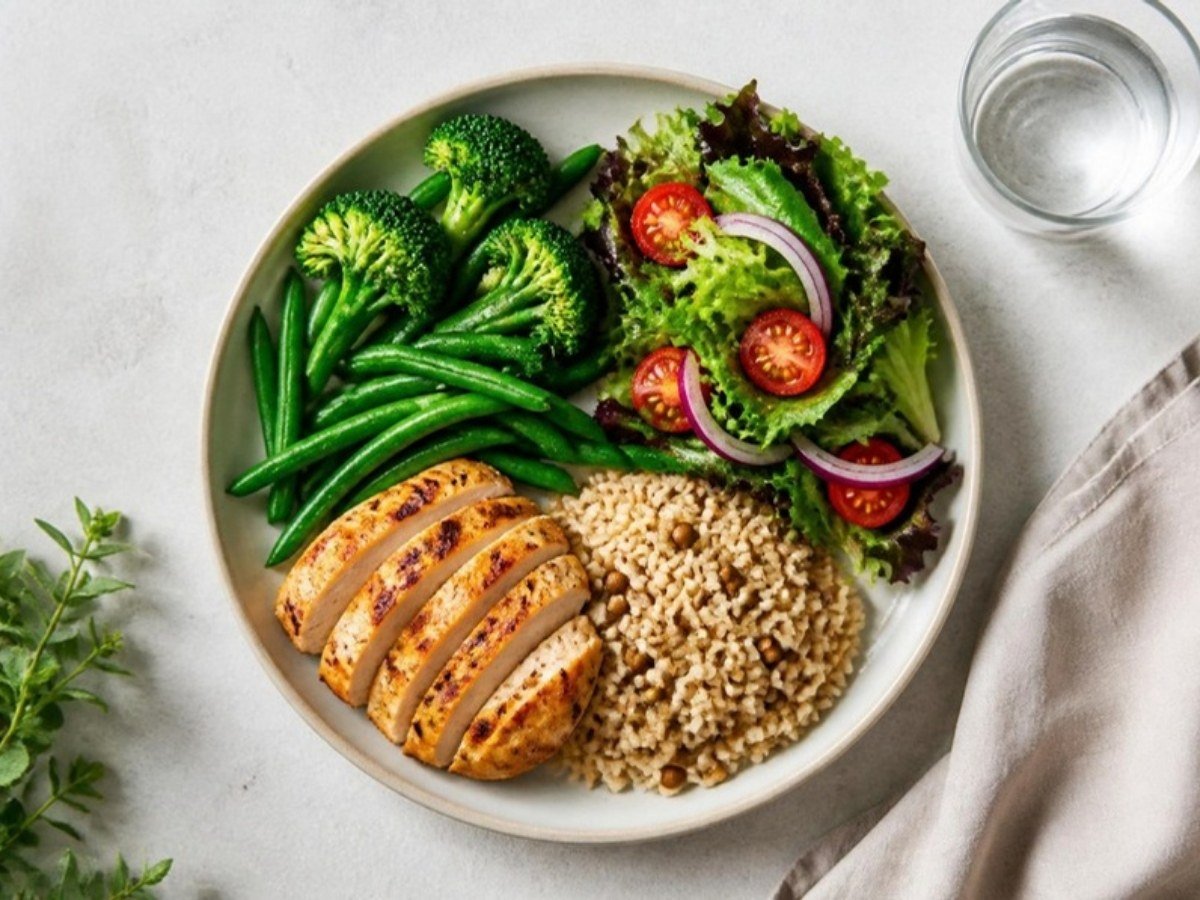
The easiest structure to start with is the ADA’s Diabetes Plate Method. You don’t need to count or weigh anything. You need a plate that’s about 9 inches (23 cm) across:
- Half the plate: non-starchy vegetables. Think broccoli, green beans, peppers, cauliflower, leafy greens, tomatoes, cucumber, mushrooms and zucchini. They’re high in fiber and have little impact on blood sugar.
- One quarter: lean protein. Chicken, fish, eggs, tofu, lean meat, or beans and lentils.
- One quarter: quality carbohydrate foods. Whole grains, starchy vegetables like potatoes or sweet potatoes, beans, fruit, or dairy such as yogurt or milk.
- To drink: water or a zero-calorie drink.
Because carbohydrate foods are limited to a quarter of the plate, you end up with a meal that’s naturally lower in carbs without feeling restrictive. For a full worked example, see our Diabetes-Friendly Baked Salmon with Roasted Vegetables, which is built exactly on this plate.
What about mixed dishes?
Soups, stir-fries, curries and sandwiches don’t sit neatly in sections. Estimate instead: does roughly half of the dish look like vegetables? If a bowl of pasta is mostly pasta, add a side salad or roasted vegetables, and serve a smaller portion of the pasta.
Choose carbs that work harder for you
Carbohydrates raise blood sugar more than protein or fat, but they’re also where a lot of fiber, vitamins and energy come from. The goal is better carbs in sensible portions, not zero carbs.
- Pick whole grains over refined ones. Brown rice, oats, quinoa, barley and whole-wheat bread instead of white bread, white rice and pastries.
- Lean on beans and lentils. They bring both carbohydrate and protein, plus plenty of fiber. Our One-Pot Lentil and Vegetable Stew is an easy place to start.
- Eat whole fruit instead of juice. Whole fruit keeps its fiber; juice delivers the sugar quickly without it.
- Watch portions of rice, pasta and bread. Keep them to that one-quarter section.
- Check labels for added sugar. Flavored yogurts, granola, sauces and “healthy” snack bars often contain more than you’d expect.
For more on why fiber matters, see Fiber 101: Why It Matters and the Best High-Fiber Foods.
Pair carbs with protein, fat and fiber
Eating a carbohydrate food on its own tends to raise blood sugar faster than eating it as part of a mixed meal. Protein, healthy fats and fiber slow digestion, which can help soften the rise.
Some easy pairings:
- An apple with a tablespoon of peanut butter, like our Apple Slices with Peanut Butter Yogurt Dip
- Whole-grain toast with eggs instead of toast with jam
- Oats made with milk and topped with nuts or chia seeds, like our Overnight Oats with Berries and Chia
- Crackers with cheese or hummus
Keep a steady rhythm
When and how regularly you eat matters too.
- Try not to skip meals and then overeat later. Long gaps followed by a very large meal can make blood sugar harder to manage, especially for people on certain medications.
- Keep meal times fairly consistent. A predictable routine makes it easier to see how foods affect you.
- Plan snacks if meals are far apart. A small snack with protein can bridge a long afternoon.
If you take insulin or medication that can cause low blood sugar, your care team may give you specific advice on meal timing. Follow that first.
Small habits beyond the plate
Food is only part of the picture. The CDC’s guidance for managing diabetes also highlights physical activity, sleep and stress. A few small habits that fit around meals:
- Take a short walk after eating. Even 10–15 minutes of light movement after a meal is a common, practical habit.
- Cut back on sugary drinks. Swap regular soda, sweet tea and energy drinks for water, sparkling water or unsweetened tea.
- Aim for regular sleep. Poor sleep can make appetite and blood sugar harder to manage.
A sample day of plate-method eating
This is one example of how a day could look. Portions and carb amounts should be adjusted to your own needs with your care team.
- Breakfast: Two eggs scrambled with spinach and tomatoes, one slice of whole-grain toast, coffee or tea without sugar.
- Lunch: A big salad with grilled chicken or chickpeas, cucumber, peppers and olive oil dressing, plus a small whole-grain pita.
- Snack: Plain Greek yogurt with a handful of berries.
- Dinner: Baked salmon, a large portion of roasted broccoli and peppers, and a small serving of brown rice or sweet potato.
👨🍳 How I cook for diabetic guests
On cruise ships, in hotels and in restaurants, cooking for guests with diabetes was a normal part of my job. We often had dedicated dietary stations or set dietary menus, and the waitstaff used dietary tick-sheets to pass each guest’s exact requirements to the kitchen. The goal was never just taking things away. It was making sure the guest felt they were enjoying a proper restaurant meal, not hospital food.
Here’s what I changed in the kitchen:
- Smarter carbs. I swapped refined starches like white rice, regular pasta and russet potatoes for higher-fiber options such as quinoa, wild rice, farro, lentils or a cauliflower mash.
- A rebalanced plate. I built the plate around lean protein, a little healthy fat and plenty of non-starchy green vegetables like broccoli, asparagus and leafy greens. It’s the same idea as the plate method above.
- No hidden sugar in sauces. Glazes, marinades and pan sauces are where sugar hides. I avoided honey, brown sugar, fruit-juice reductions and bottled sweet sauces like hoisin or teriyaki, and used herb-infused jus, pan-sauce reductions or a fresh salsa verde instead.
— Chef Nadeem
Common mistakes to avoid
- Cutting out all carbs overnight. It’s hard to sustain and can cause problems if you take medication that lowers blood sugar.
- Trusting “sugar-free” labels blindly. Sugar-free cookies can still be high in refined flour and calories.
- Forgetting about drinks. Juice, sweetened coffee drinks and smoothies can contain a lot of sugar.
- Going it alone. A registered dietitian or diabetes educator can personalize everything in this guide. Ask your doctor for a referral.
Frequently asked questions
Can I still eat fruit if I have diabetes?
Yes. Whole fruit counts toward the carbohydrate quarter of your plate. Berries, apples, pears and oranges are good everyday choices. Juice is the one to limit.
Is white rice off-limits?
Not necessarily. Portion size and what you eat it with matter. Keep it to a quarter of the plate, pair it with protein and vegetables, and consider brown rice or other whole grains more often.
Do I need to buy special “diabetic” foods?
No. The plate method works with regular groceries. Our Healthy Pantry Staples Checklist covers the basics.
Sources
- American Diabetes Association, What is the Diabetes Plate? (Diabetes Food Hub)
- Centers for Disease Control and Prevention, Healthy Eating with Diabetes
Disclaimer: This article is for general information only and does not replace advice from your doctor, diabetes educator or registered dietitian. Read our full Disclaimer.


Leave a Reply