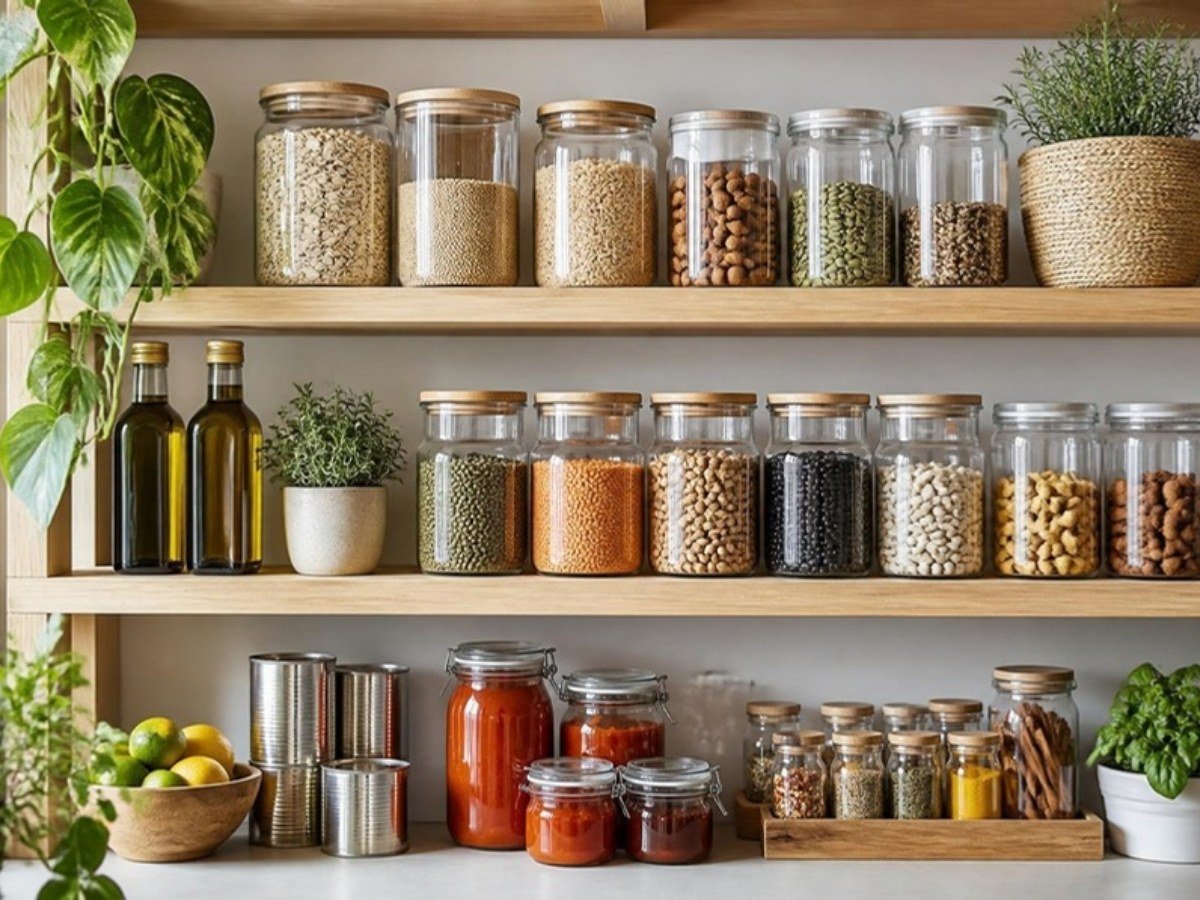
The biggest obstacle to eating well usually isn’t knowledge. It’s opening the fridge at 7pm, tired and hungry, and finding nothing you can turn into a meal. A well-stocked pantry fixes that. With the right staples on hand, a healthy dinner is often 15 minutes away, which beats waiting for delivery.
Here’s the checklist I recommend, plus how to shop smarter and what to cook with it.
👨🍳 Chef Nadeem’s three pantry must-haves
If I could only keep three things in my own kitchen, these would be it:
- Good extra virgin olive oil. For finishing, emulsifying dressings, and bringing a raw, peppery depth to everything from Italian pasta to grilled meats.
- Whole lemons, for zest and juice. Acid is the ultimate flavor regulator. It cuts through fat, lifts heavy spices in South Asian cooking, and brightens dishes without relying on salt.
- Whole spices: cumin, coriander and black pepper. Years of cooking Pakistani, Indian and Middle Eastern food taught me that spices you toast and grind fresh give a depth of flavor that pre-ground spices simply can’t match.
The pantry checklist
Grains and starches
- Rolled oats
- Brown rice or quinoa
- Whole-wheat pasta
- Whole-grain wraps or bread (freeze half to keep it fresh)
- Barley, bulgur or farro (optional)
Beans and legumes
- Canned chickpeas
- Canned black or kidney beans
- Canned or dried lentils
- Rinse canned beans to reduce sodium, or buy “no salt added”
Canned and jarred basics
- Canned tomatoes and passata
- Low-sodium stock or broth
- Canned tuna, salmon or sardines in water or olive oil
- Peanut or almond butter with no added sugar
- Tahini
Oils, vinegars and flavor
- Extra virgin olive oil
- A neutral oil for high-heat cooking
- Apple cider vinegar or other vinegar
- Low-sodium soy sauce
- Dijon mustard
- Garlic, onions and lemons (they last for weeks)
- Dried herbs and spices: cumin, paprika, oregano, chili flakes, cinnamon
Nuts and seeds
- Almonds, walnuts or mixed unsalted nuts
- Chia seeds
- Ground flaxseed (store in the fridge)
The fridge checklist
- Eggs
- Plain Greek yogurt
- Milk or unsweetened plant milk
- Feta or another flavorful cheese (a little goes a long way)
- Salad greens or spinach
- Carrots, peppers and cucumbers
- Seasonal fruit
- Hummus
The freezer checklist
- Frozen mixed vegetables, broccoli, spinach and peas
- Frozen berries (for oats, yogurt and smoothies)
- Frozen fish fillets or shrimp
- Chicken breasts or thighs
- Leftover soup or chili portions for busy nights
How to read a label in 30 seconds
You don’t need to study every number. Check four things:
- Serving size. Is it realistic? Many packages assume tiny portions.
- Added sugar. Lower is better, especially for yogurt, cereal, granola and sauces.
- Sodium. Canned soups, sauces and stocks vary a lot between brands.
- Ingredients list. Ingredients are listed by weight. If sugar is near the top, or appears under several names, treat it as a treat.
The Dietary Guidelines for Americans recommend limiting added sugars, saturated fat and sodium, which is exactly what these checks help with.
How to save money
- Build meals around beans, lentils, eggs and oats. They’re among the cheapest nutritious foods.
- Use frozen vegetables and fruit. No waste, and they’re often cheaper out of season.
- Buy store brands for basics like canned beans, oats and frozen vegetables.
- Plan three or four dinners before you shop and write a list.
- Check what you have first so you don’t buy duplicates.
For a full week of low-cost meals, see our Budget-Friendly Healthy Meal Plan.
👨🍳 How professional kitchens save money: use everything
In professional kitchens, whether hotel banquet kitchens like the Sheraton in Riyadh or a busy takeaway line, profit lives in the trim. We buy whole chickens, whole cuts of meat and whole vegetables, then use every scrap: meat trimmings go into braises, curries and stews, and bones, shells and vegetable peelings go into rich homemade stock. You eliminate waste, cut food costs significantly, and get far deeper flavor than any store-bought stock cube.
At home, keep a bag in the freezer for onion ends, carrot peels, celery tops and chicken bones. When it’s full, simmer it with water for a couple of hours and you have free stock. — Chef Nadeem
10 meals you can make from this list
- Overnight oats with frozen berries and chia. See our recipe.
- Veggie omelet with spinach, peppers and feta.
- Chickpea salad with cucumber, tomatoes, lemon and olive oil.
- Tuna salad lettuce wraps. See our recipe.
- Lentil and vegetable stew. See our recipe.
- Whole-wheat pasta with canned tomatoes, garlic, spinach and white beans.
- Brown rice bowl with frozen stir-fry vegetables, an egg and soy sauce.
- Black bean and vegetable quesadillas on whole-grain wraps.
- Baked fish with frozen broccoli and quinoa.
- Greek yogurt with nuts and fruit for a quick breakfast or snack.
Frequently asked questions
Is it worth buying organic?
It’s a personal choice. Eating more vegetables, fruit and whole foods matters more than whether they’re organic.
How long do pantry staples last?
Canned goods, dried grains and beans last many months. Nuts, seeds and whole-grain flours can go rancid sooner, so store them in a cool place or the fridge.
What if I only have a tiny kitchen?
Start with ten items: oats, canned beans, canned tomatoes, canned fish, brown rice, olive oil, eggs, frozen vegetables, frozen berries and one spice blend you like.
Sources
- U.S. Department of Agriculture & HHS, Dietary Guidelines for Americans
Leave a Reply