
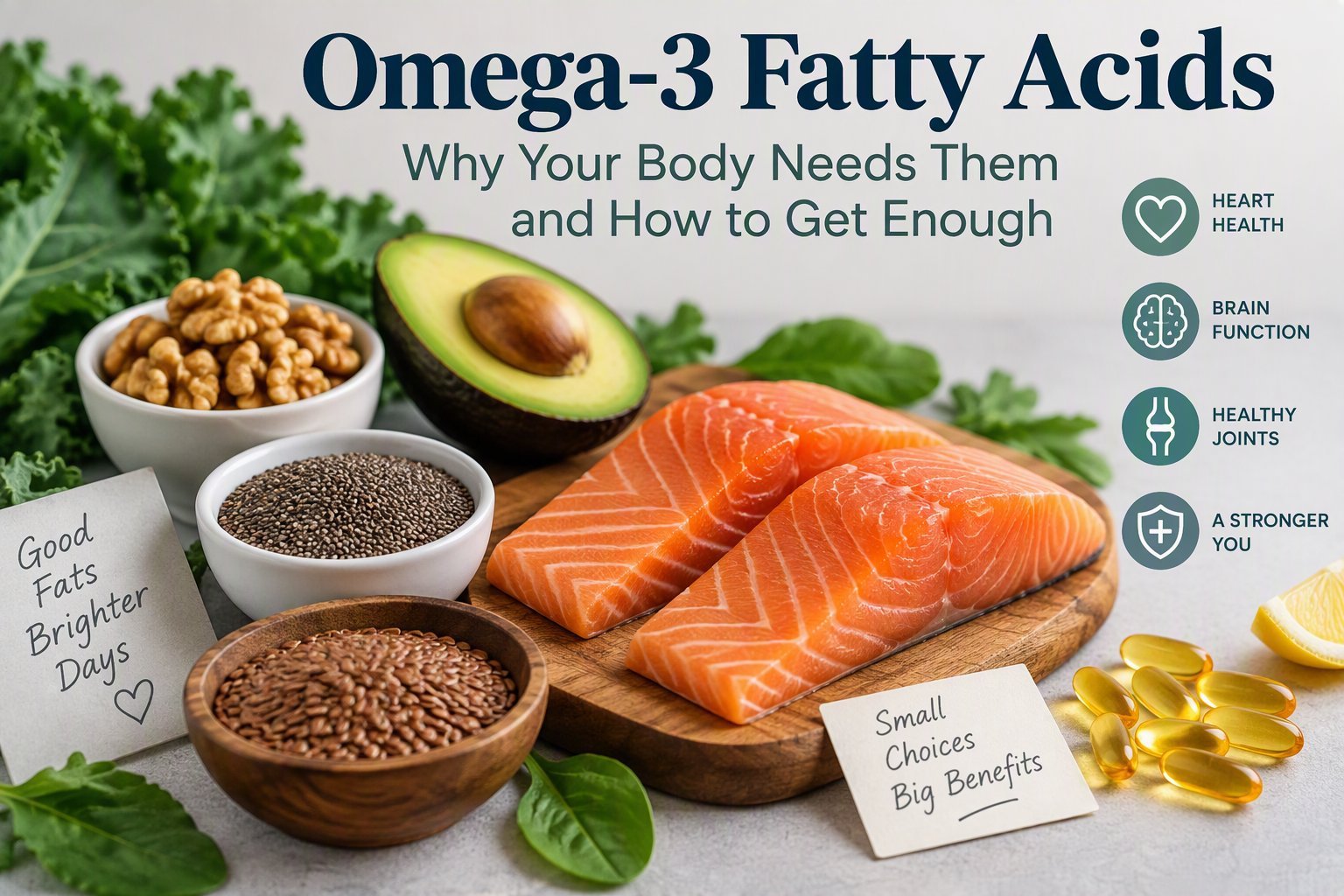
Omega-3 fatty acids get mentioned constantly in nutrition advice, but it’s easy to feel unsure about what they actually do, how much you need, and whether a daily fish-oil capsule is really necessary. Here’s a clear, practical breakdown of what the science actually says — and simple ways to get more omega-3s from food most weeks, no supplement aisle required.
What Are Omega-3 Fatty Acids?
“Omega-3” actually refers to a family of three related fats, and the distinction matters more than most people realize. According to the National Institutes of Health Office of Dietary Supplements, the three main types are ALA, EPA, and DHA.
ALA, EPA, and DHA
- ALA (alpha-linolenic acid) is found in plant oils like flaxseed, soybean, and canola oil. It’s considered an essential fat because your body can’t make it — you have to get it from food.
- EPA and DHA are found mainly in fish and seafood. Your body can convert a small amount of ALA into EPA and DHA, but the conversion rate is quite low — which is why eating EPA/DHA directly from fish (or algae-based sources) matters more than relying on plant sources alone.
- DHA in particular concentrates in the retina, brain, and other tissues, which is part of why it’s singled out so often in conversations about brain and eye health.
- Heart health: EPA and DHA from fatty fish can help lower triglycerides, and the American Heart Association recommends 1 to 2 servings of fish per week for general heart health, with roughly 1 gram per day of combined EPA and DHA — ideally from oily fish — suggested for people who already have heart disease.
- Brain health: some studies link higher fish and omega-3 intake to a lower risk of cognitive decline and dementia, though the NIH notes other studies haven’t found the same effect, so this remains an active area of research rather than a settled fact.
- Eye health: higher dietary omega-3 intake has been associated with a lower risk of age-related macular degeneration, though once AMD is already present, supplements don’t appear to slow it down. Evidence for omega-3s and dry eye is mixed, with at least one large study finding no benefit over a placebo.
- Inflammation: in people with rheumatoid arthritis, omega-3 supplements may allow for lower doses of anti-inflammatory medication, though it’s less clear whether they directly reduce joint pain and swelling on their own.
- Pregnancy and infant development: eating 8 to 12 ounces of lower-mercury fish per week during pregnancy and breastfeeding may support infant health, and DHA is naturally present in breast milk and added to most infant formulas.
- Adult men: about 1.6 grams per day
- Adult women: about 1.1 grams per day
- Pregnant women: about 1.4 grams per day
- Breastfeeding women: about 1.3 grams per day
- Fatty fish (EPA + DHA): salmon, mackerel, herring, sardines, trout, and tuna. Salmon, herring, sardines, and trout are especially good choices because they’re high in omega-3s and relatively low in mercury.
- Plant sources (ALA): flaxseed and flaxseed oil, chia seeds, walnuts, and canola or soybean oil. Keep in mind your body only converts a small fraction of ALA into EPA and DHA, so these are a helpful addition rather than a one-to-one swap for fish.
- Algal oil: a direct source of EPA and DHA made from algae, useful for vegetarians and vegans who don’t eat fish.
- Fortified foods: some brands of eggs, yogurt, milk, orange juice, and soy beverages now add omega-3s — check the label if you’re trying to boost your intake through everyday staples.
- Mercury: stick to lower-mercury fish like salmon, sardines, trout, and herring, and limit larger predatory fish such as swordfish, shark, and marlin — this matters most for pregnant or breastfeeding women and young children.
- Blood thinners: high-dose omega-3 supplements may increase bleeding risk in people taking blood thinners like warfarin. Talk to your doctor before adding a supplement if this applies to you.
- Supplement limits: the FDA advises against exceeding 5 grams per day of combined EPA and DHA from supplements. Common mild side effects include bad breath, heartburn, nausea, and headache.
- Plan one or two fish dinners into your week — salmon, trout, or sardines are all simple weeknight options.
- Stir a tablespoon of ground flaxseed or chia seeds into oatmeal, yogurt, or a smoothie.
- Keep a bag of walnuts around for an easy snack or salad topper.
- Choose omega-3-fortified eggs or milk if they’re available and within your budget.
- If you’re vegetarian, vegan, or simply don’t eat much fish, ask a healthcare provider whether an algal oil supplement makes sense for you.
Why Your Body Needs Omega-3s
The research on omega-3s is strongest in a few specific areas, and more mixed in others. Here’s an honest look at both:
A quick note: this is general wellness information, not medical advice, especially around heart disease, pregnancy, and medication interactions. Talk with your doctor or a registered dietitian about what’s right for your specific health situation.
How Much Omega-3 Do You Actually Need?
There’s no official daily target for EPA and DHA specifically, but there are established recommendations for total ALA intake, per the NIH:
For EPA and DHA, most general guidance simply points back to the American Heart Association’s recommendation of 1 to 2 servings of fatty fish per week, which for most people covers the gap without needing to count grams.
Best Food Sources of Omega-3s
You don’t need a supplement to get meaningful amounts of omega-3s. Food sources include:
A Few Safety Notes
A handful of practical cautions are worth keeping in mind:
Easy Ways to Get More Omega-3s This Week
The Bottom Line
Omega-3 fatty acids are one of the few nutrients where the food-first approach is also the easiest one: a couple of fish dinners a week, plus a few plant-based sources sprinkled into your regular meals, covers most people’s needs without any supplement at all. The science is strongest for heart health and still developing for brain and eye health, but either way, working more omega-3-rich foods into your rotation is a low-risk, high-reward habit.
Ready to put this into practice? Try our Sheet-Pan Honey Garlic Salmon with Roasted Brussels Sprouts for an easy omega-3-rich dinner, pair it with our guide to heart-healthy eating, or check out our Diabetes-Friendly Baked Salmon for another fish-forward option.
Leave a Reply