
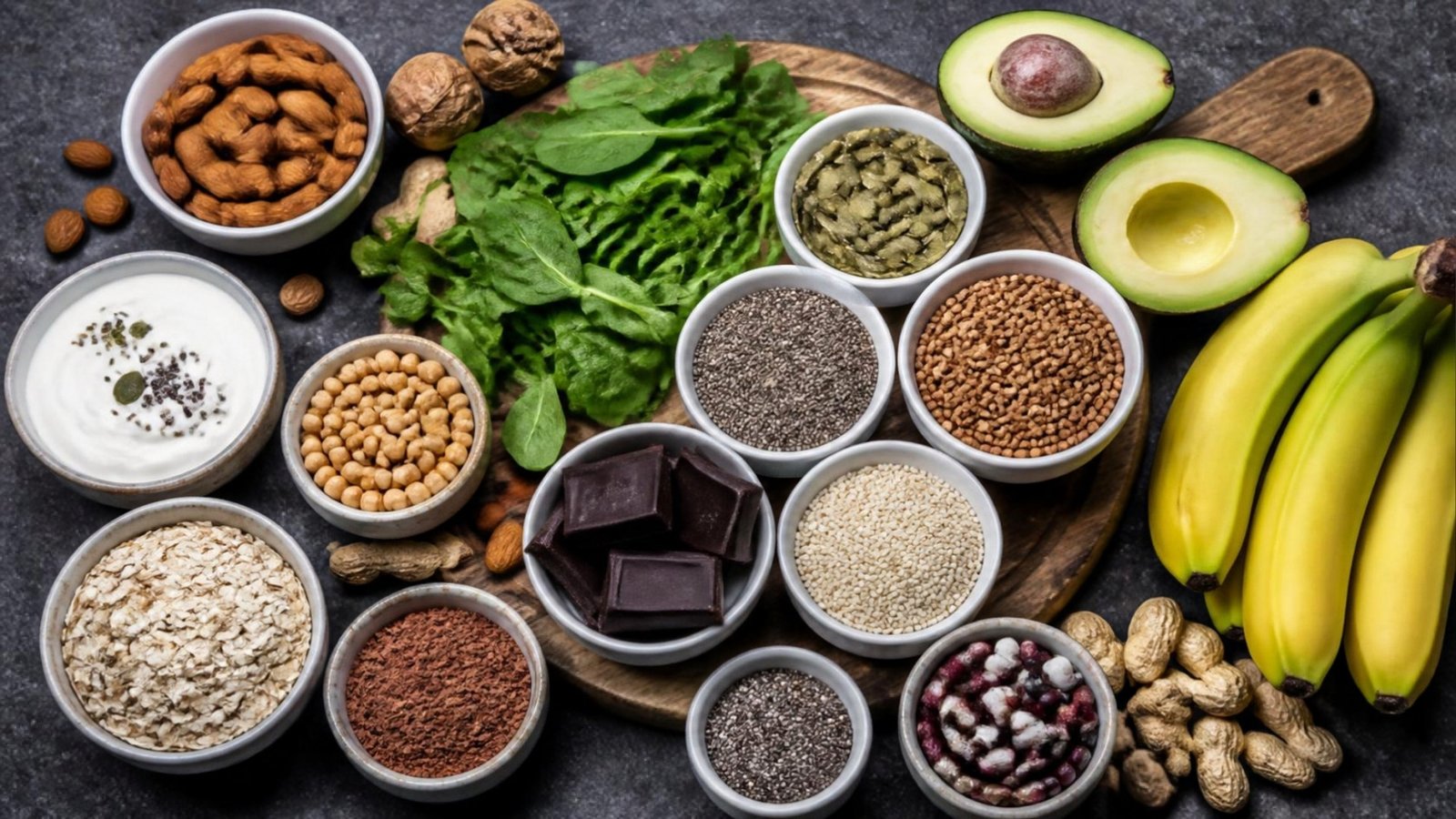
If you’ve been doing everything “right”—eating reasonably well, moving your body, trying to get enough sleep—but you still feel wiped out by mid-afternoon, wake up at 3 a.m. for no reason, or can’t shake a low-grade sense of tension, there’s a mineral worth putting on your radar: magnesium. It doesn’t get the spotlight that protein or fiber do, but magnesium is involved in more than 300 enzyme reactions in your body, from how your muscles contract to how steadily your heart beats. And a meaningful number of people fall short of getting enough of it from food alone.
The good news is that closing the gap doesn’t require a supplement aisle deep-dive. A handful of everyday foods—many of which you probably already have in your kitchen—can get you most of the way there. Here’s what magnesium actually does, how to tell if you might be running low, how much you need, and the best food sources to build into your week.
What Magnesium Actually Does in Your Body
According to the National Institutes of Health Office of Dietary Supplements, magnesium is a cofactor in hundreds of enzymatic reactions, supporting everything from protein synthesis and blood sugar regulation to nerve transmission and muscle function. Harvard’s Nutrition Source notes that roughly 60% of the magnesium in your body is stored in bone, where it works alongside calcium and vitamin D to help maintain bone density—and the mineral also acts like an electrical conductor, helping your heart maintain a steady rhythm and your muscles contract and relax properly.
Put simply: magnesium isn’t a niche “wellness” nutrient. It’s foundational, working quietly in the background of nearly every system in your body.
Signs You Might Not Be Getting Enough
True magnesium deficiency (hypomagnesemia) is relatively uncommon in people who eat a varied diet, but suboptimal intake—getting less than you need without being clinically deficient—is fairly common, especially since modern soil depletion and food processing can reduce the magnesium content of crops. The NIH notes that early signs of low magnesium can include loss of appetite, nausea, fatigue, and weakness. If levels drop further, symptoms can progress to numbness, tingling, muscle cramps, and in more severe cases, personality changes or an irregular heartbeat.
Certain groups are more likely to run low, including people with gastrointestinal conditions like Crohn’s disease or celiac disease (which can impair absorption), people with type 2 diabetes and older adults. If you fall into one of these categories and are concerned about your intake, it’s worth bringing up with your doctor rather than self-diagnosing from a symptom list.
How Much Magnesium Do You Actually Need?
The recommended dietary allowance (RDA) varies by age, sex, and life stage. Per the NIH and Harvard Nutrition Source:
- Adult men (19+): 400–420 mg per day
- Adult women (19+): 310–320 mg per day
- Teen boys (14–18): about 410 mg per day
- Teen girls (14–18): about 360 mg per day
- Pregnancy: 350–360 mg per day
- Breastfeeding: 310–320 mg per day
The best strategy for most people is to focus on food sources first rather than reaching straight for a supplement—partly because whole foods bring along fiber, antioxidants, and other nutrients that work together, and partly because very high-dose magnesium from supplements (above 350 mg/day from supplements specifically) can cause digestive upset like diarrhea in some people.
12 Magnesium-Rich Foods to Add to Your Plate
The best part about magnesium is that it shows up generously in foods that are already staples of a balanced diet. Here are some of the richest sources, according to Harvard Nutrition Source and the NIH:
- Pumpkin seeds — one of the most concentrated plant sources; great sprinkled on oatmeal, yogurt, or salads
- Almonds and cashews — easy to keep on hand for snacking or blending into nut butter
- Spinach and Swiss chard — leafy greens are a reliable magnesium source and easy to fold into almost any meal
- Black beans and kidney beans — a budget-friendly, fiber-rich way to boost intake
- Soybeans and edamame — a complete-protein option that’s also magnesium-rich
- Brown rice and oats — whole grains retain more magnesium than their refined counterparts
- Salmon and other fatty fish — brings magnesium alongside omega-3 fatty acids
- Avocado — a creamy source that also delivers potassium and healthy fats
- Bananas — a convenient, portable source, especially paired with nut butter
- Dark chocolate (70% cacao or higher) — yes, really; cacao is naturally magnesium-rich
- Plain yogurt and milk — a smaller but steady contributor, especially across multiple servings a day
- White potatoes (with the skin on) — much of the magnesium and fiber lives in the skin
Notice a pattern? Nuts, seeds, legumes, whole grains, and leafy greens are the backbone of magnesium intake—which is also the backbone of pretty much every evidence-based eating pattern, from Mediterranean-style eating to general healthy-plate guidance.

Simple Ways to Boost Your Magnesium Intake Today
1. Upgrade your breakfast
Top oatmeal, yogurt, or a smoothie bowl with a spoonful of pumpkin seeds and sliced banana. It takes thirty seconds and meaningfully boosts the meal’s magnesium content.
2. Swap refined grains for whole grains
Choosing brown rice over white, or whole-grain bread over white bread, is one of the easiest low-effort swaps, since refining grains strips away much of their natural magnesium along with the fiber.
3. Keep a “magnesium snack drawer”
A small stash of almonds, cashews, or a square or two of dark chocolate makes it easy to snack your way toward your daily target instead of reaching for something that offers little nutritional value.
4. Build at least one bean-based meal into your week
A black bean chili, a lentil soup, or a simple bean salad is an easy way to get a concentrated dose of magnesium along with fiber and plant protein.
5. Don’t peel your potatoes
Leaving the skin on white or sweet potatoes keeps more of their fiber and magnesium intact—just give them a good scrub first.
What About Magnesium and Sleep?
Magnesium’s reputation as a “sleep mineral” has become popular online, and there is some real science behind it—though it’s more nuanced than social media often suggests. An observational analysis from the long-running CARDIA study, published in the journal Sleep, found that higher dietary magnesium intake was associated with better sleep quality and a lower likelihood of reporting sleep difficulty over time. Magnesium is thought to play a role in regulating the nervous system and supporting the body’s natural relaxation response, which may help explain the connection.
That said, this is an association, not proof that eating more magnesium-rich foods will fix insomnia on its own—sleep is influenced by dozens of factors, including light exposure, stress, caffeine timing, and consistency of your sleep schedule. If you’re dealing with persistent sleep problems, magnesium-rich foods are a reasonable, low-risk addition to a broader sleep routine, but they’re not a substitute for addressing the root cause, and anyone considering a magnesium supplement specifically for sleep should check with a healthcare provider first, especially if they take other medications or have kidney issues.
A Note on Blood Pressure, Blood Sugar, and Supplements
Research summarized by Harvard Nutrition Source and the NIH also points to modest associations between higher magnesium intake and better blood pressure regulation, as well as improved insulin sensitivity in people with or at risk for type 2 diabetes. These are promising patterns in nutrition research, but they describe general population trends, not guarantees for any individual—and magnesium-rich eating is not a treatment or cure for high blood pressure, diabetes, or any other medical condition.
This article is for general informational and recipe-inspiration purposes only and isn’t a substitute for individualized medical advice. If you have a health condition such as diabetes, heart disease, or kidney disease, or you’re considering a magnesium supplement, please talk with your doctor or a registered dietitian about what’s right for you.
Bringing It All Together
Magnesium is one of those nutrients that works best in the background—you’re unlikely to notice a dramatic before-and-after from any single meal, but consistently choosing magnesium-rich foods over time can support everything from muscle and nerve function to bone health and, potentially, better sleep. The simplest approach is also the most sustainable one: build your plate around nuts, seeds, legumes, whole grains, leafy greens, and a little dark chocolate, and let the magnesium take care of itself.
Start small. Add pumpkin seeds to tomorrow’s breakfast, swap in brown rice at dinner, or keep a bag of almonds within reach for your next snack craving. Over a week, those small swaps add up to a meaningfully more magnesium-rich diet—no supplement aisle required.


Leave a Reply