
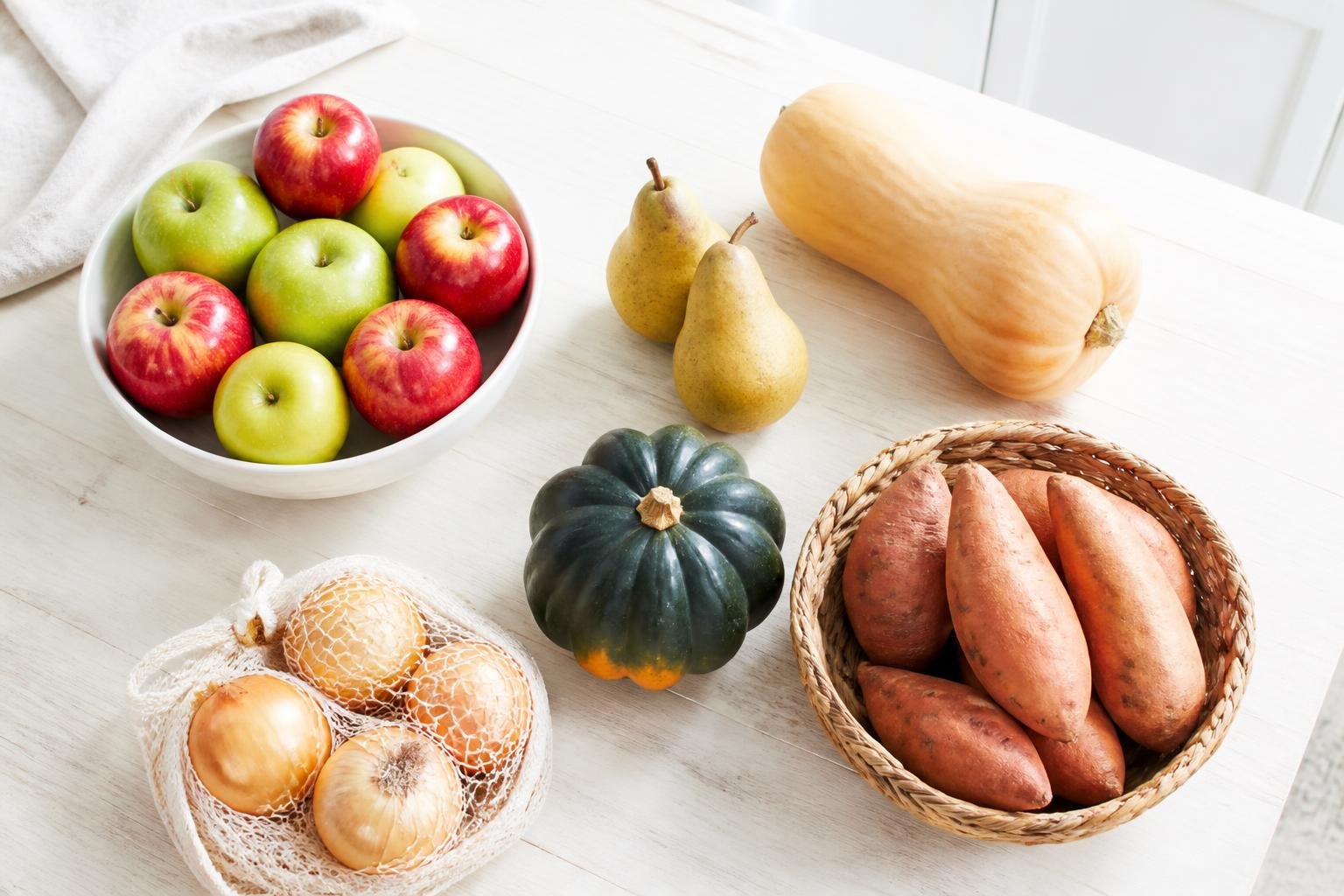
You came home from the farmers market or grocery store with a bag of crisp apples, a couple of squash, and a sack of sweet potatoes. A week later, the apples are mealy, the sweet potatoes have soft spots, and the onions are sprouting. Sound familiar?
The fix isn’t buying less. It’s knowing where each item wants to live. Fall produce is some of the longest-keeping food you can buy, but only if you store it right.
Key Takeaways
- Apples and pears go in the fridge (pears after they ripen), kept away from your other produce.
- Winter squash, sweet potatoes, potatoes, and onions skip the fridge. They want a cool, dry, dark spot instead.
- Never store potatoes and onions together, and keep apples away from leafy greens and broccoli.
- Check your stash weekly. One bad apple really can speed up the rest.
The One Rule That Explains Almost Everything: Ethylene
Some fruits give off a natural gas called ethylene as they ripen. It’s harmless to you, but it speeds up ripening, and eventually spoiling, in nearby produce that’s sensitive to it.
Big ethylene producers: apples, pears, bananas, plums, and honeydew melons.
Ethylene-sensitive produce: leafy greens, broccoli, cauliflower, Brussels sprouts, carrots, and cucumbers.
What to do: Give your apples and pears their own crisper drawer, or their own bowl away from your other fruits and vegetables. A sealed bag traps the gas and speeds ripening, so use a loose or perforated bag instead.
Use it to your advantage: Have a rock-hard pear or avocado? Put it in a paper bag with an apple for a day or two to ripen it faster.
Apples: Cold, Humid, and Alone
Apples keep best close to freezing with high humidity, which makes your fridge the right spot. A bowl on the counter looks lovely, but apples there are best eaten within about a week. In the refrigerator, good keeping varieties can stay crisp for weeks or even months.
How to store them:
- Keep apples in the crisper drawer in a loose or perforated plastic bag to hold in moisture.
- Don’t wash them until right before eating, since extra moisture encourages rot.
- Sort through them before storing. Set aside any bruised or cut apples and eat those first.
Swap it: Bought too many? Slice and freeze them for baking, or cook a big batch of applesauce. Both keep for months.
Pears: Ripen First, Then Chill
Pears are picked before they’re ripe and finish ripening off the tree. That means they need two storage spots.
How to store them:
- Ripen on the counter at room temperature for a few days.
- Check the neck, not the body. When the flesh near the stem gives slightly to gentle pressure, the pear is ready.
- Move ripe pears to the fridge to slow them down, and eat them within a few days.
Common mistake: Waiting for a pear to feel soft all over. By then, the center is often mushy.
Winter Squash and Pumpkins: The Fridge Is Too Damp
Butternut, acorn, spaghetti, and kabocha squash are storage champions. Kept in a cool, dry spot around 50 to 55°F, many varieties last two months or more.
How to store them:
- Keep whole squash somewhere cool, dry, and out of direct sun: a basement, a cool pantry, or a closet floor away from heat vents.
- Leave a little space between them so air can circulate.
- Keep the stem on. A squash without its stem has an open door for mold.
- Skip the fridge for whole squash. It’s too humid, and they break down faster there.
Once it’s cut: Wrap cut squash tightly or store it in an airtight container in the fridge, and use it within a few days.
Make it ahead: Peel, cube, and freeze butternut squash on a sheet pan, then transfer the cubes to a freezer bag. They go straight from freezer to roasting pan or soup pot.
Sweet Potatoes: Never in the Fridge
This is the storage mistake people make most often. Sweet potatoes are tropical, and cold temperatures below about 50°F cause chilling injury: a hard center, dark spots, and off flavors that don’t go away when you cook them.
How to store them:
- Keep them in a cool, dry, well-ventilated spot, ideally around 55 to 60°F. A basket in a cool pantry works well.
- Don’t wash them until you’re ready to cook.
- In a typical kitchen, plan to use them within a few weeks. A cooler spot buys you more time.
Good news: Once cooked, sweet potatoes do belong in the fridge and keep for up to five days. Cook a batch on Sunday for easy weeknight sides and lunches.
Potatoes and Onions: Cool, Dark, and Separated
Potatoes and onions both want a cool, dark place, so it’s tempting to keep them in the same bin. Don’t. Onions give off moisture and gases that make potatoes sprout and spoil faster.
How to store potatoes:
- Store them in a cool, dark, ventilated spot, such as a paper bag, a basket, or a bin in the pantry.
- Light turns potatoes green. Cut off any green spots or sprouts before cooking.
How to store onions and garlic:
- Keep them somewhere cool, dry, and airy, in a mesh bag, a wire basket, or even old pantyhose.
- Once cut, wrap leftover onion and refrigerate it.
Hardy Fall Greens and Brussels Sprouts: Use These First
Not everything in your fall haul keeps for weeks. Brussels sprouts, broccoli, cauliflower, and cooking greens like kale are ethylene-sensitive and best within a few days to a week.
How to store them:
- Refrigerate them in the crisper drawer, away from apples and pears.
- Wrap greens loosely in a dry paper towel inside a bag to absorb extra moisture.
- Plan smart: Cook the delicate stuff early in the week and save squash and sweet potatoes for later.
Your Fall Produce Storage Cheat Sheet
| Produce | Where to store it | Notes |
|---|---|---|
| Apples | Fridge, crisper drawer | Keep apart from other produce |
| Pears | Counter until ripe, then fridge | Check ripeness at the neck |
| Winter squash and pumpkins | Cool, dry pantry or basement | Not the fridge; keep stems on |
| Sweet potatoes | Cool, dry, ventilated spot | Never refrigerate raw |
| Potatoes | Cool, dark, ventilated spot | Keep away from onions |
| Onions and garlic | Cool, dry, airy spot | Mesh bag or wire basket |
| Brussels sprouts, broccoli, greens | Fridge, crisper drawer | Use within a few days to a week |
Frequently Asked Questions
Can I store apples and bananas together?
Ideally, no. Both give off a lot of ethylene, so they make each other ripen faster. Keep them in separate bowls or spots.
Why is my sweet potato hard in the middle after cooking?
It may have been stored somewhere too cold, like the fridge or a chilly garage. Chilling injury causes a hard core that doesn’t soften with cooking.
How long does a whole butternut squash last?
In a cool, dry spot, often two months or more. At warm room temperature, it’s usually closer to a few weeks, so check it for soft spots.
Should I wash produce before storing it?
For most fall produce, no. Extra moisture encourages mold and rot. Wash right before you eat or cook.
Is it safe to eat a sprouted potato?
Cut away the sprouts and any green parts, which contain natural compounds that can cause stomach upset. If the potato is very green, soft, or shriveled, throw it out.
The Bottom Line
Give your apples their own space, let your squash and sweet potatoes skip the fridge, and keep potatoes and onions apart. These three habits alone can turn a week of freshness into a month or more, which means less waste and more cozy fall meals.
Put your haul to work:
- One-Pot Butternut Squash and White Bean Soup
- Black Bean & Feta Stuffed Sweet Potatoes
- Sheet-Pan Honey Garlic Salmon with Roasted Brussels Sprouts
Sources: University of Georgia Cooperative Extension, Storage of Fresh Produce; Cornell Cooperative Extension, Storage Guidelines for Fruits & Vegetables; University of Vermont Extension, Storing Fresh Garden Produce; Washington State University Extension, Storing Your Garden Harvest; Clemson HGIC, Sweetpotato Basics; Michigan State University Extension, Using, Storing and Preserving Sweet Potatoes; K-State Research and Extension; The Food Group (MN), Fresh Produce Storage Guide.

Leave a Reply