
This is the lasagna people ask for again and again: a slow-simmered beef and tomato ragu, a creamy seasoned ricotta layer, and a golden, bubbling mozzarella top. It takes a little time, but every step is simple, and it feeds a crowd. Unlike a quick weeknight pasta, this one rewards a little patience at each stage — browning the beef properly, letting the sauce reduce, and resting the finished dish before cutting — and the payoff is a lasagna that holds its shape on the plate instead of sliding apart.
The secret to tall, clean slices is patience. Let the lasagna rest for a full 20 to 30 minutes after baking so the layers set before you cut.
Layer it up
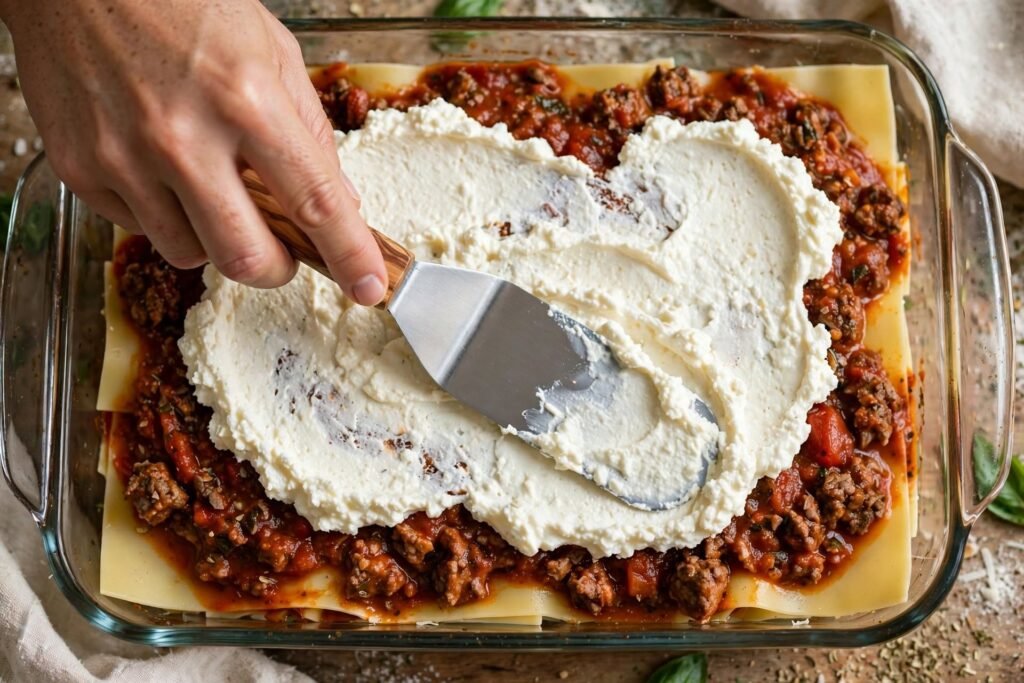
Start and finish with sauce so the noodles never dry out. Spread each layer right to the edges: sauce, noodles, dollops of ricotta smoothed into an even layer, then a handful of mozzarella. Three full layers fills a standard 9×13-inch dish.
Bake until bubbling
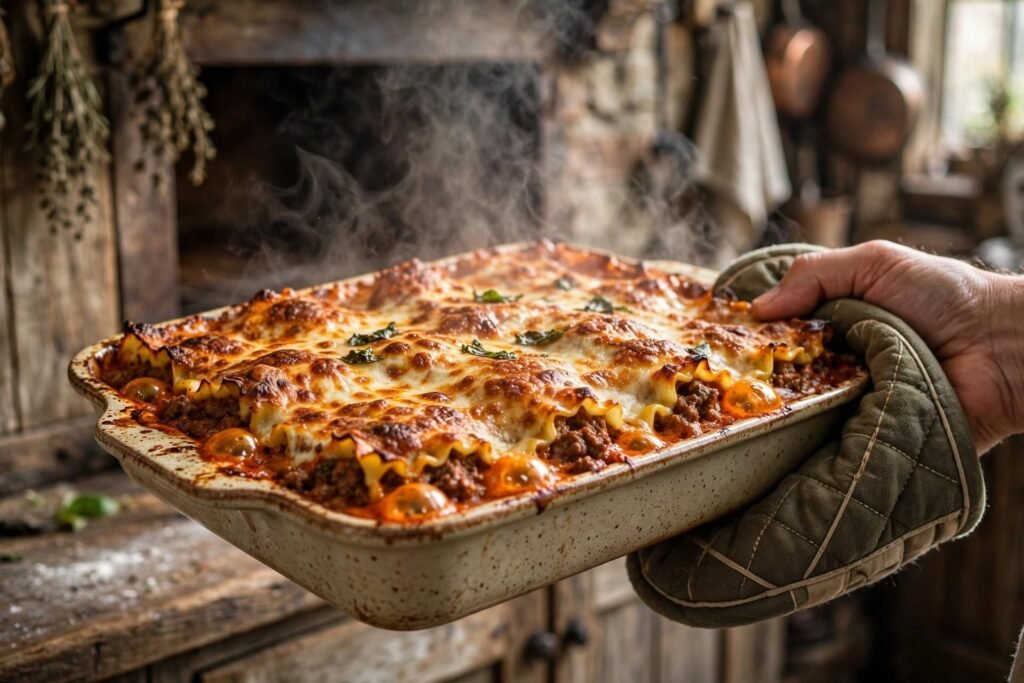
Bake covered first so the noodles cook through in the sauce, then uncover so the cheese browns. You are looking for sauce bubbling up at the edges and golden spots across the top.
Rest, then slice
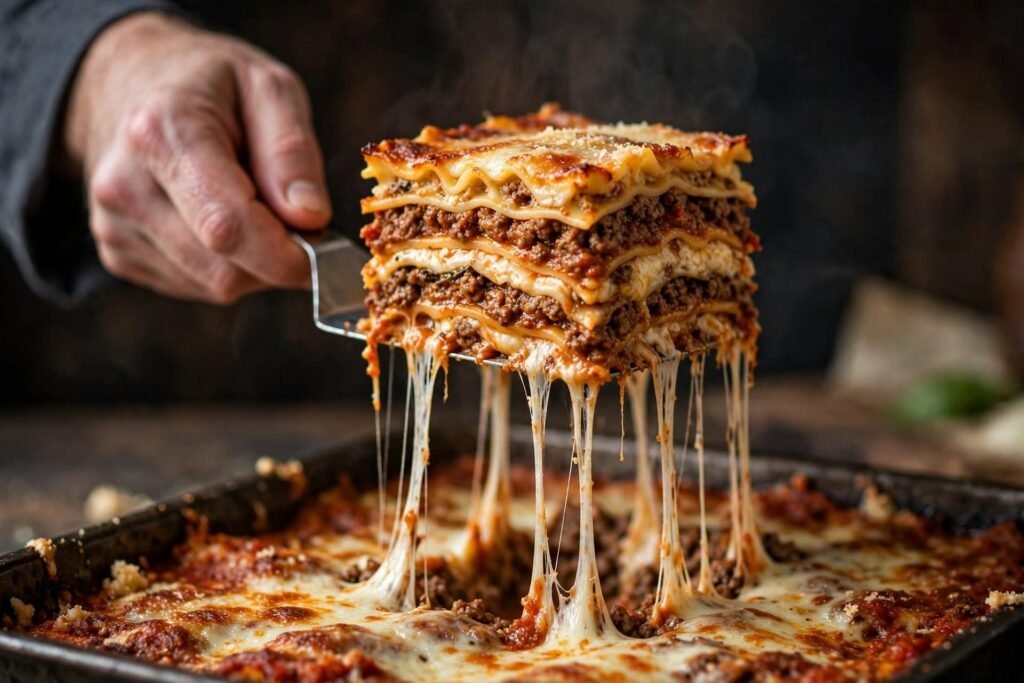
Resting is what gives you that tall slice with strings of melted cheese instead of a sloppy pile. Use a sharp knife and a wide spatula, and lift the first piece from a corner.
Tips for the best lasagna
- No-boil noodles work too: add an extra 1/2 cup of water or broth to the sauce, since they absorb more liquid.
- Make ahead: assemble, cover and refrigerate up to 24 hours. Add 10 to 15 minutes to the covered baking time.
- Freeze: wrap the unbaked lasagna tightly and freeze up to 3 months. Thaw overnight in the fridge before baking.
- Lighter version: use 93% lean beef or half beef and half lean ground turkey, and part-skim ricotta and mozzarella. Stirring a big handful of chopped spinach into the ricotta adds greens without changing the classic flavor.
Make It Your Own
This classic version is easy to adapt without losing what makes it good. For a lighter lasagna, use 93% lean beef, or split the meat half beef and half lean ground turkey — both swaps keep the texture of the ragu while cutting back on saturated fat. Using part-skim ricotta and mozzarella trims even more without changing how the layers set. Stirring a big handful of chopped spinach into the ricotta filling is an easy way to add greens to the dish without anyone noticing a change in flavor, since the mild spinach blends right into the creamy layer.
No-boil noodles are a convenient shortcut, but they absorb more liquid as they bake, so add an extra half cup of water or broth to the sauce if you go that route, or the finished lasagna can come out slightly drier than intended.
Serving Ideas
A rich, cheesy lasagna pairs well with something crisp and acidic on the side to balance it out. A simple green salad with a lemon or vinegar-based dressing cuts through the richness nicely, and garlic bread made from a whole-grain loaf rounds out the meal without much extra effort. If you are looking for a lighter side salad that still feels substantial, our warm roasted beet, apple and farro salad makes a nice contrast to a heavy, baked main like this one.
Make-Ahead, Storage and Reheating
Lasagna is one of the best make-ahead dinners precisely because it holds and reheats so well. You can assemble it up to 24 hours ahead, cover it tightly, and refrigerate it unbaked — just add 10 to 15 minutes to the covered baking time since it will be starting cold. For longer storage, wrap the unbaked lasagna tightly and freeze it for up to 3 months, then thaw it overnight in the refrigerator before baking as usual.
Once baked, leftovers keep for about 4 days in the refrigerator, following the general food-safety guidance of refrigerating cooked food within two hours of cooking and using it up within four days. Reheat individual slices covered at 350°F for 15 to 20 minutes, or in the microwave with a splash of water to keep the sauce from drying out. If you are using a thermometer to confirm the ground beef was cooked through the first time, USDA guidance calls for an internal temperature of 160°F.
A Quick Nutrition Note
A slice of classic beef lasagna is a good source of protein and calcium between the beef, ricotta, mozzarella and Parmesan, though it is also a relatively calorie-dense, rich dish. Pairing a slice with a vegetable-forward side, as suggested above, is an easy way to round out the plate without changing the recipe itself. This is general nutrition information, not medical advice, so check with a doctor or registered dietitian about how a dish like this fits your own needs.
Frequently Asked Questions
Why did my lasagna turn out watery?
This is usually one of two things: the meat sauce was not simmered long enough to thicken, or the ricotta mixture was too loose. Simmering the sauce until it visibly thickens, and letting the baked lasagna rest the full 20 to 30 minutes before cutting, solves most watery-lasagna problems.
Can I make this without ricotta?
Cottage cheese blended until smooth is a common substitute and works well in the same quantity. The texture will be slightly different, but the layers will still set properly.
How do I know the lasagna is fully cooked?
Look for sauce bubbling up visibly at the edges of the dish and golden-brown spots across the top once you uncover it. The meat sauce itself should already be fully cooked before assembly, since it was simmered on the stovetop first.
The Bottom Line
A great classic beef lasagna comes down to a handful of small habits: browning the meat properly, simmering the sauce until it thickens, layering edge to edge, and resting the finished dish before you cut into it. Follow those steps and this recipe holds up as a reliable centerpiece for a weeknight dinner, a potluck, or a freezer stash for busier days ahead.
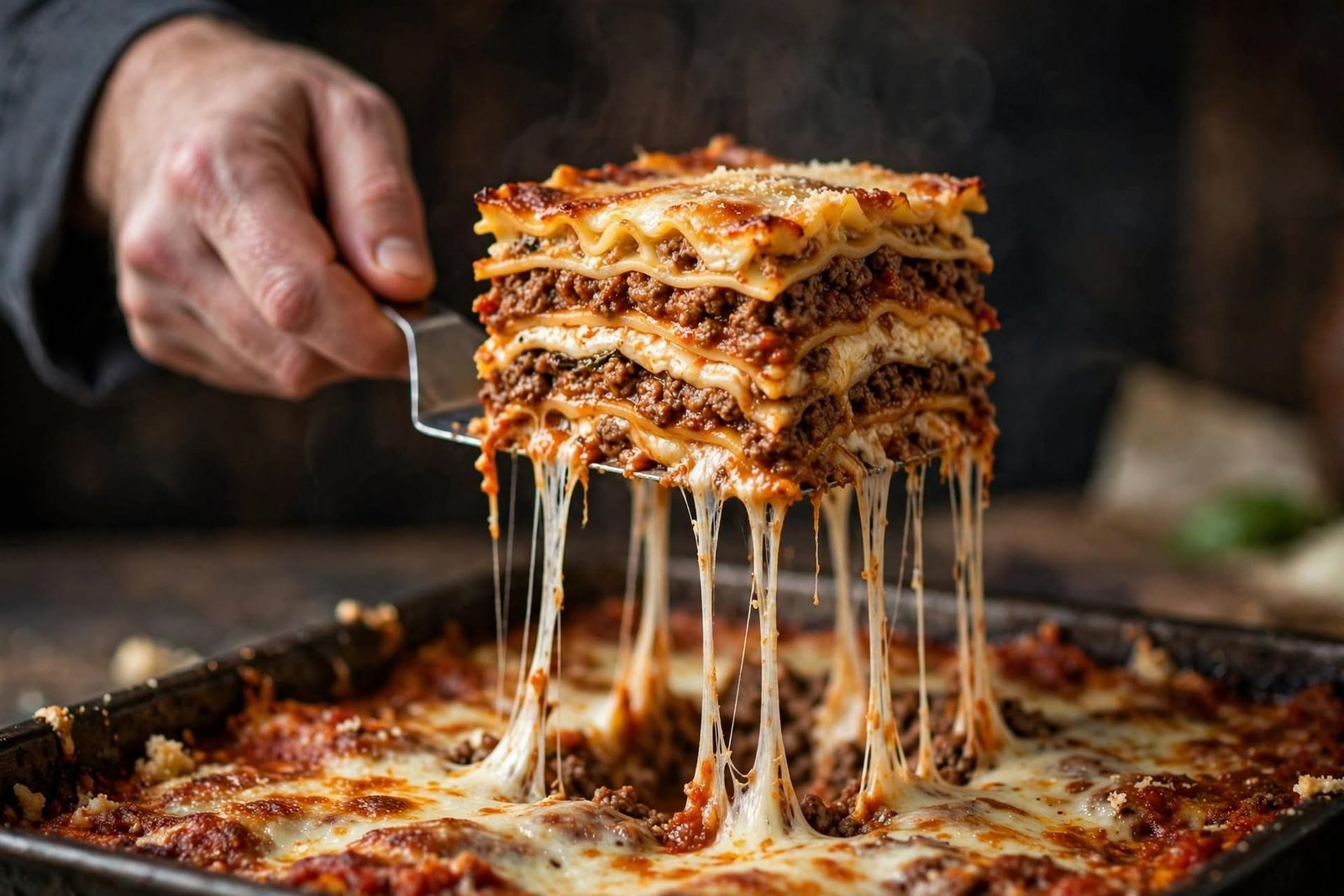
Classic Beef Lasagna
Ingredients
Method
- Heat the olive oil in a large pot over medium heat. Cook the onion for 5 minutes until soft, then add the garlic and cook 30 seconds.
- Add the ground beef, salt and pepper. Cook, breaking it up, until browned, about 8 minutes. Drain excess fat if needed.
- Stir in the tomato paste for 1 minute, then add the crushed tomatoes, tomato sauce, Italian seasoning and sugar. Simmer uncovered for 20 to 30 minutes, stirring now and then, until thickened. Stir in the basil.
- Meanwhile, cook the noodles in salted water 2 minutes less than the package says. Drain, rinse briefly with cool water and lay flat on an oiled sheet so they don't stick.
- Mix the ricotta, egg, Parmesan, parsley and salt in a bowl. Heat the oven to 375°F (190°C).
- Spread 1 cup of meat sauce over the bottom of a 9×13-inch baking dish. Add 4 noodles, one third of the ricotta, 1 cup of mozzarella and about 1 1/2 cups of sauce. Repeat twice more.
- Finish with the remaining sauce, the last 1 cup of mozzarella and the 1/2 cup Parmesan.
- Cover with foil (tent it or grease the underside so it doesn't stick to the cheese) and bake 25 minutes. Uncover and bake another 20 to 25 minutes, until bubbling at the edges and golden on top.
- Rest for 20 to 30 minutes before slicing. This is what keeps the layers tall and neat.

Leave a Reply