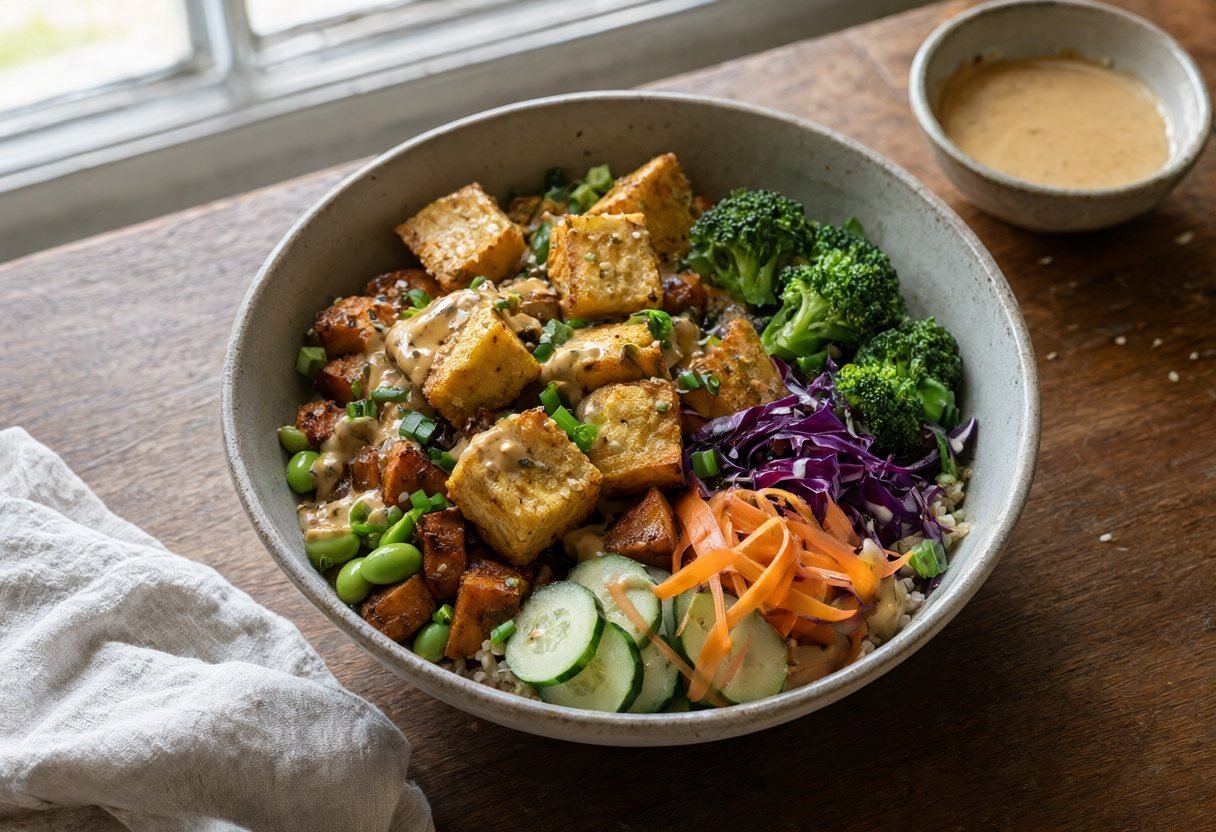
Tofu has a reputation problem. For a lot of home cooks it conjures up images of bland, mushy cubes sitting sadly on top of a salad — which is a shame, because when it’s pressed well, tossed in a few pantry staples, and baked until the edges turn golden and crackly, tofu is one of the easiest ways to get a hearty, satisfying, plant-based dinner on the table in under 40 minutes. This Crispy Baked Tofu Buddha Bowl with Peanut-Ginger Sauce is built around exactly that: crisp-edged baked tofu, warm roasted vegetables, a grain base, and a creamy, salty-sweet peanut-ginger sauce that pulls the whole bowl together.
Why Tofu Deserves a Spot in Your Weekly Rotation
Tofu is made by coagulating soy milk and pressing the curds into blocks, a process that’s been part of East and Southeast Asian cooking for centuries. Nutritionally, it’s one of the few plant foods that counts as a complete protein, meaning it supplies all nine essential amino acids your body can’t make on its own. A typical half-cup serving of firm tofu provides roughly 10 grams of protein, and when it’s made with calcium sulfate as the coagulant (check the ingredient label — many firm tofus are), it’s also a meaningful source of calcium.
Tofu is also one of the most studied soy foods when it comes to heart health. A 2020 analysis published in the American Heart Association’s journal Circulation followed over 200,000 adults and found that those who ate tofu and other isoflavone-rich soy foods regularly had a modestly lower risk of cardiovascular disease compared to those who rarely did, an association researchers linked to the plant compounds (isoflavones) naturally present in soy (American Heart Association, 2020). That’s one study among many, and it doesn’t mean tofu is a cure-all — but as part of an overall vegetable- and fiber-forward eating pattern, it’s a reasonable, budget-friendly protein to lean on a few nights a week. This is general information and not a substitute for personalized medical advice, especially if you have a thyroid condition or soy allergy, in which case it’s worth checking with your doctor or a registered dietitian first.
What You’ll Need
For the crispy baked tofu:
- 1 block (14-16 oz) extra-firm tofu, pressed
- 1 tablespoon cornstarch (this is the trick to really crispy edges)
- 1 tablespoon avocado or olive oil
- 1 tablespoon low-sodium soy sauce or tamari
- 1/2 teaspoon garlic powder
For the peanut-ginger sauce:
- 3 tablespoons natural peanut butter
- 1 tablespoon low-sodium soy sauce or tamari
- 1 tablespoon fresh lime juice
- 1 teaspoon fresh grated ginger (or 1/2 teaspoon ground ginger)
- 1 teaspoon honey or maple syrup
- 2-4 tablespoons warm water, to thin
For the bowl:
- 2 cups cooked brown rice, farro, or quinoa
- 2 cups broccoli florets
- 1 cup shredded carrots
- 1 cup shredded red cabbage
- 1 avocado, sliced
- 2 tablespoons chopped roasted peanuts or sesame seeds, for topping
- Sliced scallions and fresh cilantro, for topping
How to Make Crispy Baked Tofu
- Preheat your oven to 425°F (220°C) and line a sheet pan with parchment paper.
- Press the tofu: wrap the block in a clean towel, set something heavy on top (a cast-iron pan or a few cookbooks work well), and let it sit for 15-20 minutes to push out excess water. This step matters more than any seasoning — it’s what lets the tofu crisp instead of steam.
- Cut the pressed tofu into 3/4-inch cubes. Toss gently in a bowl with the oil and soy sauce, then sprinkle the cornstarch and garlic powder over the top and toss again until every piece is lightly coated.
- Spread the cubes in a single layer on the sheet pan, leaving space between pieces so steam can escape. Bake for 25-30 minutes, flipping halfway through, until deeply golden and crisp on the edges.
Roasting the Vegetables
While the tofu bakes, toss the broccoli florets with a little oil and a pinch of salt and roast on a separate sheet pan at the same 425°F for about 15 minutes, until bright green with slightly charred edges. Roasting the broccoli rather than steaming it adds a nutty, caramelized flavor that holds up well against the bold peanut-ginger sauce.
Making the Peanut-Ginger Sauce
Whisk together the peanut butter, soy sauce, lime juice, ginger, and honey in a small bowl until smooth. Add warm water one tablespoon at a time, whisking between additions, until the sauce is pourable but still clings to a spoon — you’re aiming for the texture of heavy cream. Taste and adjust: more lime for brightness, more honey if it tastes too sharp, a splash more water if it’s too thick to drizzle.
Assembling the Buddha Bowl
Divide the cooked grain between four bowls. Arrange the crispy tofu, roasted broccoli, shredded carrots, shredded cabbage, and avocado slices in sections over the grain — part of the appeal of a Buddha bowl is the colorful, compartmentalized look, so resist the urge to toss everything together before serving. Drizzle generously with the peanut-ginger sauce and finish with chopped peanuts, scallions, and cilantro. If you enjoyed the format of our Quinoa Power Bowl with Roasted Sweet Potato and Tahini Dressing, this bowl follows the same build-your-own logic with a different protein and a punchier, Southeast Asian-inspired sauce.
Tips for Extra-Crispy Tofu
- Don’t skip the press. Even a quick 15-minute press makes a noticeable difference in texture.
- Cornstarch (or arrowroot starch) is the real crisping agent — it forms a thin, crackly shell as it bakes.
- Give the cubes room on the pan. Crowding traps steam and leads to soft, soggy tofu instead of crisp edges.
- Resist flipping too early; let the first side set and deeply brown before turning so the coating doesn’t tear away.
Make-Ahead and Storage Tips
This bowl is great for meal prep. Roast the tofu and broccoli, cook the grain, and make the sauce up to 4 days ahead, storing each component separately in the refrigerator. The sauce will thicken as it chills, so stir in a splash of warm water to loosen it before serving. For the best texture, reheat the tofu in a hot oven or air fryer for a few minutes rather than the microwave, which will soften the crispy edges. Shredded carrots and cabbage hold up well raw for several days, so it’s worth prepping those once at the start of the week. Looking for another protein-packed make-ahead option to round out your prep day? Our No-Bake Peanut Butter Oat Energy Bites use a similar peanut butter base and keep well in the fridge for an easy snack alongside this bowl.
Easy Swaps
- No peanut allergy concerns to work around? You can swap the peanut butter for sunflower seed butter or tahini for a nut-free version.
- Short on time? A store-bought pre-cooked grain pouch or leftover rice works just as well as cooking a fresh batch.
- Want more protein? Add a soft-boiled egg or swap in extra tofu — this bowl is flexible by design.
- Craving a different vegetable combo? Roasted Brussels sprouts, snap peas, or bell peppers all work well here, similar to the mix of roasted vegetables in our Black Bean & Feta Stuffed Sweet Potatoes.
A Satisfying, Plant-Forward Dinner
What makes this Buddha bowl work as a weeknight staple is that every component can be made ahead, mixed and matched, and scaled up without much extra effort. It’s naturally vegetarian, easy to make vegan with a maple syrup swap in the sauce, and hearty enough that you won’t be reaching for a snack an hour later. Once you get the hang of the crispy-tofu technique, it’s a method you’ll find yourself reusing in grain bowls, lettuce wraps, and salads well beyond this one recipe.

Leave a Reply