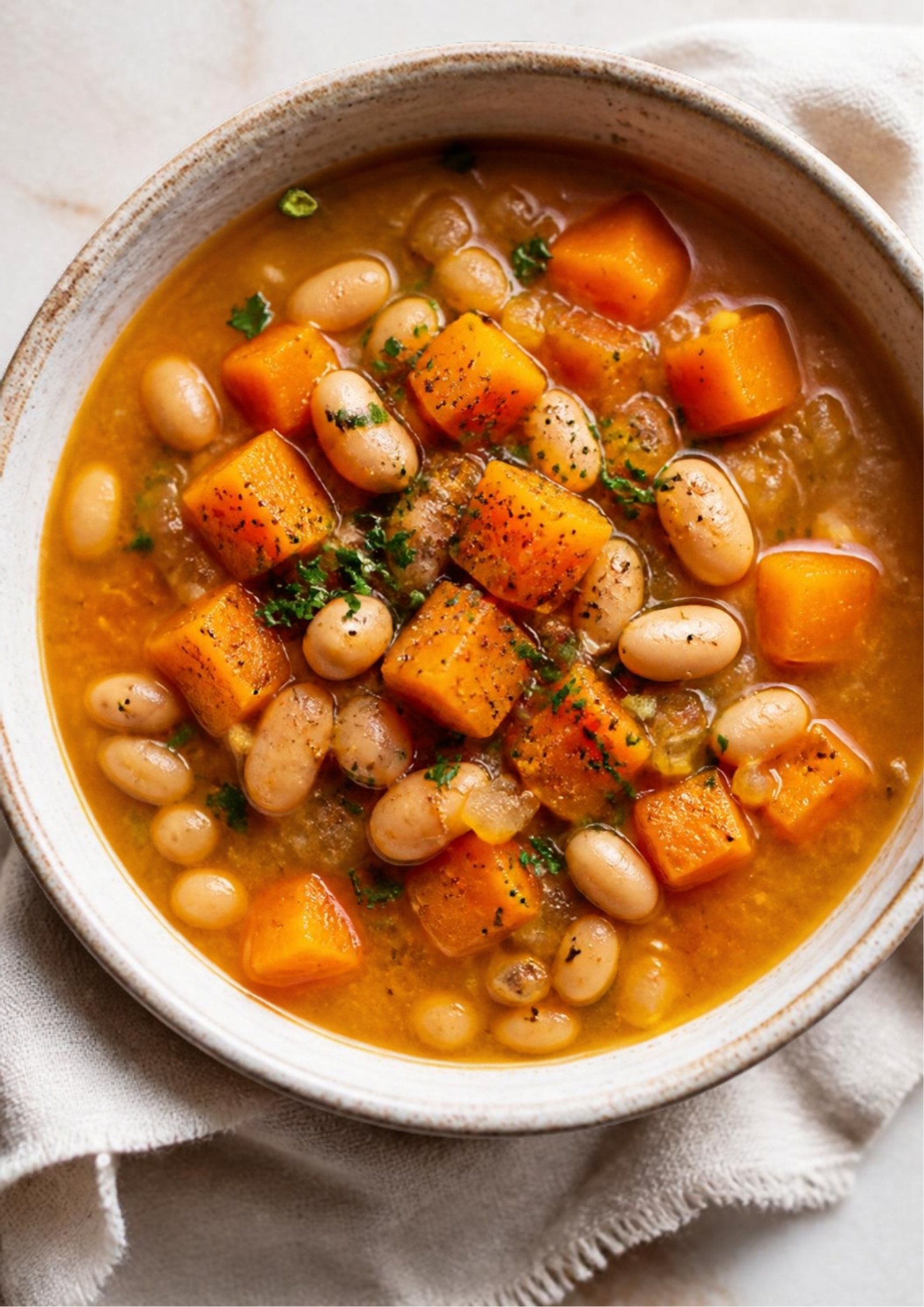
There’s a particular kind of comfort that only a pot of simmering soup can bring on a cool fall afternoon — and this one-pot butternut squash and white bean soup delivers that coziness while quietly packing in more fiber, vitamins, and plant protein than most weeknight dinners manage. It comes together in one pot, needs no fancy technique, and tastes like it took far longer than it actually did.
Butternut squash is everywhere at farmers markets and grocery stores this time of year, and for good reason: it’s naturally sweet, creamy when blended or simmered, and loaded with beta-carotene. Pair it with creamy white beans — cannellini, navy, or great northern all work — and you get a soup that’s genuinely filling, not just warm and tasty. Let’s get into why this combination works so well, then walk through exactly how to make it.
Why This Soup Belongs in Your Fall Rotation
Soup season isn’t just about staying warm — it’s one of the easiest ways to eat more vegetables and legumes without much effort. A single pot of this soup covers a serving of vegetables, a hearty dose of fiber, and plant-based protein, all in a format that reheats beautifully for lunches throughout the week. It’s also naturally vegetarian (and easy to make vegan with vegetable broth), gluten-free, and budget-friendly, since both butternut squash and dried or canned white beans are inexpensive pantry staples through the colder months.
The Health Benefits of Butternut Squash
Butternut squash is often overlooked next to flashier vegetables, but its nutrition profile is hard to beat. According to Healthline’s nutrition breakdown, a 100-gram serving of raw butternut squash has only about 48 calories, yet delivers roughly 2 grams of fiber, 7.6 milligrams of vitamin C, and 329 milligrams of potassium, along with an abundance of beta-carotene that your body converts into active vitamin A.
- Vitamin A support: The carotenoids in butternut squash are converted into vitamin A, which plays a role in immune function and vision.
- Antioxidant content: Research reviewed by Healthline suggests diets rich in antioxidants like those found in orange and yellow vegetables may be linked to a reduced risk of certain cancers, though researchers note more evidence is still needed.
- Heart and brain health research: One cited study found heart disease risk fell by 23% for every additional daily serving of yellow-orange vegetables, and a separate 2021 study linked higher carotenoid intake from vegetables to reduced cognitive decline in older adults.
- Weight-friendly fiber: Its fiber content contributes to satiety, and fiber-rich, plant-based eating patterns have been associated with better weight management outcomes in research.
These are general findings about a nutrient-dense food, not guarantees — no single ingredient prevents disease on its own. But stacking your plate (or your soup pot) with vegetables like butternut squash is a well-supported habit for long-term wellness.
Why White Beans Make This Soup Even Better
If butternut squash brings the vitamins, white beans bring the staying power. Legumes like white beans are a textbook example of what nutrition researchers call a “sweet spot” food — high in both fiber and protein at once. According to Harvard’s T.H. Chan School of Public Health Nutrition Source, legumes are nutrient-dense sources of protein, fiber (both soluble and insoluble), folate, iron, and phosphorus, and they also contain heart-healthy unsaturated fats.
The research on legumes and heart health is particularly compelling. Harvard’s Nutrition Source notes that eating legumes about four times a week has been associated with a 14–22% reduced risk of coronary artery disease in various studies, and that legume consumption has been linked to reductions in total and LDL (“bad”) cholesterol alongside modest increases in HDL (“good”) cholesterol. Because legumes have a low glycemic index and are high in fiber, they also digest more slowly than refined carbohydrates, which helps avoid sharp blood sugar spikes.
A quick note: this post is meant as general recipe inspiration and nutrition information, not individualized medical advice. If you’re managing a specific health condition like heart disease or diabetes, talk with your doctor or a registered dietitian about how legumes and other foods fit into your personal plan.
Ingredients You’ll Need
This recipe makes about 6 servings and keeps the ingredient list short on purpose — the squash and beans do most of the work.
- 2 tablespoons olive oil
- 1 medium yellow onion, diced
- 3 cloves garlic, minced
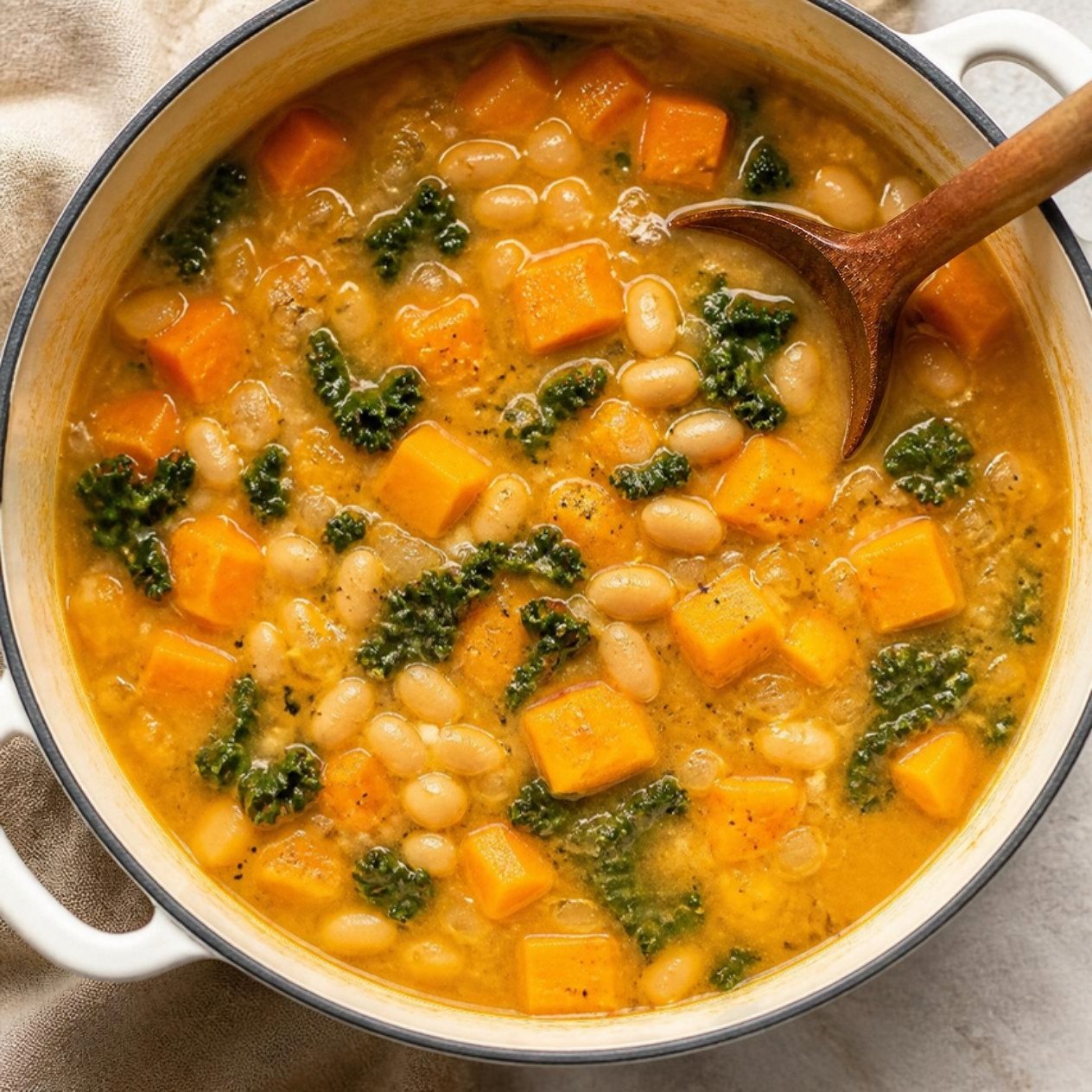
- 1 medium butternut squash (about 3 pounds), peeled and cubed
- 2 (15-ounce) cans white beans (cannellini, navy, or great northern), drained and rinsed
- 4 cups vegetable or chicken broth
- 1 teaspoon ground cumin
- 1/2 teaspoon smoked paprika
- 1/4 teaspoon cayenne pepper (optional, for a little heat)
- Salt and black pepper, to taste
- 2 cups chopped kale or spinach (optional, for extra greens)
- Fresh herbs, a drizzle of olive oil, or toasted pumpkin seeds, for serving
Step-by-Step Instructions
- Sauté the aromatics. Heat the olive oil in a large pot or Dutch oven over medium heat. Add the diced onion and cook for 4-5 minutes, until softened and translucent. Add the garlic and cook for another 30 seconds, until fragrant.
- Add the squash and seasonings. Stir in the cubed butternut squash, cumin, smoked paprika, and cayenne (if using). Cook for 2-3 minutes, stirring occasionally, to let the spices bloom.
- Add the beans and broth. Pour in the white beans and broth. Bring the mixture to a boil, then reduce the heat to a gentle simmer. Cover and cook for 20-25 minutes, until the squash is fork-tender.
- Blend (partially or fully), if desired. For a creamier soup, use an immersion blender to purée about half the pot, leaving some texture. For a brothier, chunkier soup, skip this step entirely — both versions are delicious.
- Stir in the greens. If using kale or spinach, stir it in during the last 3-5 minutes of cooking, just until wilted.
- Season and serve. Taste and adjust salt and pepper. Ladle into bowls and top with a drizzle of olive oil, toasted pumpkin seeds, or fresh herbs like parsley or sage.
Tips for Customizing Your Soup
One of the best things about this recipe is how easily it adapts to what you have on hand or what you’re craving.
- Make it vegan: Use vegetable broth instead of chicken broth — everything else is already plant-based.
- Add protein: Stir in shredded rotisserie chicken or crumbled cooked chicken sausage for a heartier, meal-prep-friendly version.
- Boost the spice: A pinch of cinnamon or a swirl of harissa paste plays beautifully against the sweetness of the squash.
- Short on time: Pre-cubed butternut squash (fresh or frozen) cuts prep time significantly and works just as well.
- Make it in a slow cooker: Combine everything except the greens and cook on low for 6-7 hours, or high for 3-4 hours, stirring in the greens at the end.
How to Store and Reheat
This soup is an excellent make-ahead option. Let it cool completely, then store it in an airtight container in the refrigerator for up to 5 days. It also freezes well for up to 3 months — portion it into individual containers for easy grab-and-go lunches. Reheat gently on the stovetop over medium-low heat, or in the microwave in 1-minute increments, stirring between each, adding a splash of broth or water if it has thickened too much in the fridge.
Frequently Asked Questions
Can I use a different squash? Yes — acorn squash, kabocha squash, or even sweet potato can be substituted for butternut squash with similar results.
Can I use dried beans instead of canned? Absolutely. Cook about 1.5 cups of dried white beans according to package instructions (or soak overnight and simmer until tender) before adding them in step 3.
Is this soup good for meal prep? Very much so — the flavors deepen after a day in the fridge, making it an ideal make-ahead lunch or dinner.
The Bottom Line
This one-pot butternut squash and white bean soup proves that nourishing, nutrient-dense food doesn’t have to be complicated. With just one pot, a handful of pantry staples, and about 40 minutes, you get a meal that’s rich in fiber, vitamin A, and plant protein — and genuinely satisfying on a cold day. Make a double batch, and you’ve got lunches covered for most of the week.
Leave a Reply