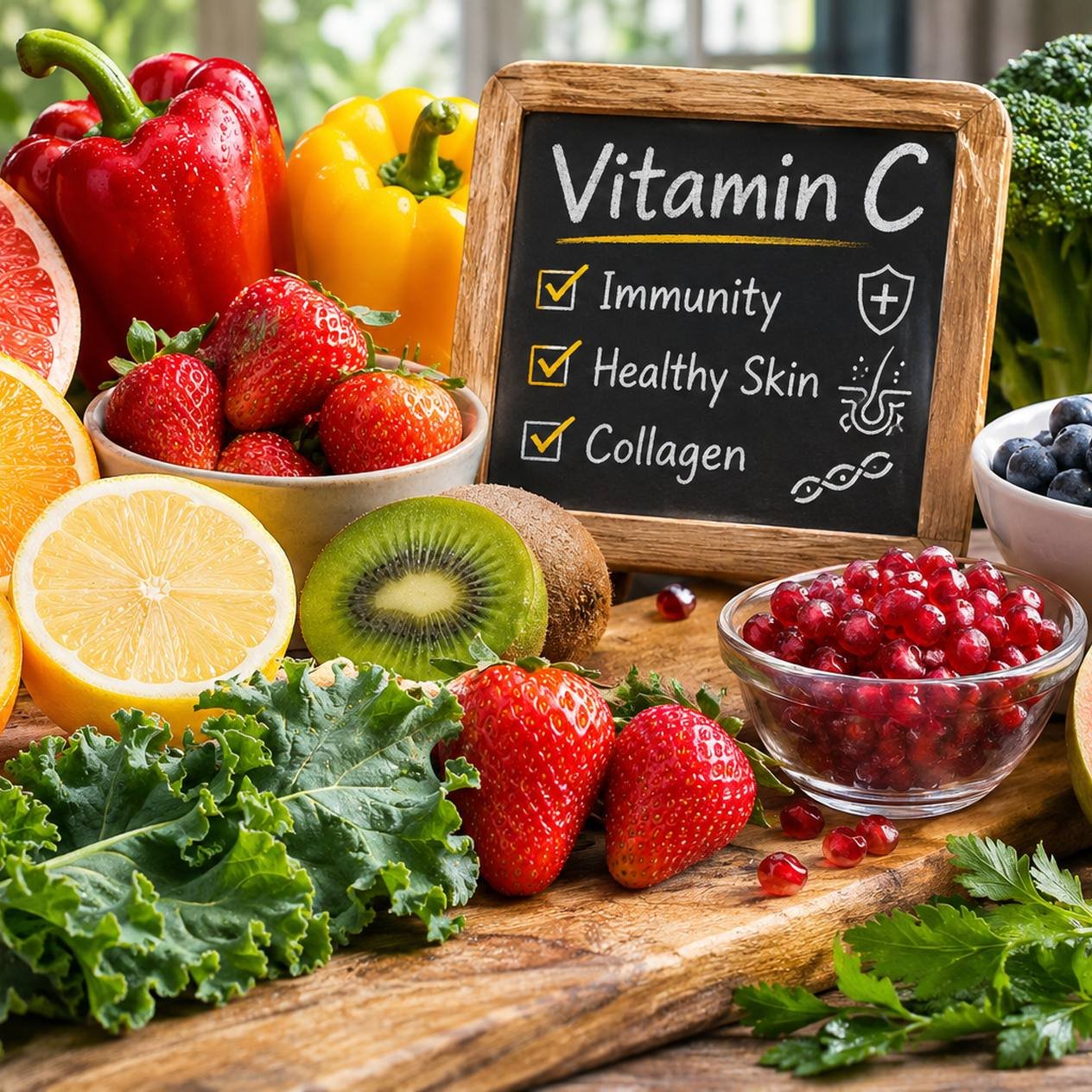
Oranges get all the credit, but vitamin C shows up in a lot more of your kitchen than you might think — and your body burns through its supply faster than you’d expect, since it can’t be stored for later. This water-soluble nutrient plays a role in everything from how quickly a cut heals to how well your skin holds its structure, yet many people still only think of it as “the cold vitamin.” Here’s a practical, no-hype guide to how much vitamin C you actually need, which foods deliver the most, and a few easy habits that make hitting your daily target almost automatic.
This article is for general information and isn’t a substitute for personalized medical advice — check with your doctor or a registered dietitian about your own nutrient needs, especially if you’re managing a health condition.
Why Vitamin C Matters for Your Body
Vitamin C (ascorbic acid) is an antioxidant, which means it helps protect your cells from damage caused by free radicals — unstable molecules linked to aging and chronic disease. But its job list goes well beyond that. Your body needs vitamin C to build collagen, the structural protein that holds together skin, blood vessels, tendons, and ligaments, which is why it’s essential for wound healing. It also helps your immune system function properly, and — in a detail that’s easy to miss — it significantly improves how well your body absorbs iron from plant foods like beans, lentils, and spinach. Pairing a vitamin-C food with an iron-rich meal is one of the simplest nutrition upgrades you can make.
How Much Vitamin C Do You Actually Need?
According to the National Institutes of Health Office of Dietary Supplements, the Recommended Dietary Allowance (RDA) for vitamin C is:
For context, a single medium orange or about three-quarters of a cup of chopped red bell pepper can cover most adults’ daily requirement on its own. The Tolerable Upper Intake Level (UL) is 2,000 mg per day from food and supplements combined — intakes well above that can cause digestive upset like diarrhea, nausea, and stomach cramps, and research summarized by Harvard’s T.H. Chan School of Public Health notes that absorption efficiency actually drops once you’re taking in more than about 1,000 mg at a time. In other words, more isn’t automatically better; your body can only use so much.
The Best Food Sources of Vitamin C
The good news is that vitamin C is genuinely easy to get from whole foods — no supplement required for most healthy adults. Here are the most reliable sources, with approximate vitamin C content based on typical USDA food composition data:
Fruits
Vegetables
A quick kitchen note: vitamin C is sensitive to heat, light, and long cooking times, and because it’s water-soluble, it can leach into cooking liquid and get poured down the drain with it. If you want to preserve as much as possible, eat produce raw or close to peak ripeness when you can, and when you do cook vitamin-C-rich vegetables, favor quick methods — steaming, stir-frying, or microwaving with minimal water — over long boils.
Vitamin C and Skin Health
Beyond immunity, vitamin C has a direct line to skin health because of its role in collagen production. Collagen is what keeps skin firm and resilient, and your body can’t synthesize it properly without adequate vitamin C on board. This isn’t just a skincare-aisle talking point — it’s one of the more well-established, mechanistic links in nutrition science, and recent research has continued to find that dietary (not just topical) vitamin C intake is associated with measurable improvements in skin thickness and function. That makes a vitamin-C-rich diet one of the more evidence-backed “beauty from within” habits, alongside the basics of sleep, hydration, and sun protection.
Signs You Might Not Be Getting Enough
True vitamin C deficiency (scurvy) is rare in the United States and Canada today, but mild inadequacy is more common than people assume, especially among those eating a very limited variety of fruits and vegetables. According to the NIH, signs of low vitamin C status can include:
If you notice several of these at once, it’s worth a conversation with a healthcare provider rather than self-diagnosing — these symptoms can overlap with a lot of other, unrelated issues.
Who Should Pay Extra Attention
A few groups are more likely to fall short on vitamin C and may want to be especially intentional about their intake: people who smoke or are regularly exposed to secondhand smoke (both increase the body’s vitamin C turnover), people with very limited diets or restricted food access, and people with certain malabsorption conditions or who require kidney dialysis. If any of these apply to you, it’s worth discussing your specific needs with a doctor or registered dietitian rather than relying on general guidelines alone.
Easy Ways to Get More Vitamin C Every Day
Vitamin C also works alongside other nutrients as part of a broader immune-supportive diet — if you want the fuller picture, our posts on immune-boosting foods and zinc-rich foods are good next reads.
A Quick Note on Supplements
Most healthy adults eating a varied diet don’t need a vitamin C supplement to meet the RDA — a bell pepper and a piece of fruit will usually do it. If you do take one, more isn’t better: research summarized by Harvard’s Nutrition Source has found that high-dose vitamin C supplements don’t meaningfully prevent the common cold for most people, though regular users may see a slightly shorter illness. High doses can also cause GI upset, and people with hemochromatosis (an iron-overload condition) should be cautious, since vitamin C increases iron absorption. If you’re undergoing chemotherapy or radiation, talk to your oncology team before adding antioxidant supplements, since there’s some evidence they can interfere with treatment. As always, food first, supplements only if a healthcare provider recommends one for your specific situation.
The Bottom Line
Vitamin C is one of the easier nutrients to get right, precisely because it’s everywhere in the produce aisle — not just in citrus. A colorful plate with a bell pepper here, some broccoli there, and a piece of fruit at breakfast will comfortably cover most people’s daily needs while supporting your skin, your immune system, and your iron absorption all at once. You don’t need a supplement bottle; you need a grocery list with a little more color on it.

Leave a Reply