You’ve probably heard the advice a thousand times: drink eight glasses of water a day. It’s simple, it rhymes with common sense, and it’s stuck in our collective memory for decades. There’s just one problem — according to Harvard Health and the Cleveland Clinic, that number isn’t actually based on solid science. So how much water do you really need, and how can you tell if you’re falling short? Let’s clear up the confusion and give you a hydration approach that’s grounded in what the research actually says.
Why Hydration Matters More Than You Think
Water isn’t just something you drink when you’re thirsty — it’s woven into nearly every function your body performs. According to the Mayo Clinic, water makes up about 50% to 65% of your total body weight, and it’s distributed throughout your cells, muscles, organs, and bones. Every sip you take helps your body:
- Regulate body temperature through sweating
- Flush waste through urine and bowel movements
- Support digestion and help your body absorb nutrients
- Transport oxygen and nutrients to your cells
- Cushion your joints and protect sensitive tissues and organs
- Maintain the electrolyte balance your nerves and muscles depend on
Proper hydration has also been linked to a lower risk of kidney stones and urinary tract infections, according to Mayo Clinic. In short, water is quietly doing a lot of heavy lifting, even on days when you don’t think twice about it.
So How Much Water Do You Actually Need?
The General Guidelines
Rather than a single magic number, health authorities tend to offer a range. Mayo Clinic says the average healthy adult gets enough fluid by consuming somewhere between 11.5 cups (2.7 liters) and 15.5 cups (3.7 liters) of total fluids per day — and importantly, that includes fluid from food and beverages beyond plain water, not just what comes out of your water bottle.
Harvard Health breaks it down similarly: most people need roughly four to six cups of plain water daily, with total fluid intake (including other beverages and food) averaging around 15.5 cups for men and 11.5 cups for women. The Academy of Nutrition and Dietetics offers a comparable benchmark, suggesting about 104 ounces (13 cups, or roughly 3.1 liters) a day for men and 73 ounces (9 cups, or roughly 2.1 liters) a day for women.
Notice that these are starting points, not rigid rules carved in stone. As the Cleveland Clinic puts it, the “eight glasses a day” guideline is somewhat arbitrary and isn’t rooted in strong scientific evidence — your actual needs depend on your body, your lifestyle, and your environment.
Factors That Increase Your Needs
Several everyday factors can push your hydration needs higher than the baseline guidelines:
- Exercise: Any activity that makes you sweat requires extra fluid before, during, and after your workout.
- Climate: Hot, humid weather and high altitudes both increase fluid loss.
- Illness: Fever, vomiting, and diarrhea all elevate your body’s fluid requirements.
- Pregnancy and breastfeeding: Both life stages come with increased hydration needs.
- Age: Harvard Health notes that older adults are especially at risk of under-hydrating because the body’s natural thirst signal tends to weaken with age.
The Telltale Signs You’re Not Drinking Enough
Your body is usually pretty good at telling you when it needs more water — the trick is knowing what to listen for. According to Mayo Clinic and Cleveland Clinic, common signs of mild dehydration include:
- Persistent thirst
- Dark yellow urine (pale yellow is the goal)
- Headaches
- Fatigue or reduced physical performance
- Dry mouth
- Muscle cramps
- Constipation
In more severe cases, dehydration can cause dizziness, confusion, and low blood pressure — at which point it’s worth seeking medical attention rather than just reaching for a glass of water. One of the easiest at-home checks is simply glancing at the color of your urine: pale yellow generally signals good hydration, while darker shades suggest it’s time to drink more.
Easy Ways to Stay Hydrated Without Overthinking It
Staying hydrated doesn’t have to mean chugging water you don’t want or setting a dozen phone reminders. A few small habits can make a real difference:
- Sip steadily, not all at once. Cleveland Clinic recommends spreading your fluid intake throughout the day rather than trying to down a large amount in one sitting.
- Keep a water bottle within reach. Having water visible on your desk, in your bag, or in the car makes it far easier to sip without thinking about it.
- Pair water with existing habits. Drink a glass when you wake up, before each meal, and whenever you make coffee or tea.
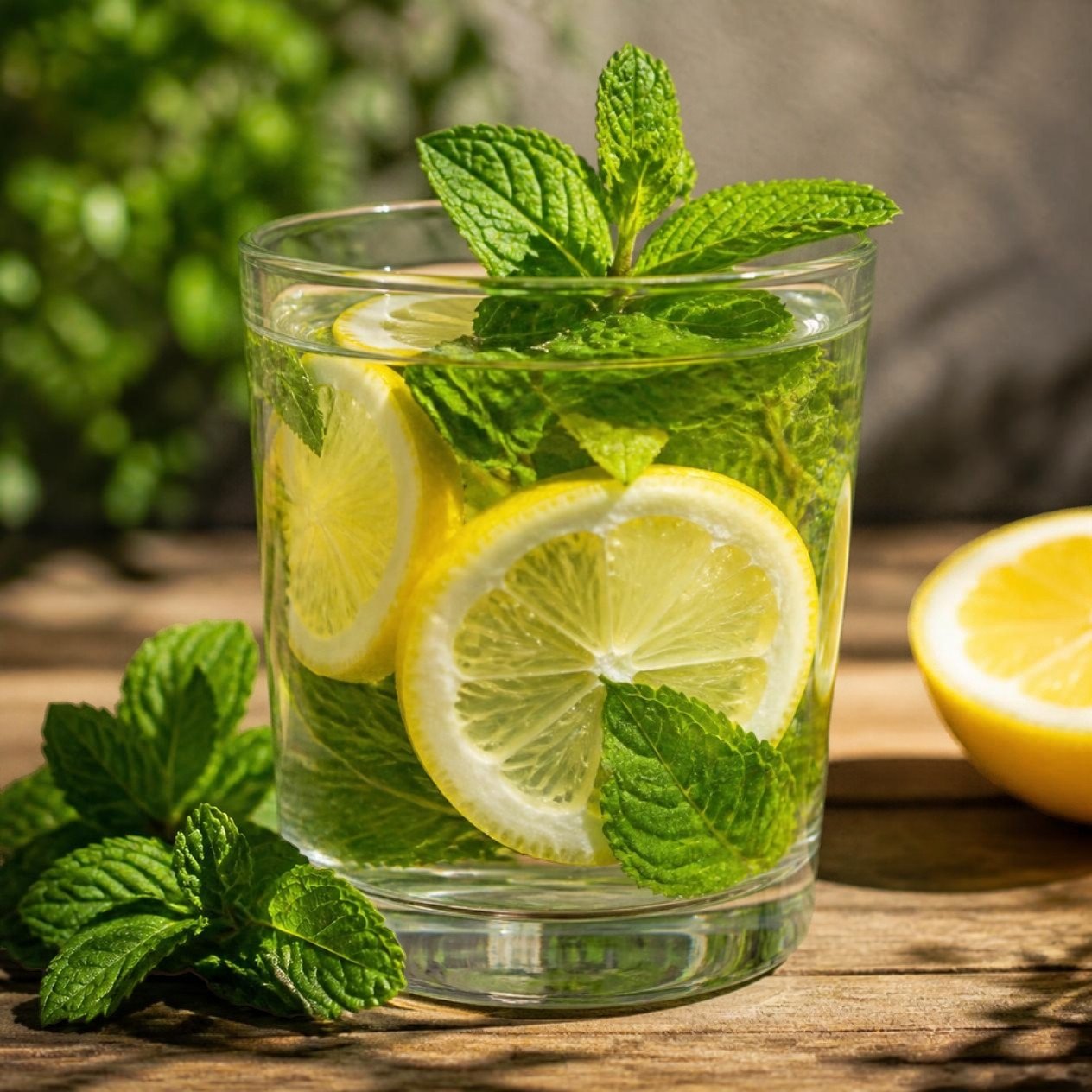
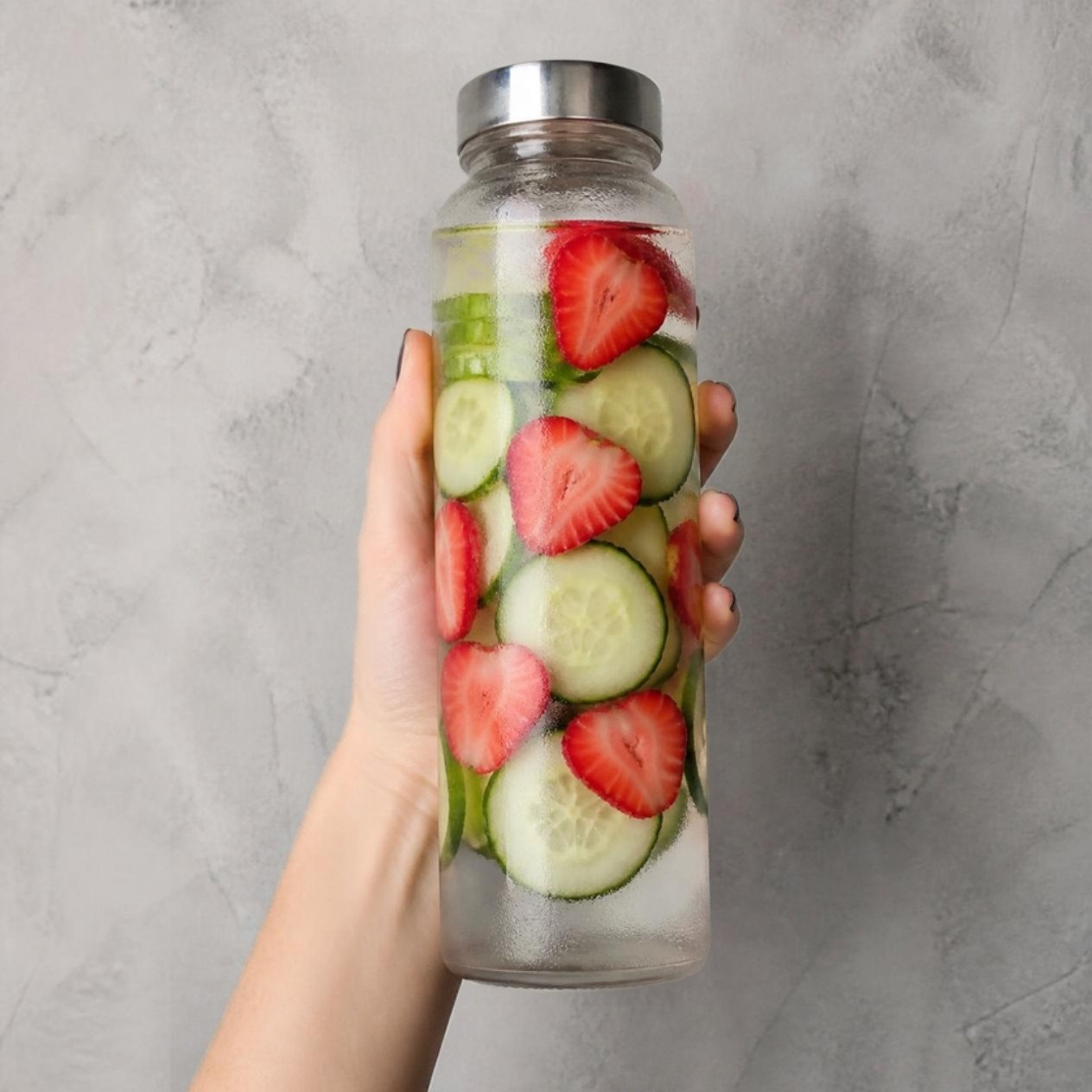
- Flavor it naturally. Add citrus slices, cucumber, berries, or fresh herbs like mint if plain water feels boring — it’s an easy way to make hydration something you look forward to.
- Adjust for the day you’re having. On hot days, during workouts, or when you’re sick, bump up your intake rather than sticking rigidly to a baseline number.
- Let thirst and urine color be your guide. Rather than hitting an exact ounce count, use these as simple, practical check-ins.
Water-Rich Foods That Count Toward Your Daily Goal
Here’s some good news: you don’t have to get all your fluids from a glass. Harvard Health points out that water-rich foods — along with beverages like milk, tea, and coffee — all contribute to your daily total. Some of the most hydrating foods to keep stocked in your kitchen include:
- Cucumbers
- Watermelon and other melons
- Strawberries and citrus fruits
- Lettuce and leafy greens
- Tomatoes
- Zucchini and summer squash
- Broth-based soups
Building more of these into your meals and snacks is a simple, tasty way to support your hydration goals without even noticing you’re doing it.
When to Talk to Your Doctor About Hydration
For most healthy adults, hydration is simply a matter of building good daily habits. But certain health conditions and medications can change how much fluid your body needs or how well it regulates fluid balance. Harvard Health notes that kidney, liver, heart, and thyroid conditions, as well as medications like NSAIDs, opioids, and some antidepressants, can all affect your hydration needs. If you have one of these conditions, are pregnant or breastfeeding, or you’re simply unsure what’s right for your body, it’s worth checking with your doctor or a registered dietitian for personalized guidance. This article is intended as general wellness information, not individualized medical advice.
On the flip side, it is possible — though Cleveland Clinic notes it’s rare and difficult to do by accident — to drink so much water that it dilutes your body’s sodium levels, a condition called hyponatremia. For the vast majority of people going about a normal day, this isn’t something to worry about, but it’s a good reminder that more isn’t automatically better; the goal is steady, sensible hydration rather than extremes in either direction.
The Bottom Line
Forget the idea that there’s one perfect number everyone should hit every day. Your real hydration needs shift with your activity level, the climate, your age, and your overall health — and the best tools for tracking it are often the simplest ones: your thirst, the color of your urine, and a bit of common sense. Start by aiming for roughly 9 to 13 cups of total fluids a day (adjusting up for exercise, heat, or illness), build in a few water-rich foods, and keep a glass within arm’s reach. Small, consistent habits beat chugging water you don’t want — and your body will thank you for it.


Leave a Reply