
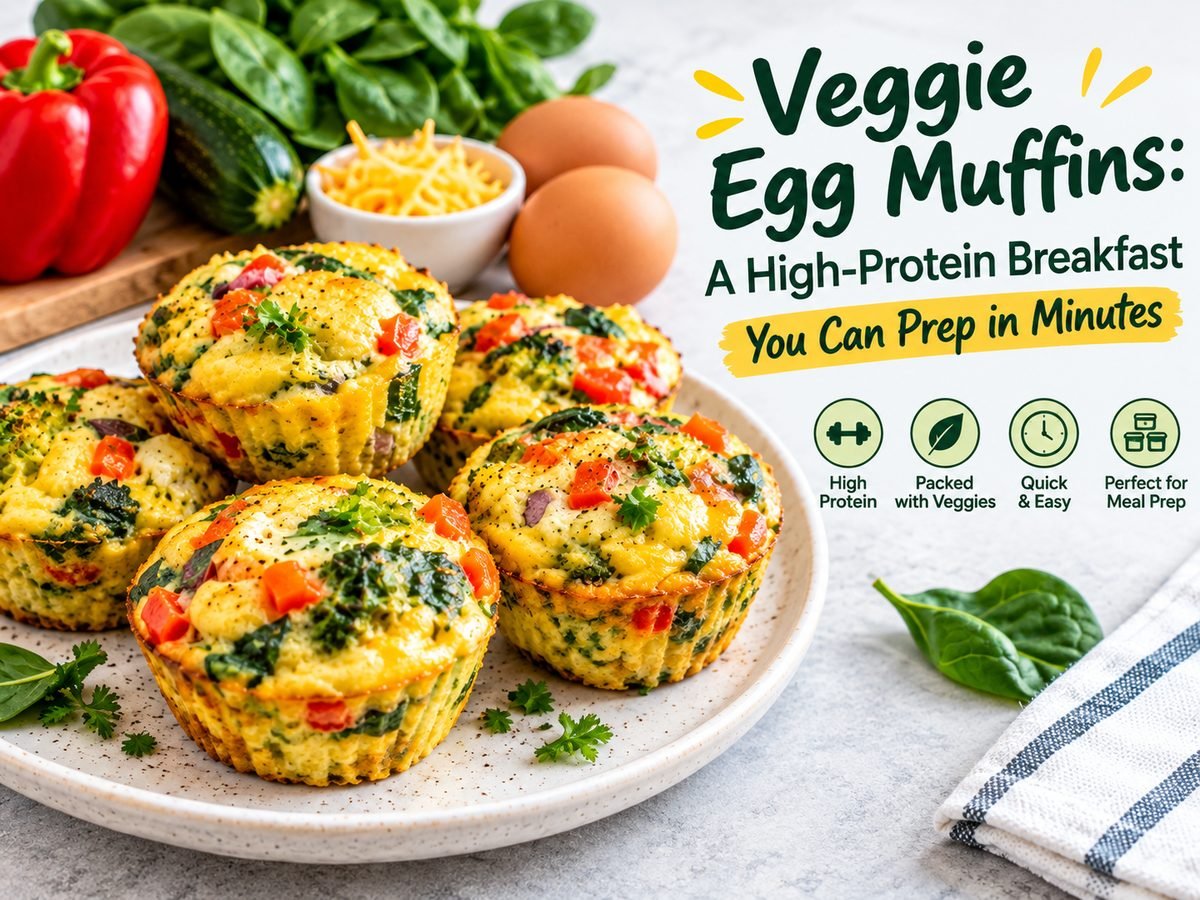
Some mornings call for a sit-down plate of eggs and toast. Most mornings call for something you can grab on the way out the door and still feel good about eating. That’s the gap these make-ahead veggie egg muffins are built to fill: a protein-forward, vegetable-packed breakfast you bake once on Sunday and reach for all week, no skillet required come Tuesday.
Beyond the convenience, there’s a real nutritional case for leaning on protein at breakfast instead of defaulting to cereal or a pastry. Below, we’ll walk through why that matters, break down the actual nutrition eggs bring to the table, and share a simple, customizable muffin recipe along with the food-safety basics for storing a make-ahead batch.
Why Starting Your Day With Protein Matters
A growing body of research points to protein-rich breakfasts as a smart way to support steadier energy and appetite control through the morning. In a 2025 study from Newcastle University, researchers gave adults either a high-protein plant-based drink, a high-protein animal-based meal, or a low-protein, high-carbohydrate control breakfast, then measured hunger hormones and appetite over the following hours. Both high-protein breakfasts significantly raised the body’s natural satiety hormones, GLP-1 and PYY, compared to the low-protein option, with no meaningful difference between the plant-based and animal-based versions.
Interestingly, that hormonal boost in fullness didn’t automatically translate into eating less at lunch in the study — a reminder that no single meal is a magic bullet. But the underlying signal is still useful: starting the day with a solid dose of protein is one of the more evidence-backed ways to feel satisfied through the morning, which is exactly the kind of meal these egg muffins are designed to be.
The Nutrition Case for Eggs
Eggs are one of the most efficient protein packages in the grocery store. According to Harvard Health, a single large egg provides about 6 grams of high-quality protein, containing all nine essential amino acids your body needs but can’t produce on its own, along with only around 1.5 grams of saturated fat, no trans fat, and roughly 70 calories.
For years, dietary cholesterol in egg yolks made eggs a nutrition “yellow light.” The current understanding, per Harvard Health, is more reassuring: most of the cholesterol circulating in your body is produced by your liver, not absorbed directly from food, and current research suggests eating up to one egg a day is fine for most healthy adults as part of an overall balanced diet. Eggs also supply choline for brain health and the antioxidants lutein and zeaxanthin, which support eye health. The bigger lever for heart health, according to Harvard Health, is usually what you eat alongside your eggs — pairing them with processed meats and extra butter adds far more saturated fat and sodium than the eggs themselves. That’s exactly why this recipe leans on vegetables and a light hand with any added cheese instead.
Make-Ahead Veggie Egg Muffins Recipe
This recipe makes 12 muffins — enough for about a week of weekday breakfasts if you’re eating two at a time, or two weeks if you’re pairing one with fruit or toast. It comes together with one bowl, one muffin tin, and whatever vegetables you have on hand.
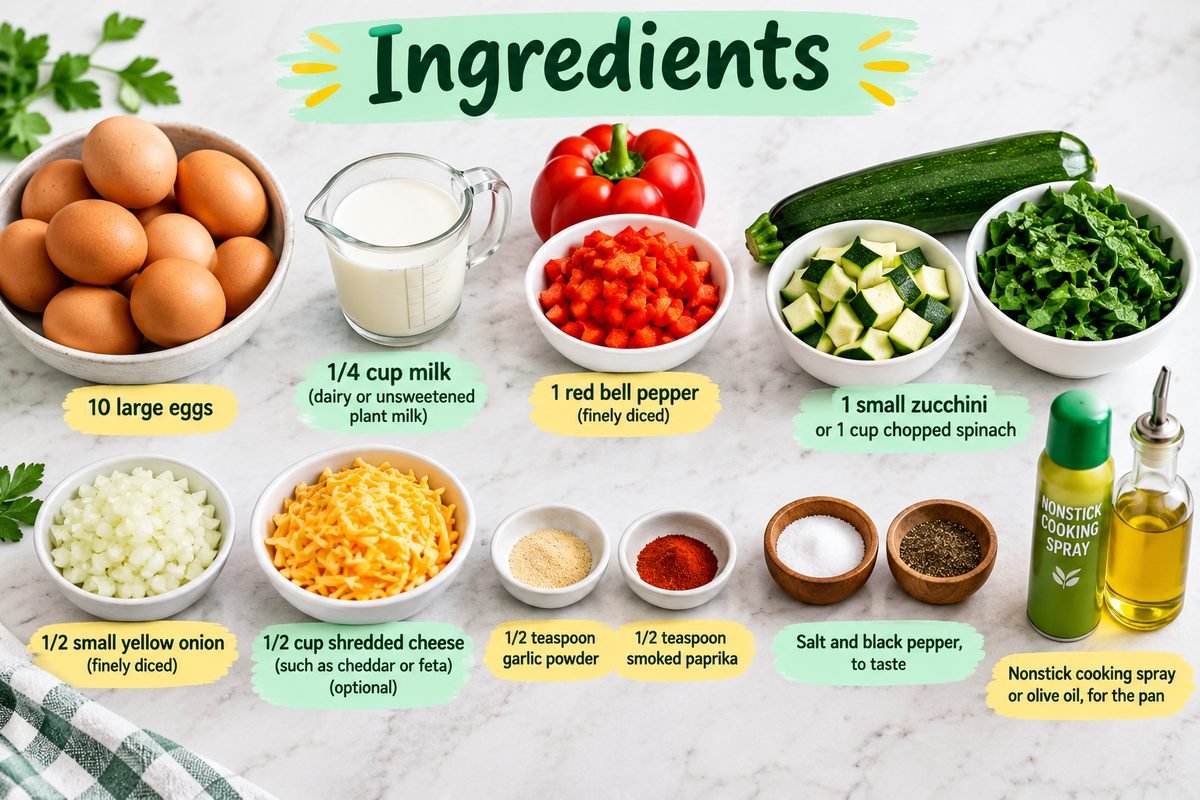
Ingredients
- 10 large eggs
- 1/4 cup milk (dairy or unsweetened plant milk)
- 1 red bell pepper, finely diced
- 1 small zucchini or 1 cup chopped spinach
- 1/2 small yellow onion, finely diced
- 1/2 cup shredded cheese, such as cheddar or feta (optional)
- 1/2 teaspoon garlic powder
- 1/2 teaspoon smoked paprika
- Salt and black pepper, to taste
- Nonstick cooking spray or olive oil, for the pan
Instructions
- Preheat your oven to 350°F (175°C). Grease a standard 12-cup muffin tin well, or line with silicone muffin cups — eggs tend to stick to paper liners, so silicone or a well-greased metal tin works best.
- In a large bowl, whisk the eggs and milk together until smooth and slightly frothy.
- Stir in the bell pepper, zucchini or spinach, onion, cheese (if using), garlic powder, smoked paprika, salt, and pepper.
- Divide the mixture evenly among the 12 muffin cups, filling each about three-quarters full to leave room for rising.
- Bake for 18 to 22 minutes, until the muffins are puffed, set in the center, and a food thermometer inserted into the middle reads at least 160°F.
- Let the muffins cool in the pan for 5 minutes, then run a thin knife around the edges and lift them out onto a wire rack to finish cooling. They’ll deflate slightly as they cool — that’s normal.
Easy Ways to Customize This Recipe
Part of what makes this recipe a weekly staple is how forgiving it is. A few swaps to keep it feeling new:
- Make it dairy-free: skip the cheese and use unsweetened almond or oat milk instead of dairy milk.
- Add more protein: stir in 1/2 cup cooked, crumbled turkey sausage or diced cooked chicken.
- Use whatever vegetables are on hand: mushrooms, broccoli, cherry tomatoes, and shredded carrots all work well — just sauté watery vegetables like mushrooms or tomatoes first so the muffins don’t turn soggy.
- Boost the flavor without the sodium: fresh herbs like chives, dill, or basil add a lot of flavor for very little effort.
Meal-Prep and Food Safety Tips
Because the whole point of this recipe is make-ahead convenience, it’s worth getting the storage right. According to the USDA Food Safety and Inspection Service, cooked egg dishes stay safe in the refrigerator for 3 to 4 days when stored at 40°F or below in an airtight container. If you want a bigger batch to last longer, these muffins freeze well: the USDA notes that frozen cooked egg products remain safe indefinitely at 0°F, though for best taste and texture, it’s best to use them within about a year.
For freezing, let the muffins cool completely, then store them in a freezer-safe bag or container with parchment between layers so they don’t stick together. To reheat, microwave straight from the fridge for about 30 to 45 seconds, or from frozen for 60 to 90 seconds, until steaming hot all the way through. A quick reheat in a 350°F oven or toaster oven for about 8 to 10 minutes works well too, especially if you want to re-crisp the edges.
A quick note: this post is general nutrition and recipe information, not individualized medical advice. If you’re managing a specific health condition such as diabetes or heart disease, or have questions about how eggs or protein timing fit your personal needs, it’s worth checking in with your doctor or a registered dietitian.
The Bottom Line
A batch of veggie egg muffins is a small weekend investment that pays off all week: a protein-rich, vegetable-packed breakfast that’s ready before your coffee finishes brewing. Bake a batch this Sunday, stash it in the fridge or freezer, and see how much easier weekday mornings feel when breakfast is already done.
Leave a Reply