
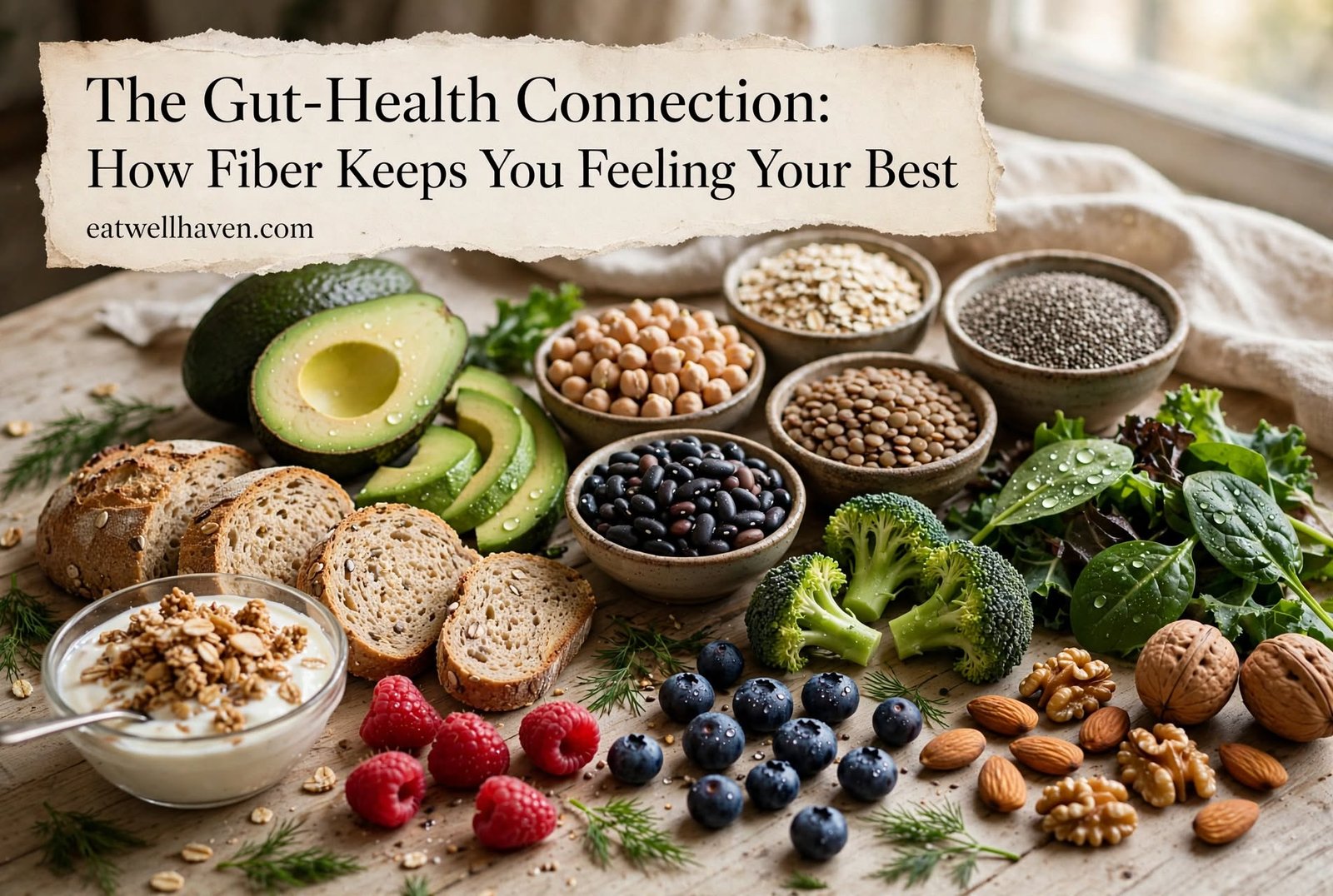
If you’ve ever felt sluggish after a meal, dealt with unpredictable digestion, or wondered why some breakfasts keep you full until noon while others leave you hungry an hour later, the answer often comes down to one humble nutrient: fiber. It doesn’t get the spotlight that protein or omega-3s do, but fiber may be one of the most underrated tools for feeling genuinely well, day to day.
The good news is that eating more fiber doesn’t require a dramatic diet overhaul. A few smart swaps and additions to meals you already eat can make a real difference in how your gut — and the rest of your body — functions. Here’s what fiber actually does, how much you need, and simple ways to fit more of it into everyday meals.
What Is Fiber, Really?
Fiber is a type of carbohydrate found in plant foods that your body can’t fully digest or absorb. Instead of being broken down into glucose like other carbohydrates, most fiber passes through your digestive system relatively intact, according to the Harvard T.H. Chan School of Public Health’s Nutrition Source. Along the way, it does a surprising amount of work: adding bulk to stool, feeding beneficial gut bacteria, and slowing down digestion in ways that help regulate blood sugar and appetite.
Soluble vs. Insoluble Fiber
Fiber comes in two main forms, and most whole foods contain a mix of both:
- Soluble fiber dissolves in water and forms a gel-like substance in the gut. It’s found in oats, chia seeds, beans, lentils, apples, and citrus fruits, and it’s particularly good at helping lower cholesterol and moderate blood sugar, per Mayo Clinic.
- Insoluble fiber doesn’t dissolve in water. It adds bulk to stool and helps food move through the digestive tract more efficiently, which supports regularity. You’ll find it in whole wheat products, nuts, seeds, leafy greens, and the edible skins of fruits and vegetables.
You don’t need to track which type you’re eating meal by meal — simply eating a variety of whole plant foods naturally covers both.
Why Your Gut (and the Rest of You) Needs Fiber
1. It Keeps Digestion Moving
This is fiber’s best-known job. By adding bulk and softness to stool, fiber helps prevent constipation and supports regular, comfortable bowel movements. It also feeds the trillions of bacteria that make up your gut microbiome — research highlighted by the Harvard Chan School links higher fiber intake to a healthier, more diverse gut bacterial community, which in turn is tied to broader markers of health, including a stronger immune response.
2. It Supports Heart Health
Soluble fiber binds to cholesterol-rich bile acids in the digestive tract, helping the body eliminate them and, over time, lowering LDL (“bad”) cholesterol. Mayo Clinic notes this effect is one of the more well-documented cardiovascular benefits of a high-fiber diet, alongside fiber’s role in supporting healthy blood pressure and reducing inflammation.
3. It Helps Steady Blood Sugar
Because soluble fiber slows the absorption of sugar into the bloodstream, high-fiber meals tend to produce gentler, more gradual rises in blood sugar than low-fiber, refined-carbohydrate meals. The Nutrition Source points to high-fiber whole grains as having some of the strongest associations with a lower risk of type 2 diabetes among dietary factors studied.
4. It Helps You Feel Full
Fiber-rich foods tend to be more filling per calorie than processed, low-fiber foods. Soluble fiber in particular slows stomach emptying, which can help curb between-meal snacking and support a healthy weight over time — not as a quick fix, but as one piece of an overall balanced eating pattern.
5. It May Support Long-Term Health
Both Harvard and Mayo Clinic note that diets higher in fiber are associated with a reduced risk of colorectal cancer, and some research points to a similar association with breast cancer risk, though researchers emphasize this is part of an overall dietary pattern rather than the effect of fiber alone.

How Much Fiber Do You Actually Need?
Most adults fall well short of recommended fiber intake. According to Mayo Clinic, the general daily targets are:
- Women 50 and younger: 25 grams per day
- Women over 50: 21 grams per day
- Men 50 and younger: 38 grams per day
- Men over 50: 30 grams per day
Despite these guidelines, the Harvard Nutrition Source notes that the average adult in the U.S. eats only about 15 grams of fiber a day — roughly half of what’s recommended. Closing that gap is one of the simplest, highest-impact changes most people can make to their diet.
Best Everyday Foods to Boost Your Fiber Intake
You don’t need special supplements to hit your fiber goals — whole, minimally processed plant foods will get you there. Some easy staples to build meals around:
- Legumes: lentils, black beans, chickpeas, and kidney beans are among the most concentrated fiber sources available, often providing 7–10 grams per cooked cup.
- Whole grains: oats, quinoa, brown rice, farro, and 100% whole wheat bread or pasta.
- Fruit: raspberries, pears, apples (with the skin on), and bananas.
- Vegetables: broccoli, Brussels sprouts, carrots, and leafy greens.
- Nuts and seeds: chia seeds, ground flaxseed, almonds, and pistachios.
Tips for Adding Fiber Without the Bloat
Ramping up fiber intake too quickly is the most common reason people give up on it — sudden increases can cause gas, bloating, or cramping. Mayo Clinic recommends a gradual approach:
- Increase slowly, over a few weeks. Add one high-fiber food every few days rather than overhauling every meal at once.
- Drink plenty of water. Fiber absorbs water as it moves through the digestive tract; without enough fluid, it can actually worsen constipation instead of relieving it.
- Spread fiber across the day. A big fiber-heavy dinner after low-fiber meals all day is more likely to cause discomfort than smaller amounts at each meal.
- Start your day with it. A bowl of oats topped with berries and a spoonful of chia seeds is an easy way to front-load fiber before you’ve even left the kitchen.
- Keep the skins on. Much of the insoluble fiber in produce like apples, potatoes, and cucumbers lives in the skin — rinse and eat it rather than peeling it away.
- Swap refined grains for whole ones. Choosing brown rice over white, or whole wheat bread over white bread, is an easy, near-invisible way to add several extra grams a day.
A Quick Note on Medical Conditions
Fiber is generally beneficial, but it isn’t universally appropriate at all times. Mayo Clinic notes that certain situations — including recovery from digestive surgery, flare-ups of inflammatory bowel disease, intestinal strictures, or preparation for a colonoscopy — may call for temporarily lower fiber intake. If you’re managing diabetes, heart disease, or a digestive condition, it’s worth talking with your doctor or a registered dietitian about the fiber intake and food choices that make sense for your specific situation. This article is intended as general nutrition information and recipe inspiration, not individualized medical advice.
The Bottom Line
Fiber is one of the few nutrients that quietly supports nearly every system in the body — digestion, heart health, blood sugar, appetite, and even long-term disease risk — and most of us simply aren’t getting enough of it. The fix doesn’t have to be complicated: swap in a few more beans, whole grains, and pieces of fruit with the skin on, increase gradually, and drink enough water along the way. Your gut will notice the difference, and so, over time, will the rest of you.

Leave a Reply