
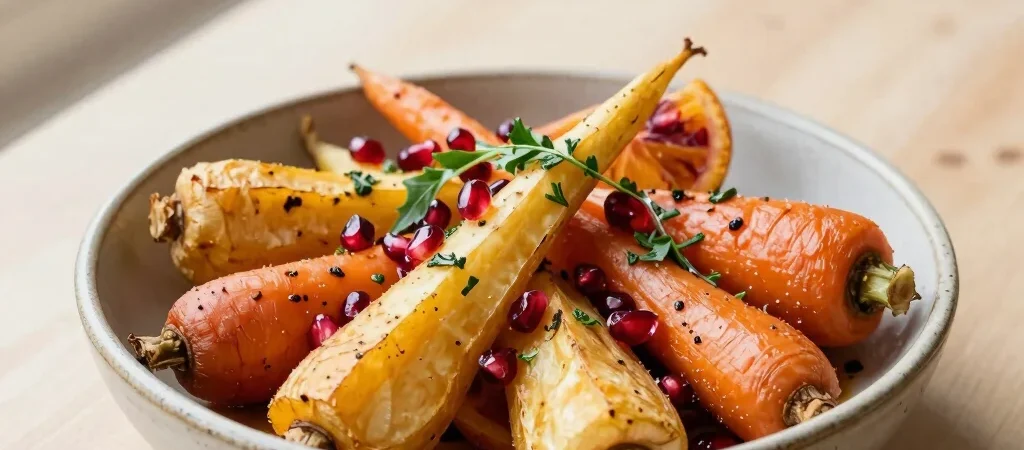
Cold weather cooking often leans heavily into deep, savory flavors, but the real key to memorable winter food is contrast. Pairing the dense, caramel sweetness of caramelized root vegetables with crisp, sun-ripened citrus creates an instant balance on the plate. It is an approachable nutrition strategy that lifts heavy seasonal produce into vibrant, crave-able meals with almost no extra effort.
The Science of Flavor Alignment
Root vegetables like parsnips, rutabagas, and carrots develop concentrated sugars when roasted at high heat. The natural acid in Meyer lemons, blood oranges, and tart grapefruits cuts right through that richness, waking up your taste buds and making each bite feel surprisingly light. Adding fresh citrus zest right as the vegetables come out of the oven releases aromatic oils that tie the whole dish together.
Roasting Techniques for Maximum Caramelization
To achieve those prized golden edges, cut your root vegetables into uniform pieces and give them plenty of room on the sheet pan. Overcrowding creates steam rather than high-heat caramelization, which dampens their natural flavors. Toss them lightly in avocado oil, sea salt, and cracked pepper, leaving the pans uncluttered so the dry heat of the oven can transform the natural starches.
Finishing Touches That Elevate Every Bite
Once your roots are browned and tender, finish the plate with raw textures and fresh herbal notes. A handful of pomegranate seeds, thinly sliced blood orange segments, toasted pumpkin seeds, and a splash of cold-pressed olive oil add complexity. This thoughtful layer of fresh ingredients turns simple winter roasting into a centerpiece worthy of any community kitchen gathering.